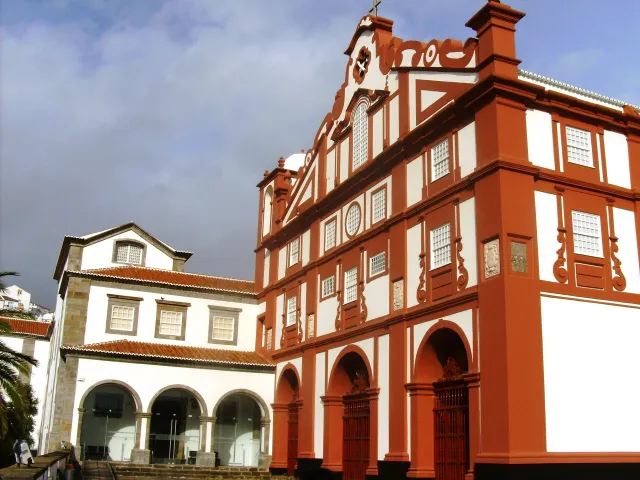
History and importance
The Azores, officially the Autonomous Region of the Azores, is an archipelago of Portugal, in the Atlantic Ocean, about 1,400 km (870 miles) west of the Portuguese mainland. Politically and administratively, together with Madeira, it is one of the two autonomous regions of Portugal and a special territory of the European Union. It is the westernmost point and region of Portugal.
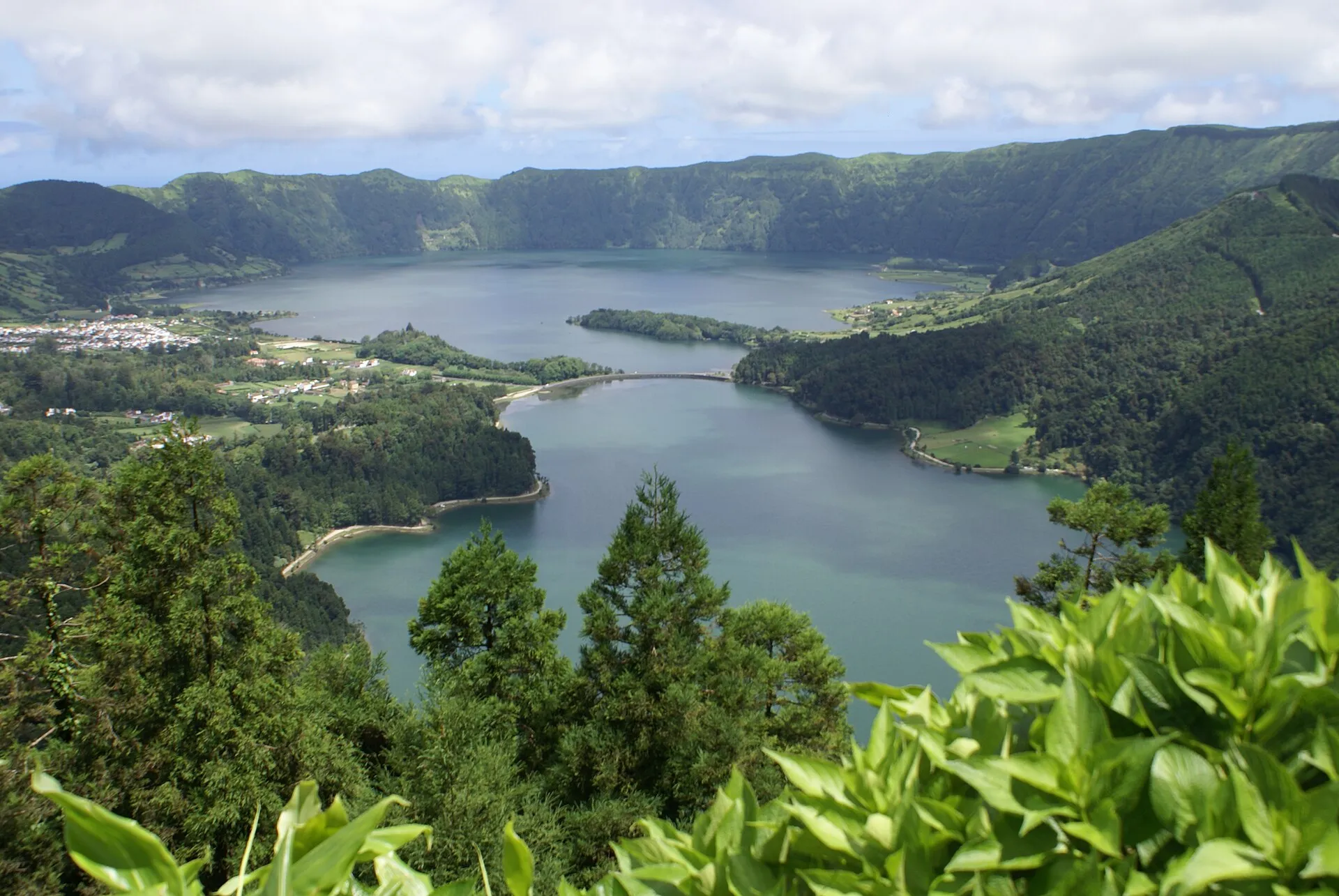
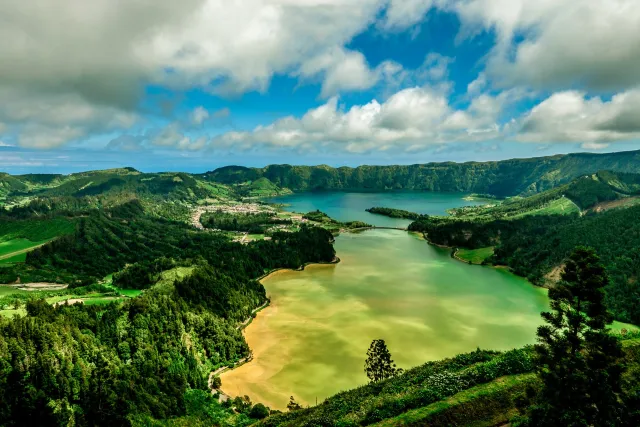
The Azores is an archipelago composed of nine volcanic islands in the Macaronesia region of the North Atlantic Ocean.
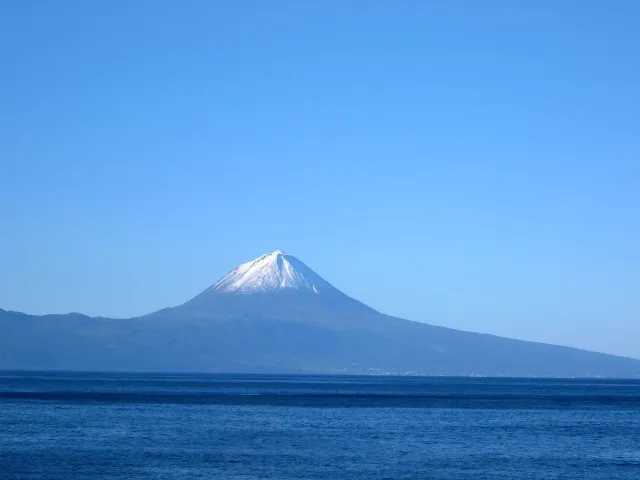
There are nine major Azorean islands and an islet cluster, in three main groups. These are Flores and Corvo to the west; Graciosa, Terceira, São Jorge, Pico, and Faial in the centre; and São Miguel, Santa Maria, and the Formigas islets to the east. They extend for more than 600 km (370 mi) and lie in a northwest–southeast direction. All the islands have volcanic origins, although some, such as Santa Maria, have had no recorded activity in the time since the islands were settled several centuries ago. Mount Pico on the island of Pico is the highest point in Portugal, at 2,351 m (7,713 ft). If measured from their base at the bottom of the ocean to their peaks, the Azores are among the tallest mountains on the planet. The Azores are located at the seismically active Azores triple junction plate boundary where the North American plate, Eurasian plate and Nubian plate meet.
The climate is mild, being influenced by its distance from the continents and by the passing Gulf Stream. Because of the marine influence, temperatures remain mild year-round. Daytime temperatures normally fluctuate between 16 and 25 °C (61 and 77 °F) depending on season. Temperatures above 30 °C (86 °F) or below 3 °C (37 °F) are unknown in the major population centres. It is also generally wet and cloudy.
Text from Wikipedia · CC BY-SA 4.0 · 9 Nov 2026
History of História dos Açores
Uma historiografia do tema inicia com os textos de Diogo Gomes de Sintra e de Valentim Fernandes Alemão relativos ao descobrimento do arquipélago e, posteriormente, pelo de Pompeo Arditi, "A viagem que Pompeo Arditi fez de Pesaro até à ilha da Madeira e aos Açores" (em italiano: Il viaggio che fece Pompeo Arditi da Pesaro all'Isola di Madera e alle Azzorre). A estes, soma-se a obra "Saudades da Terra", do padre Gaspar Frutuoso (1522–1591). O manuscrito, escrito entre 1586 e 1590, divide-se em seis volumes, e inscreve-se numa história mais ampla, a da região atlântica que hoje referimos como Macaronésia, ao abordar os arquipélagos das Canárias, Cabo Verde e Madeira, antes de se dedicar aos Açores.
No século XVII destacam-se o "Espelho Cristalino em Jardim de Várias Flores", redigido entre 1646 e 1654 por frei Diogo das Chagas (1584–1661), a "Fenix Angrence", entre 1683 e 1711 pelo padre Manuel Luís Maldonado (1644–1711), as "Crónicas da Província de S. João Evangelista das Ilhas dos Açores", até 1695 por frei Agostinho de Monte Alverne (1629–1726), e a "História Insulana das Ilhas a Portugal Sujeitas no Oceano Ocidental", publicada em 1717 pelo padre António Cordeiro (1641–1722). Desse período, nos nossos dias são também referidas obras menos conhecidas, mas não menos importantes, como por exemplo, num viés temático, "A Margarida Animada", publicada em 1723 pelo capitão Francisco Afonso de Chaves e Melo.
Text from Wikipedia · CC BY-SA 4.0 · 9 Nov 2026