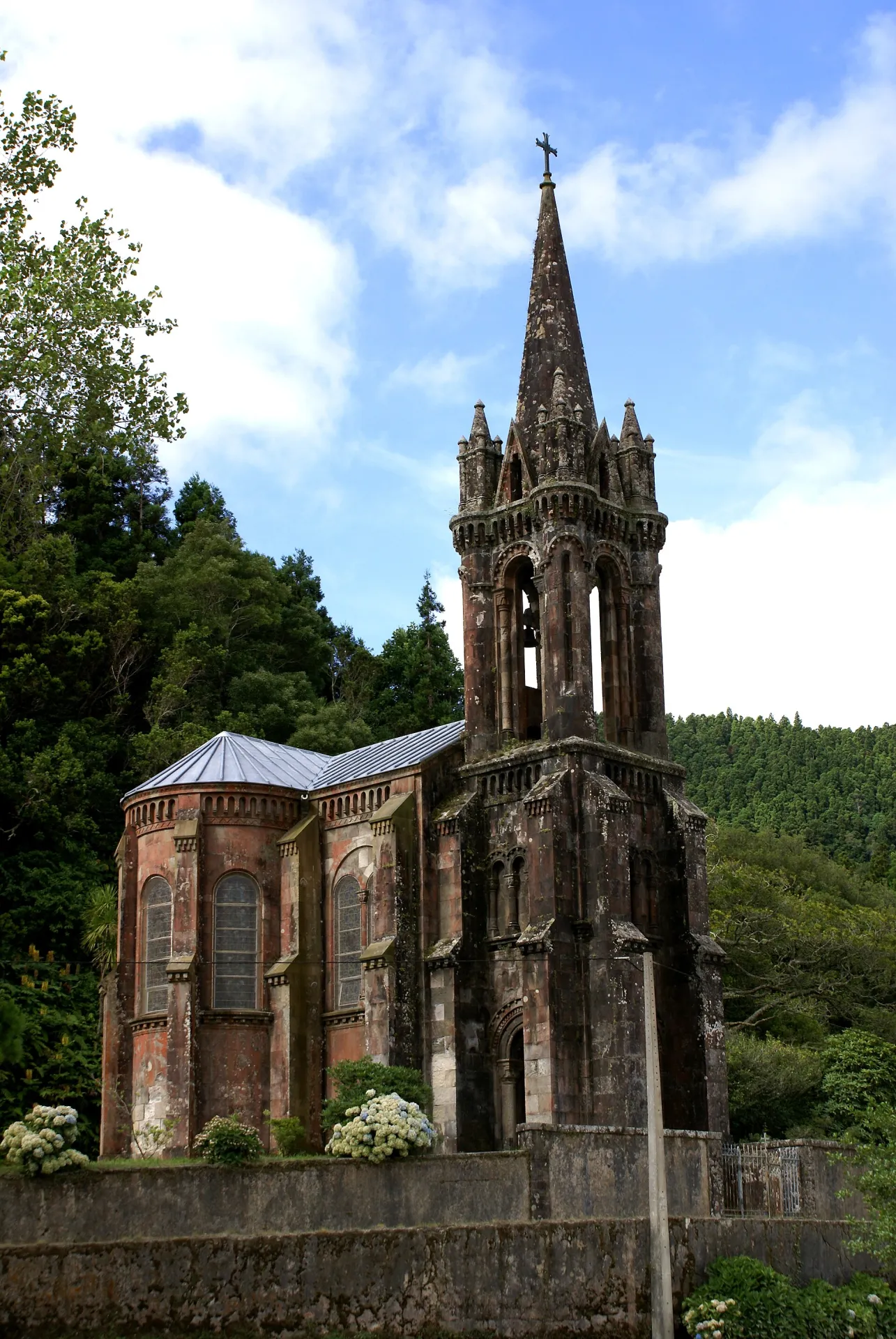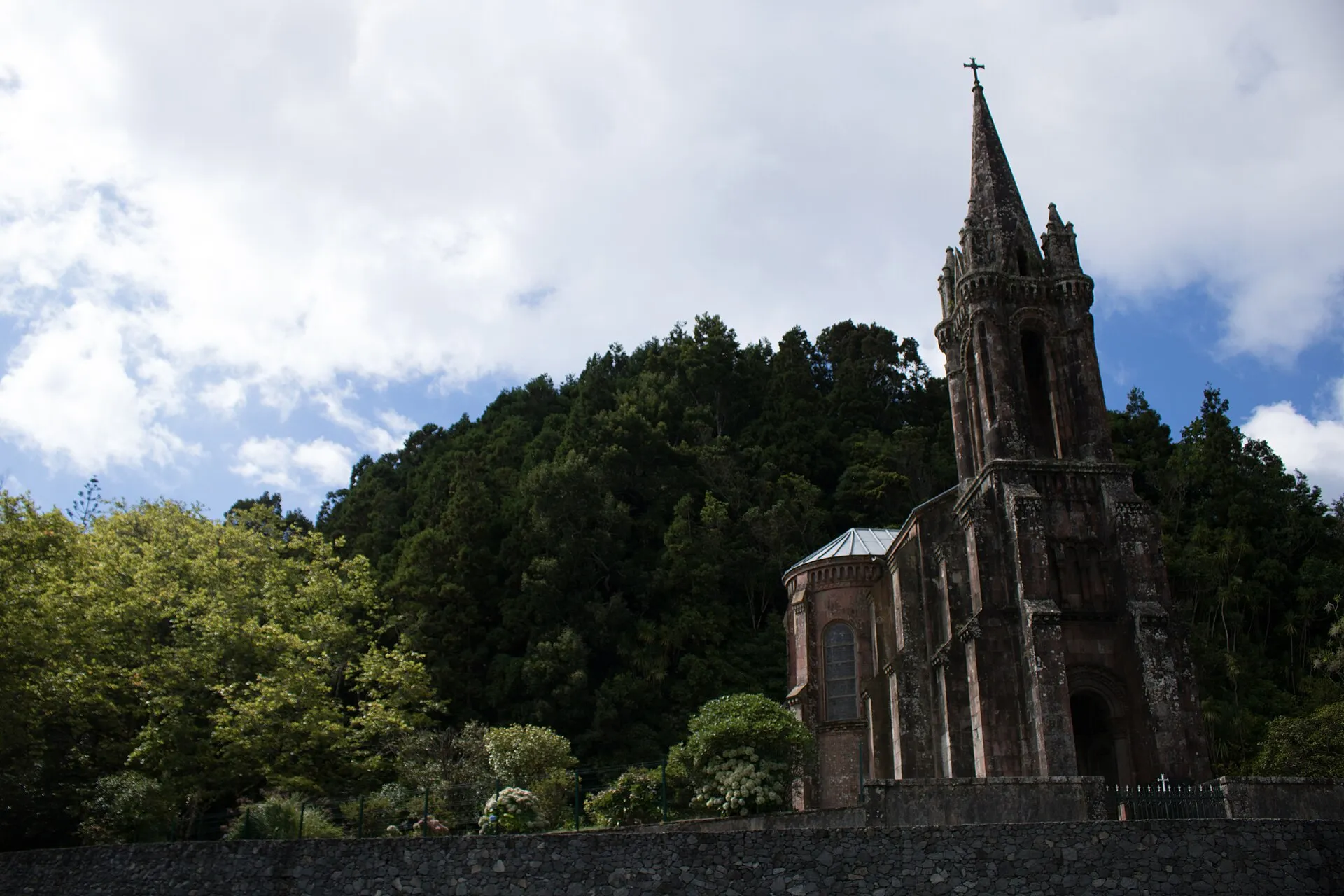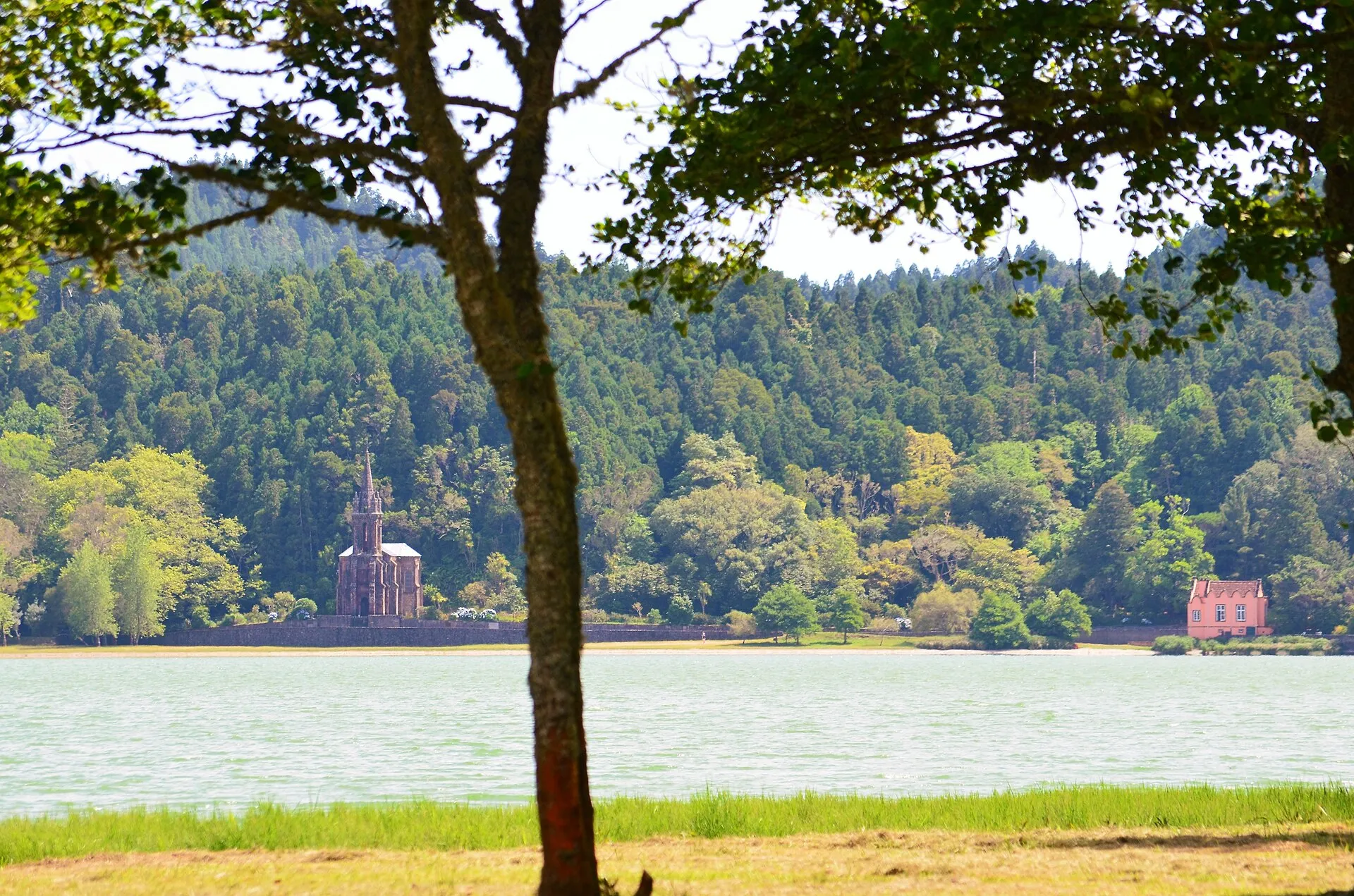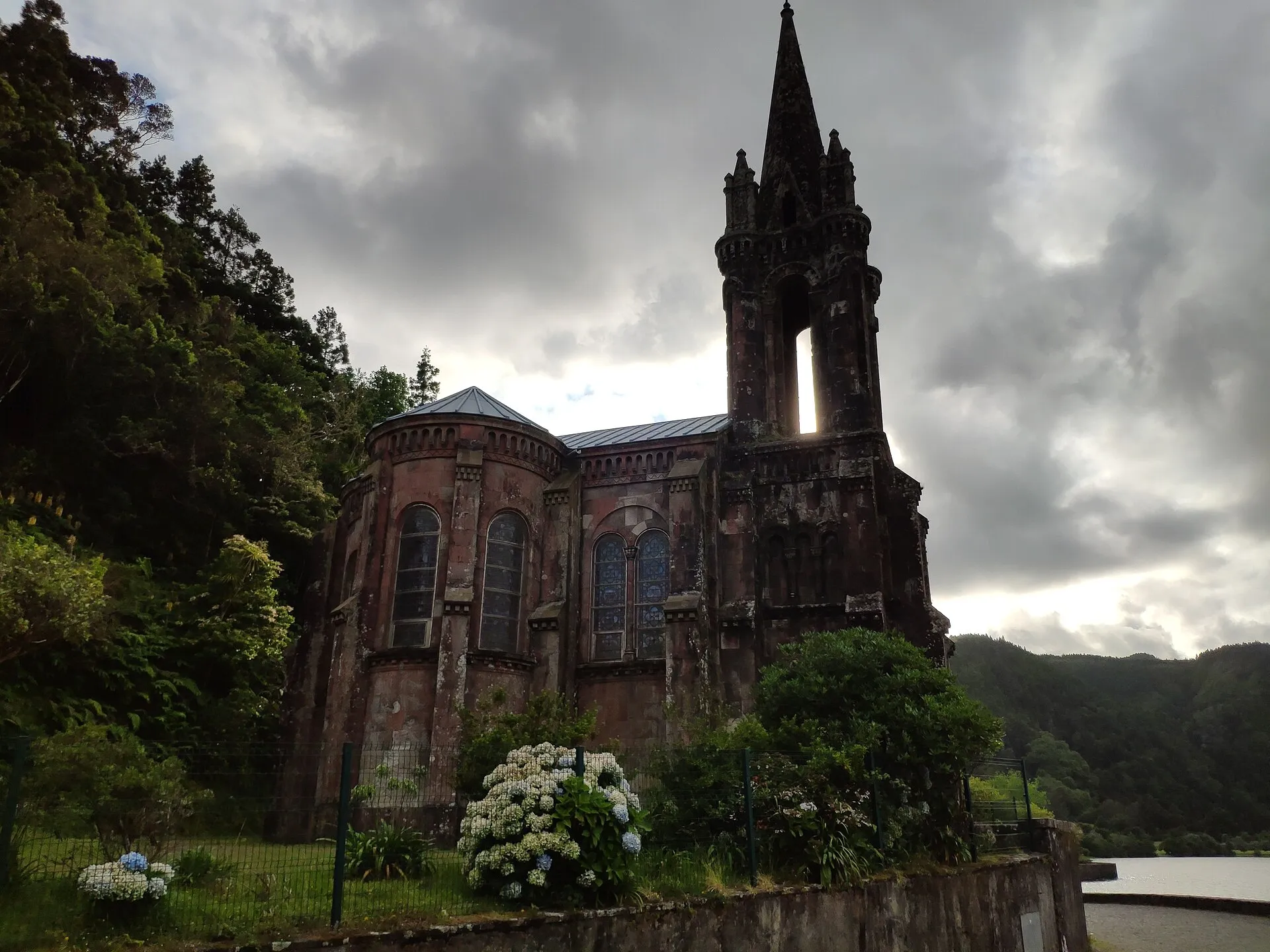
Having, during the great severity of my wife's illness in 1852, vowed to build a small chapel to the invocation of Our Lady of Victories, and not yet having achieved my purpose due to circumstances beyond to my will, I command that you complete the actual building...
The plan was executed by the architect André Breton, who he entrusted with the commission in 1864. Breton's project, was influenced directly by the Seminary Church of Angers, followed José do Canto's aspirations and preferences.
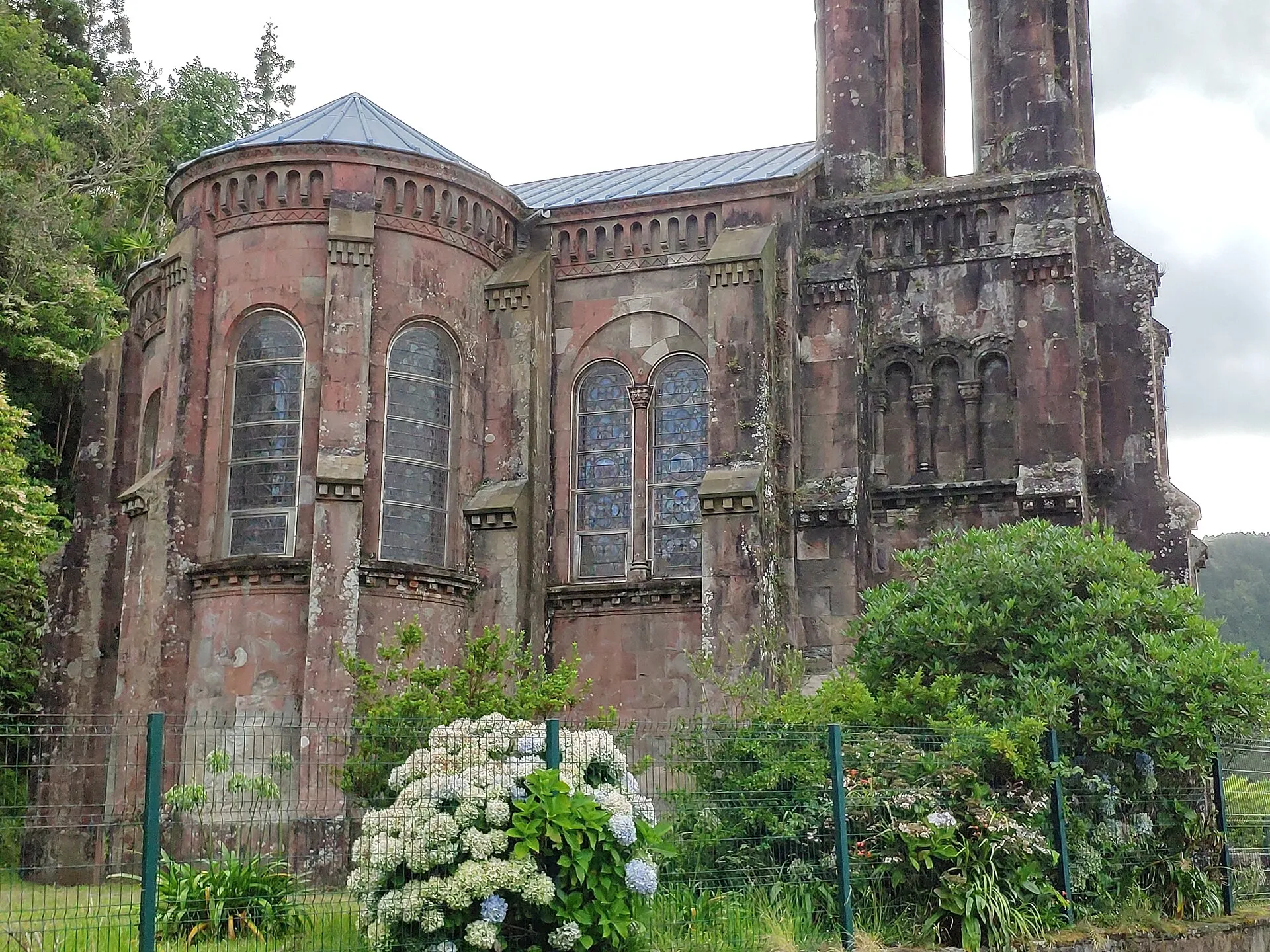
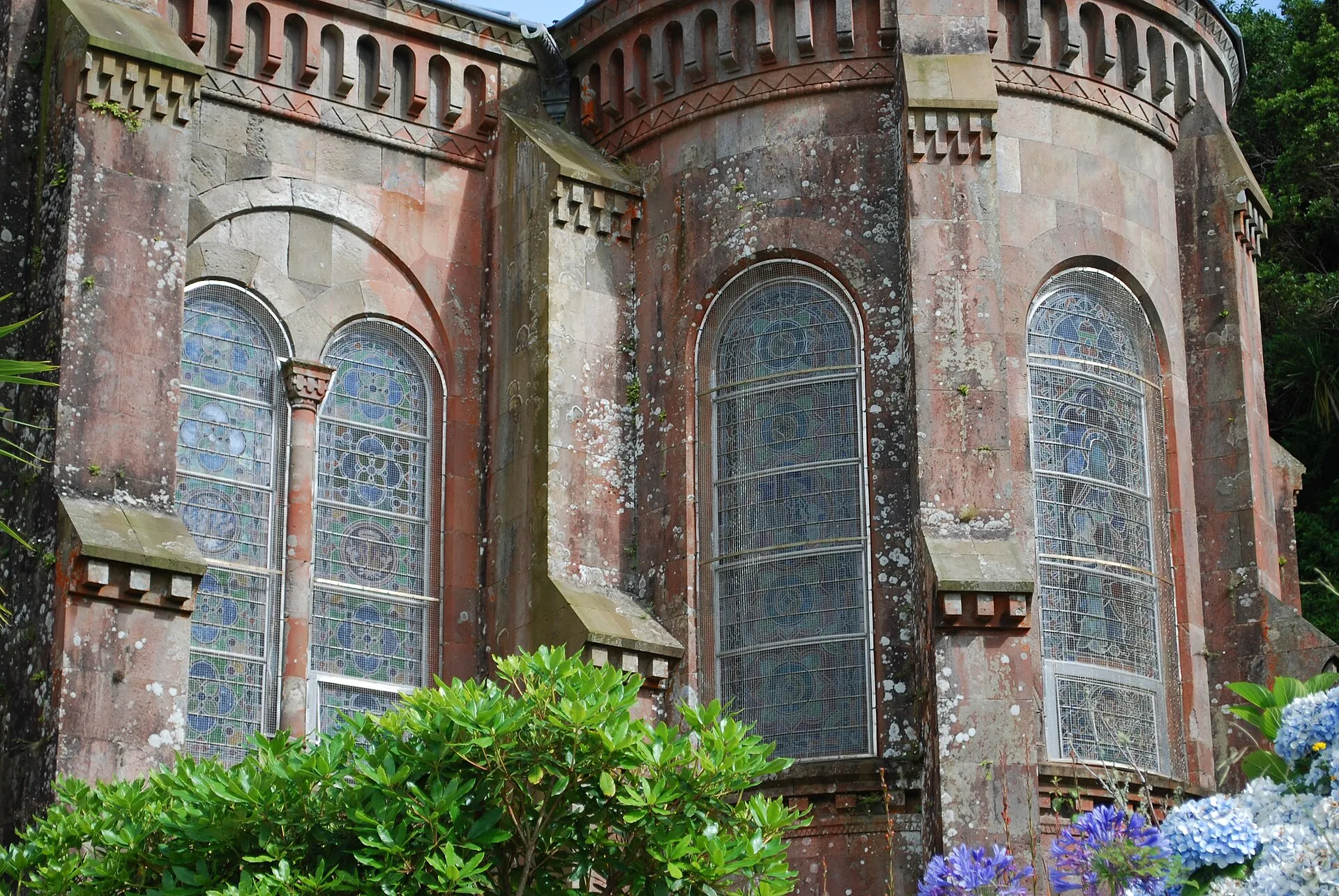
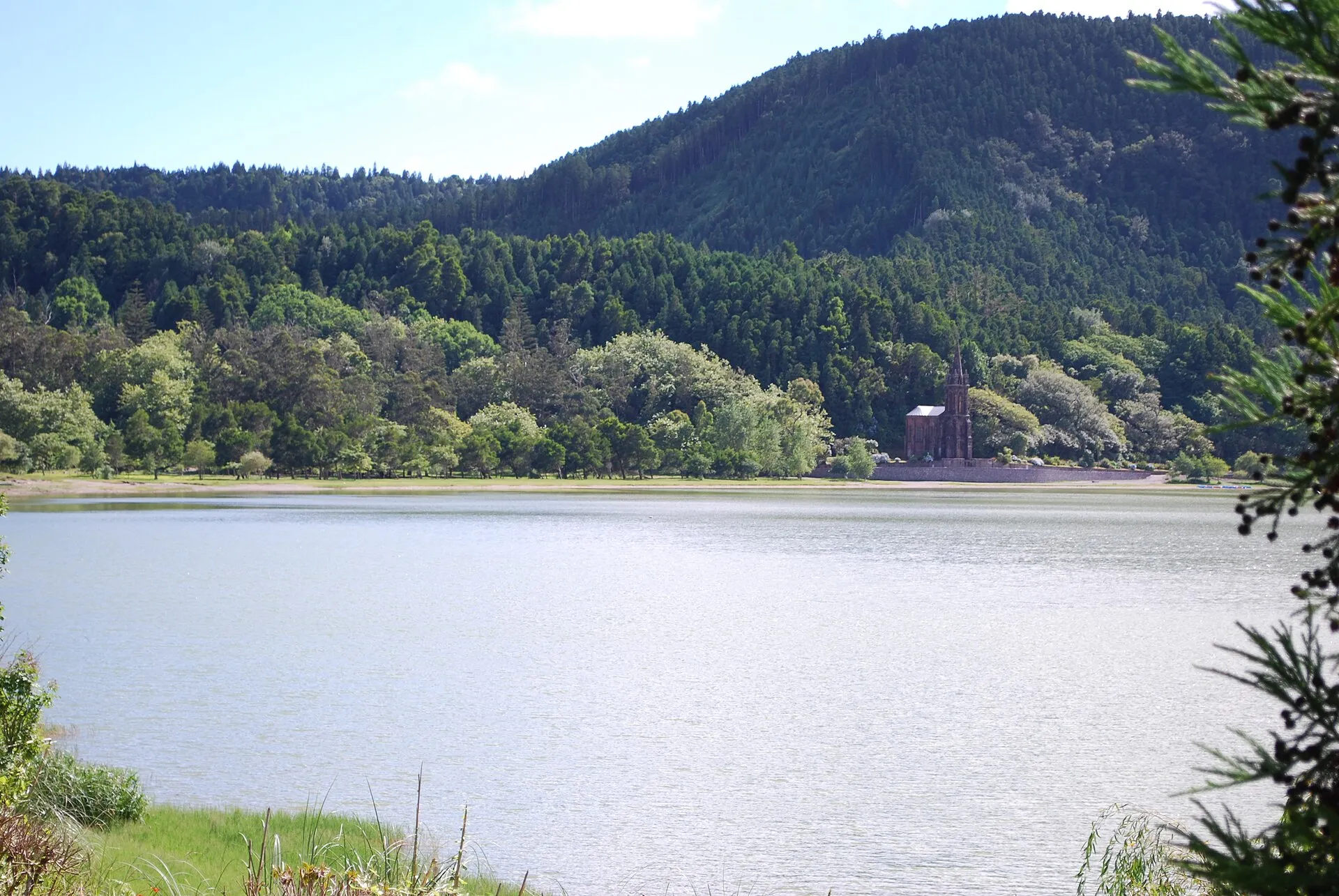
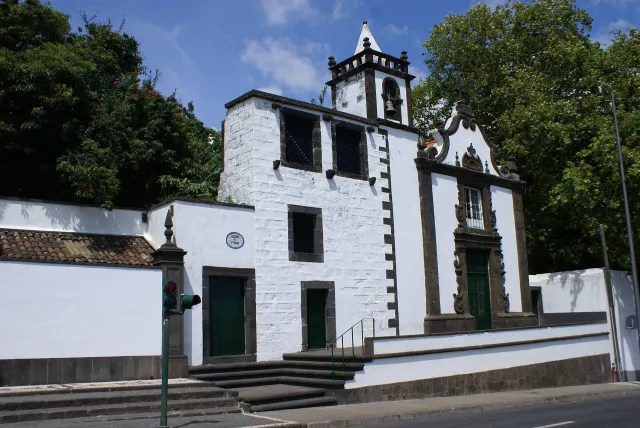
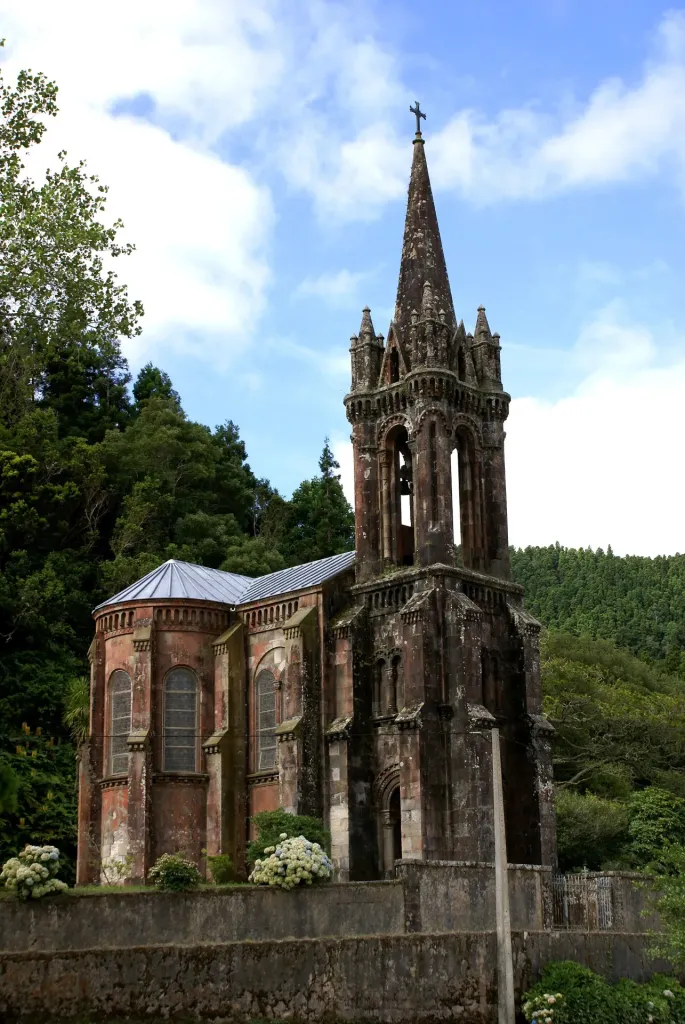
The hermitage was completed during José do Canto's lifetime, near his summer home on Furnas Lake. It was a small artistic miracle: a Neo-Gothic style chapel that imitated the great gothic cathedrals of Europe, in the rustic green-spaces of the North Atlantic archipelago. The hermitage was constructed in detailed basalt and local tuff by Micalense stonemasons, led by master António de Sousa Redemoinho, of Vila Franca do Campo, who started the project around the middle of the 1870s. It was valued, at the time of its construction, for its beautiful stained-glass windows.
By 1882, with the arrival of the pyramid-like spire, the project had come close to completion. It was a cruciform layout, typical of larger Gothic structures in Europe, but a third the size of the original Seminary Church.
It was solemnly inaugurated on 15 August 1886, by the property-owner, and written-up by many of the newspapers of the time for its beautiful stained-glass windows depicting the life of the Virgin, and in the chancel an image in jasper.
When the owner finally died, he was buried alongside his wife within the chapel, thus fulfilling his original intent.