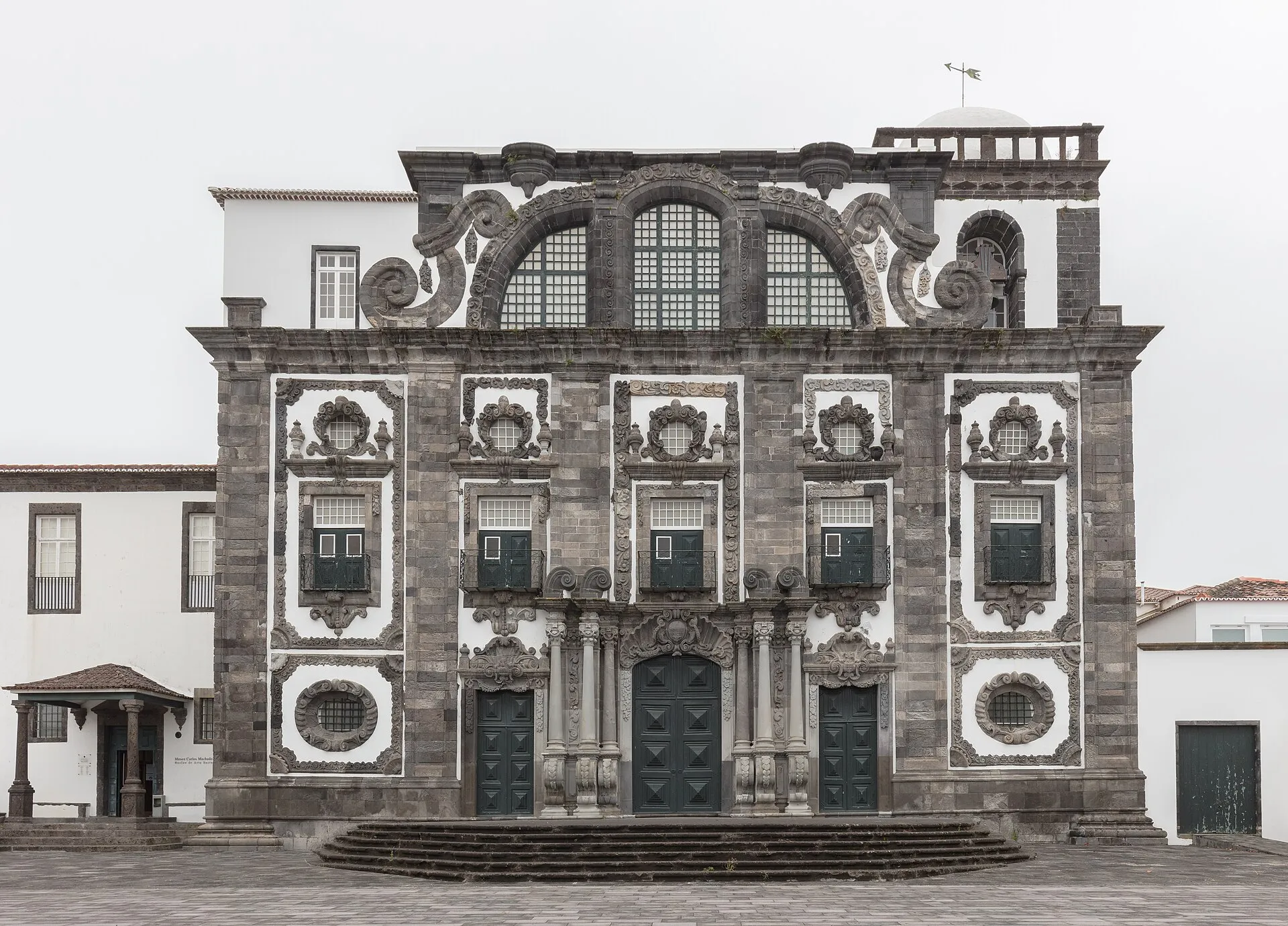
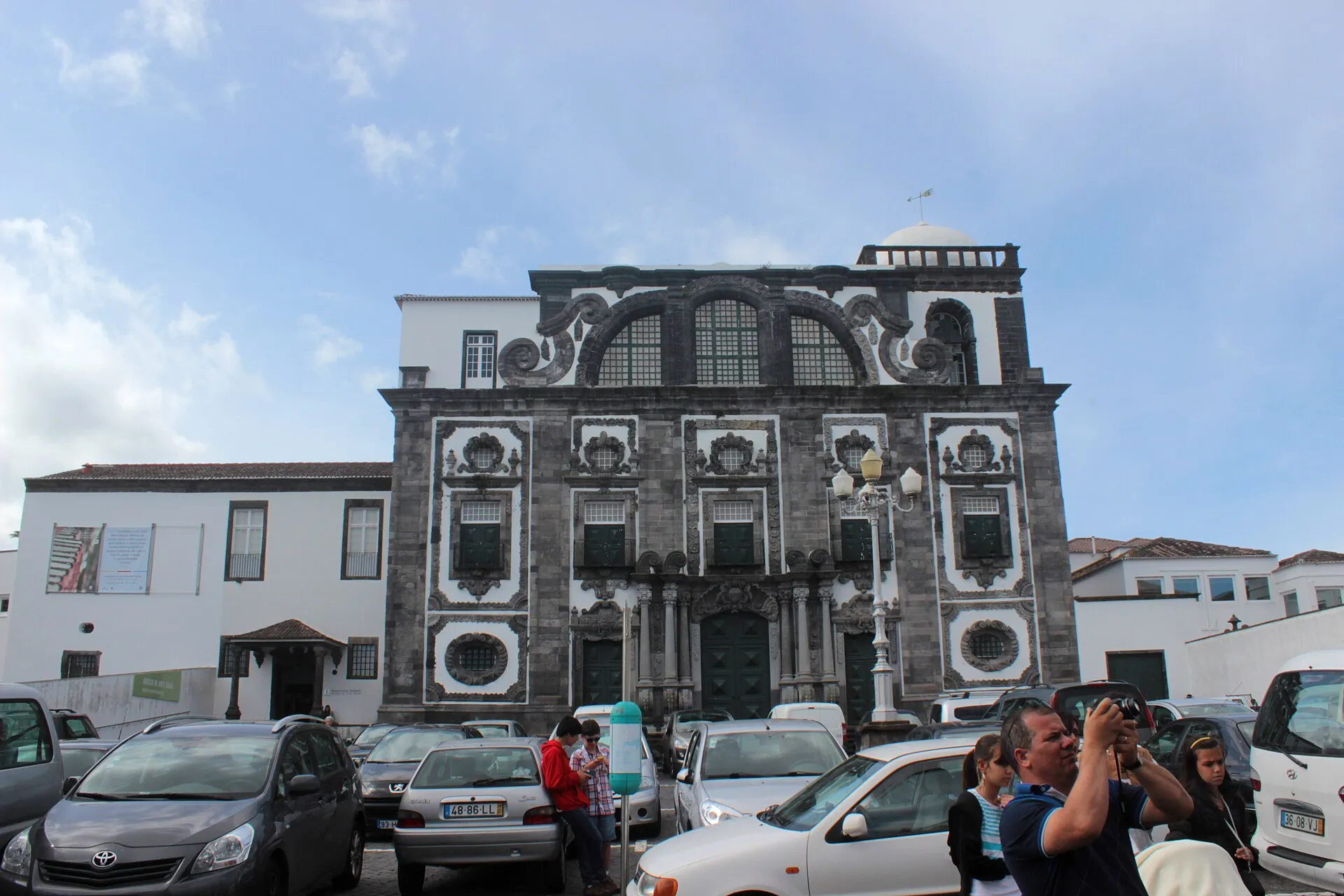
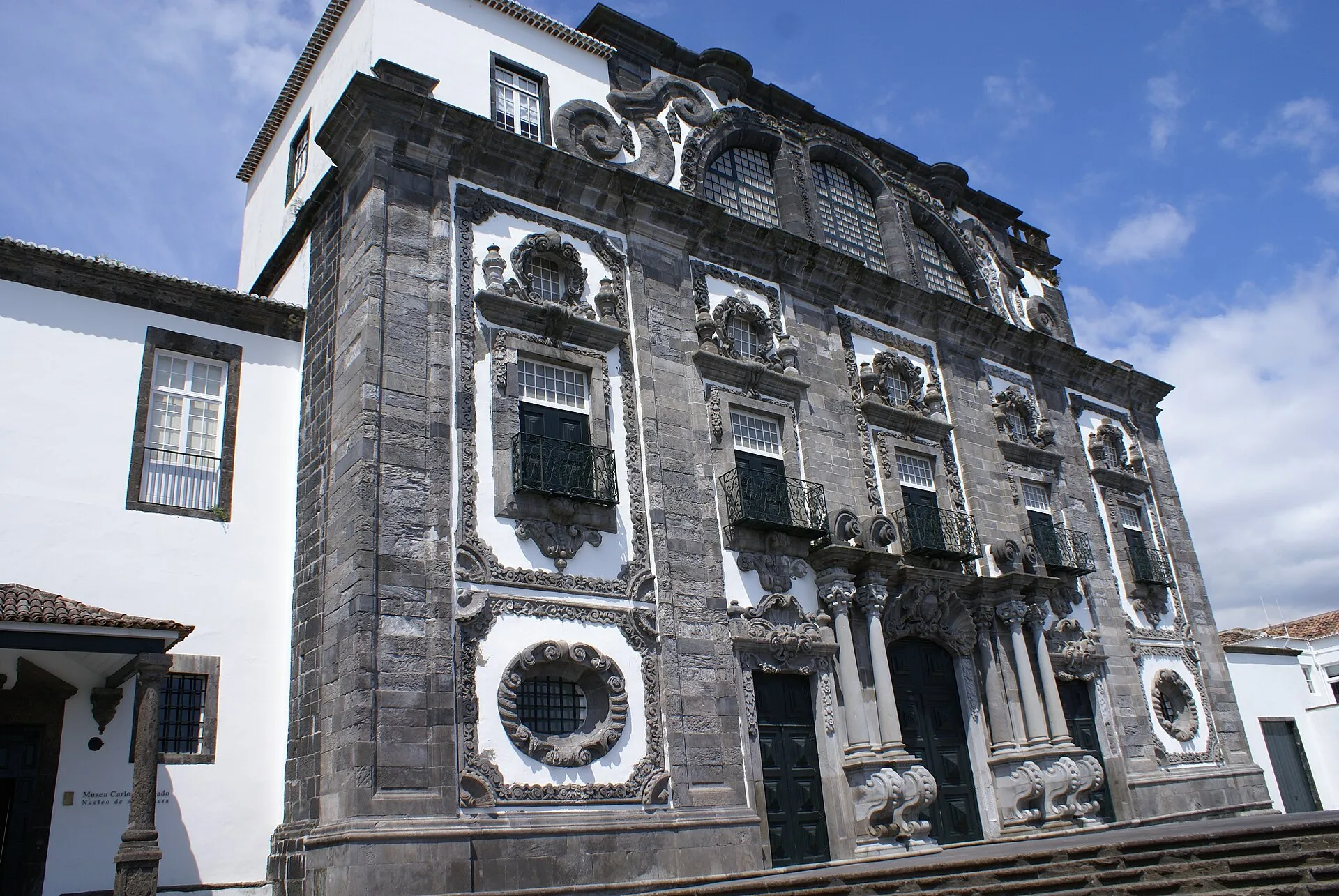
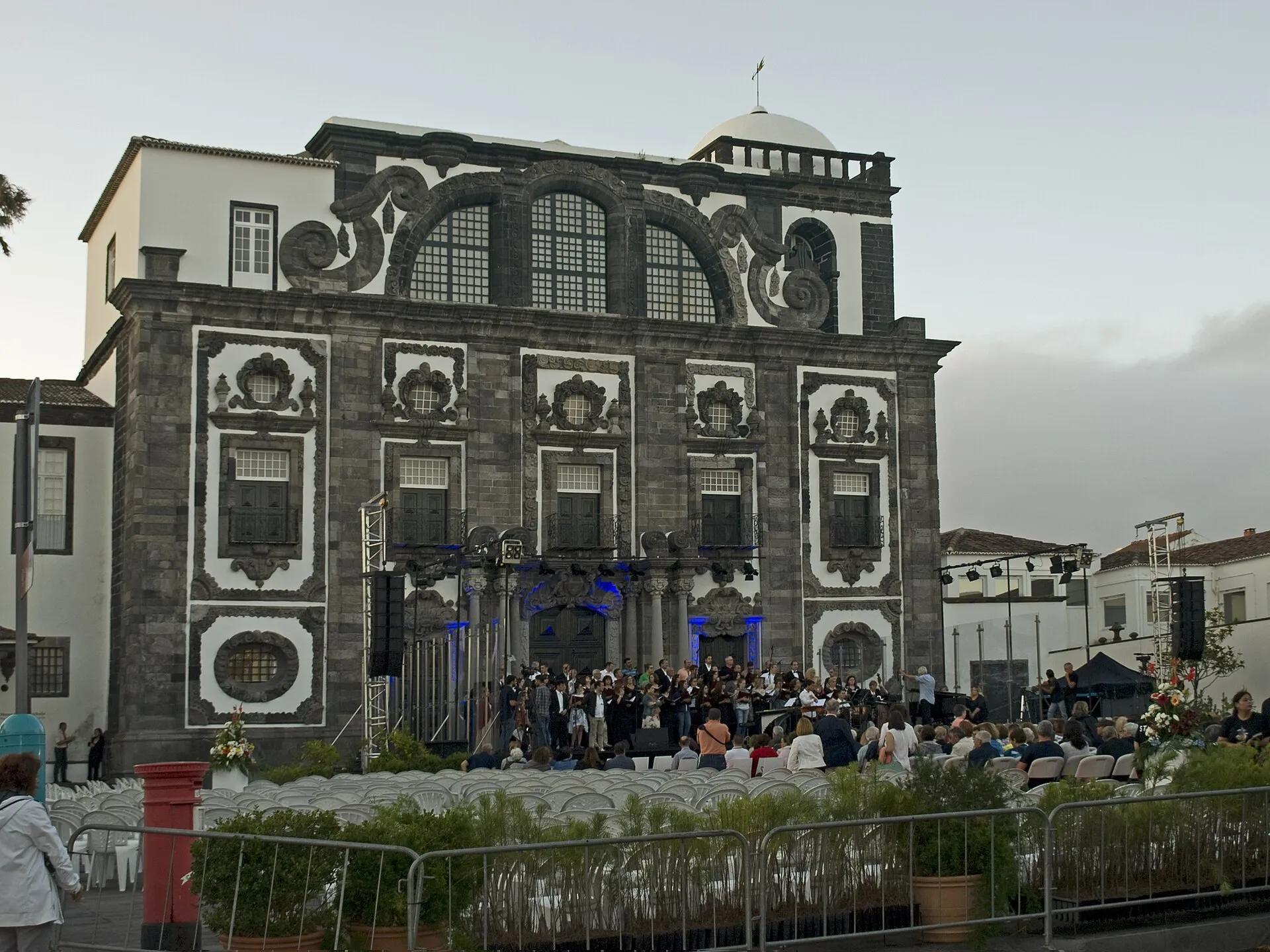
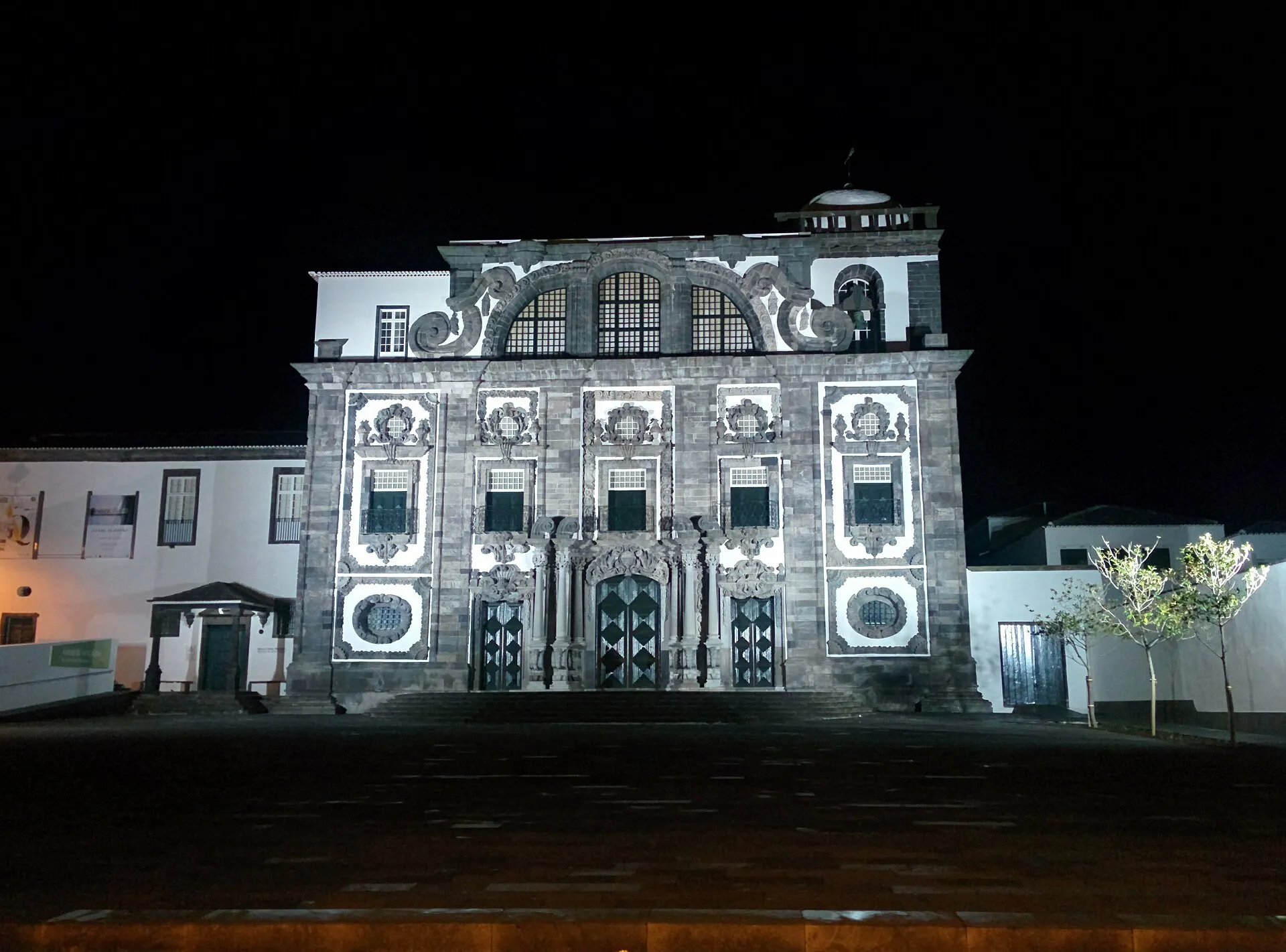
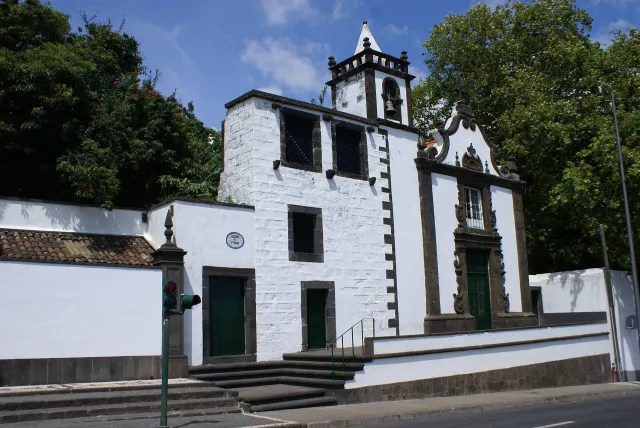
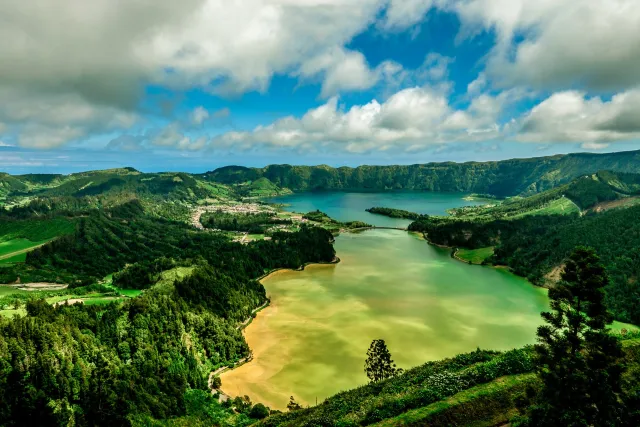
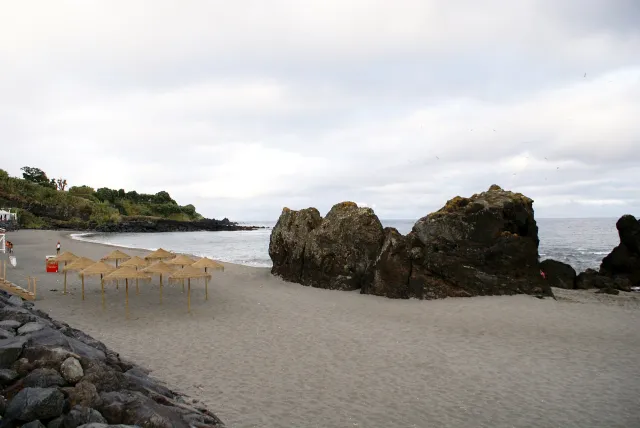
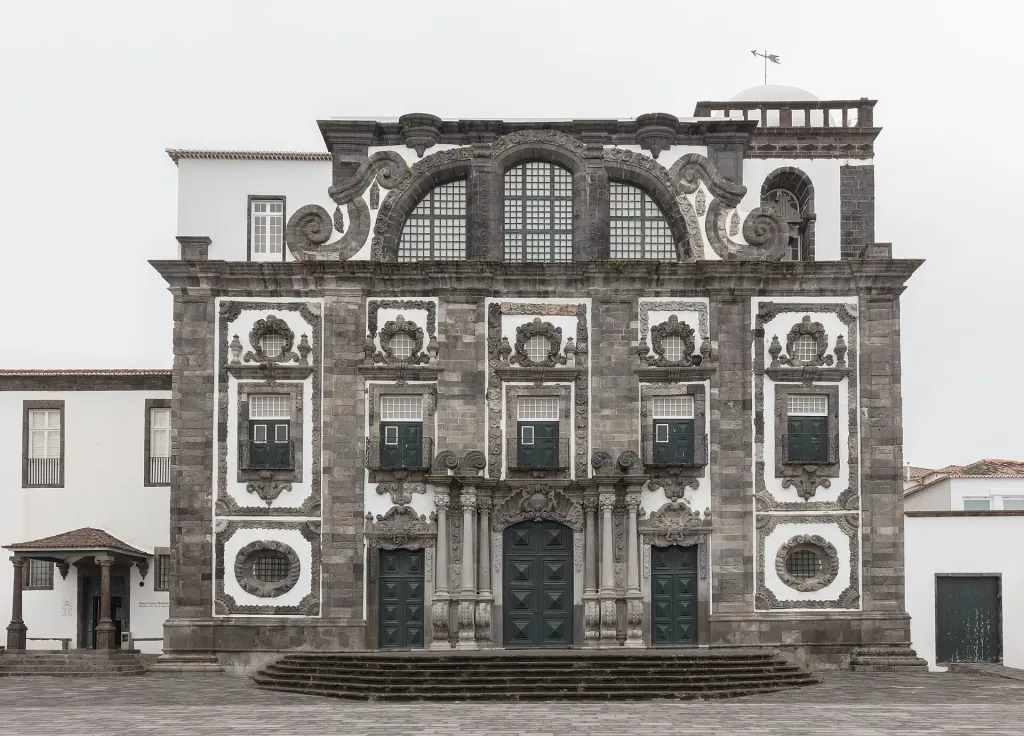
The first record associated with the College Church came from a deed on 26 November 1568 by João Lopes, who willed a 20-year allotment of 30 móios of wheat to the Company of Jesus, until such time a college was founded. A similar proposal was made by the College of São Lourenço in Porto, and later Grégorio Afonso provided one moio of wheat in his testament of 23 March 1572. The first Jesuits arrived in Angra do Heroísmo on 1 July 1570, two priests then travelled to São Miguel between August and September of the same year.
Three priests travelling to Angra between 1572 and 1573 were forced to shelter in São Miguel. They were collected by João Lopes, who offered them shelter, while urging them to remain in Ponta Delgada in order to found a college on the island. But, it was only in about 1588 when João Lopes was able to help begin constructing the building; he acquired various houses around the current location, paying between 700$000 and 800$000 réis, while Manuel da Costa offered other buildings.
In January 1591, the residences for the college of Todos os Santos (all saints) were founded, and donated to the municipal government. At this time, Francisco Rodovalho donated eight alqueires of land alongside the college, João Moreira a few houses (which were destroyed for the construction), and the Quinta da Fajã was purchased for the college by João Lopes, Gaspar do Rego de Sousa and Francisco do Rego de Sá, in order provide an economic base to support the institution. The first cornerstone was erected on 1 December 1592 by the local governor, Gonçalo Vaz Coutinho on All Saints Day. Later that year the first prelate of the residence, Father Fernão Guerreiro, was appointed to the college, and the institution first opened on 1 November. On 28 February 1593, the Church of Todos os Santos was first inaugurated.
But, by 1597, a proposal to close the college had been addressed (which remained operational), yet, in 1600, the municipal government requested that the college provide classes in Latin for the island. This was accomplished in Ribeira Grande during the 17th century, when a school for Latin and Moral Theology was opened.

 1 / 5