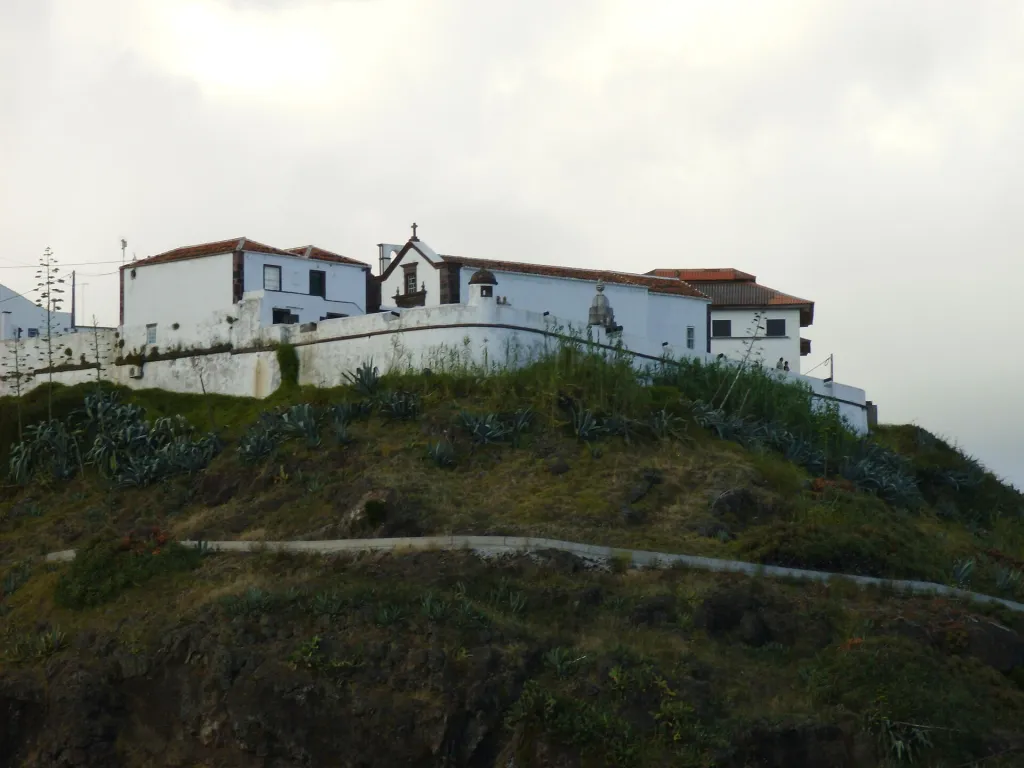
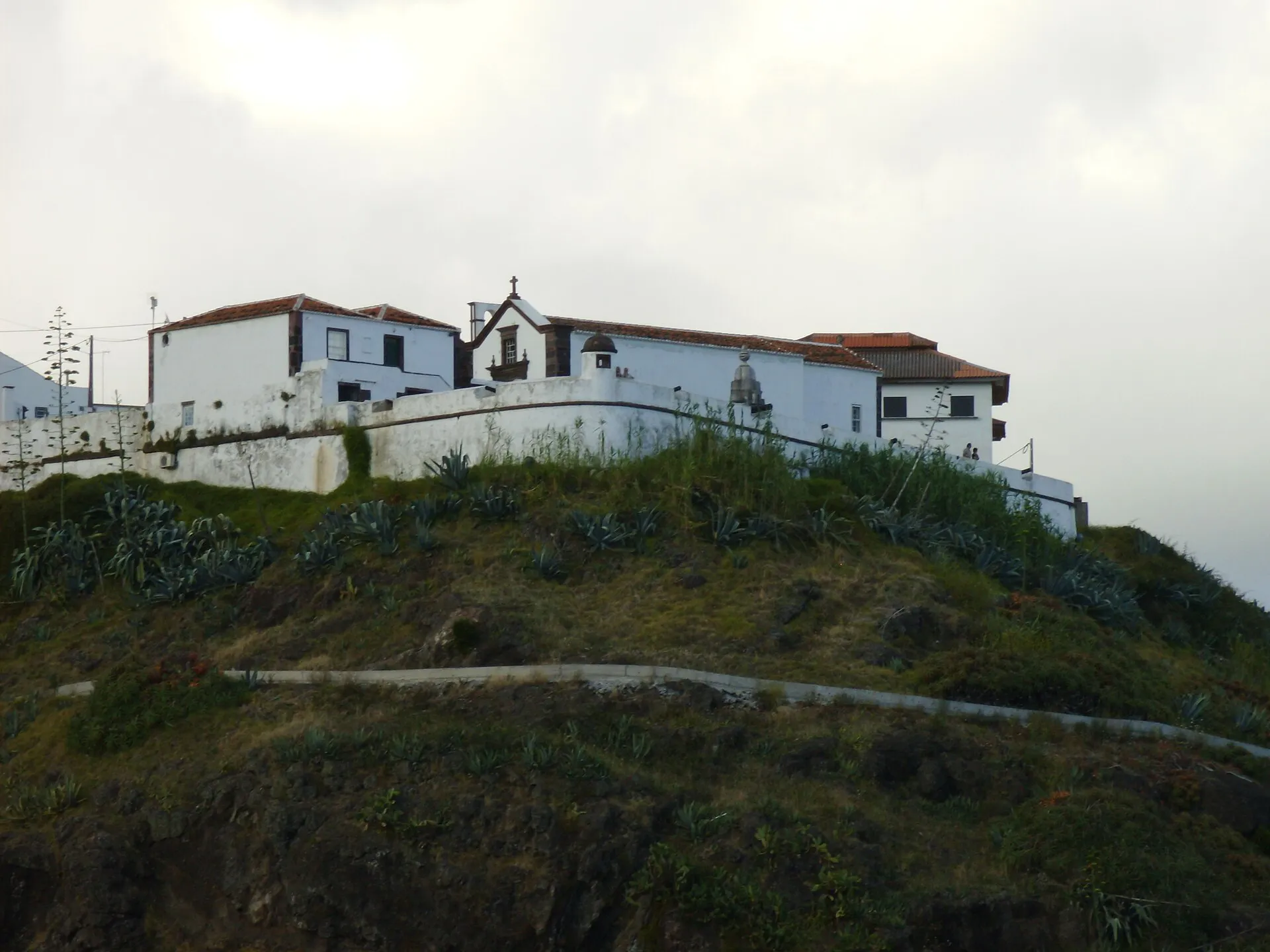
Sometime during the 17th century, it was likely that the fort was constructed, at a time when the Captain-major, João Falcão de Sousa, exercised his position as superintendent for the island's defense. A 1717 report described these defenses as:
The defense of the town, and all the island, it was little before, there was a league of ports that could be entered, and it was three times that the Mouros, English and French; but later they made in the Castle square, a fort with 14 pieces, and in front a fort with some; in front was another fort with a few pieces; in the town, two forts with its artillery; all this was not only under the direction of the Governor and the Donatary-Captain...but immediately an artillery captain with 30 artillerymen, in addition to Captain-major, officers and ordinance men..
In 1815, there is a reference to the fortification by José Carlos de Figueiredo:
Castle of São Brás at the town in the middle of the port had 14 pieces, being the best of the house of the Captain-major Francisco Barbosa de Sousa Coutinho, and those of the Castle are corrupt and little use.
On 28 February 1906, the fort was ceded to the municipal authority by the Secretaria de Guerra (War Secretariate). The walls of the fort were partially destroyed during the night, and its place a balustrade replaced the curtains.
The interior monument was inaugurated on 4 October 1929.
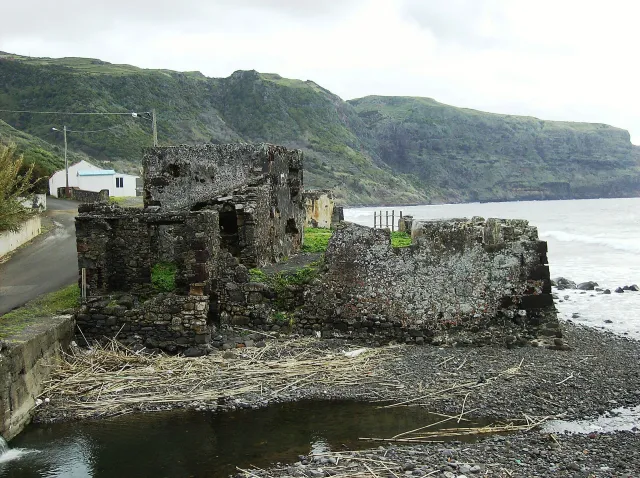
During the 1960s, the fort was reconstructed by municipal council. Completed four years later, the fort was re-inaugurated on 11 December 1966. It was at about this time that the movement to take control of the fort began in 1969; the council was interested in obtaining the right to the building of the old barracks, which was under the control of the Ministério das Finanças (Ministry of Finances), in order to demolish the structure for imperativos de urbanização ("urban imperatives"). The ruined structure was constituted by a two-story building, with an area of 87 square metres (940 ft2), a small terrace house that was 58 square metres (620 ft2) and a vaulted magazine in ruins, with 28 square metres (300 ft2).