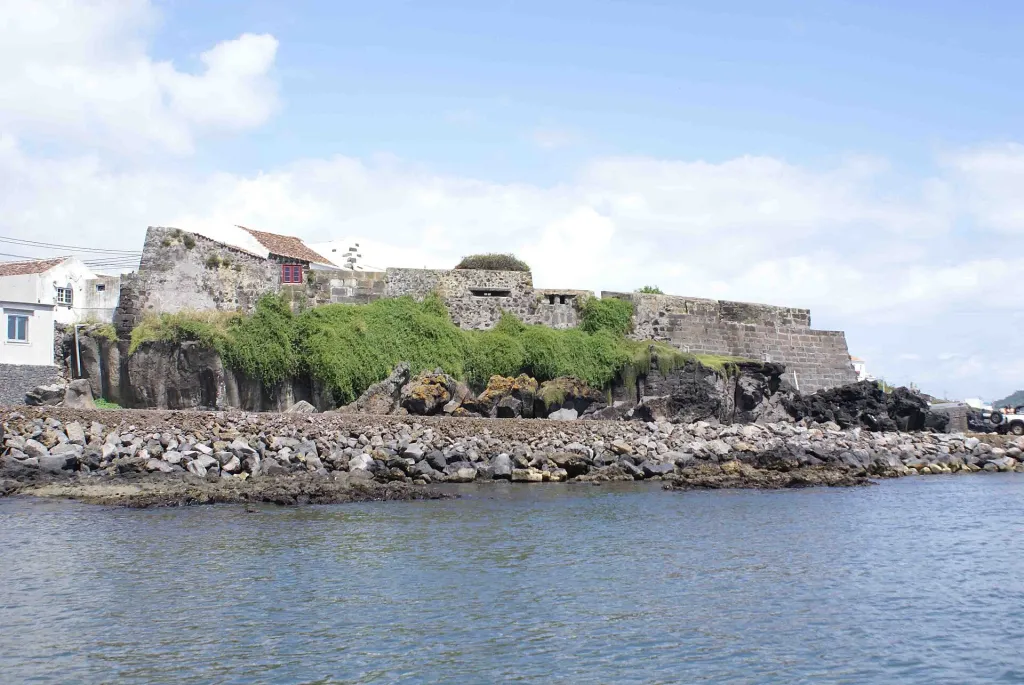
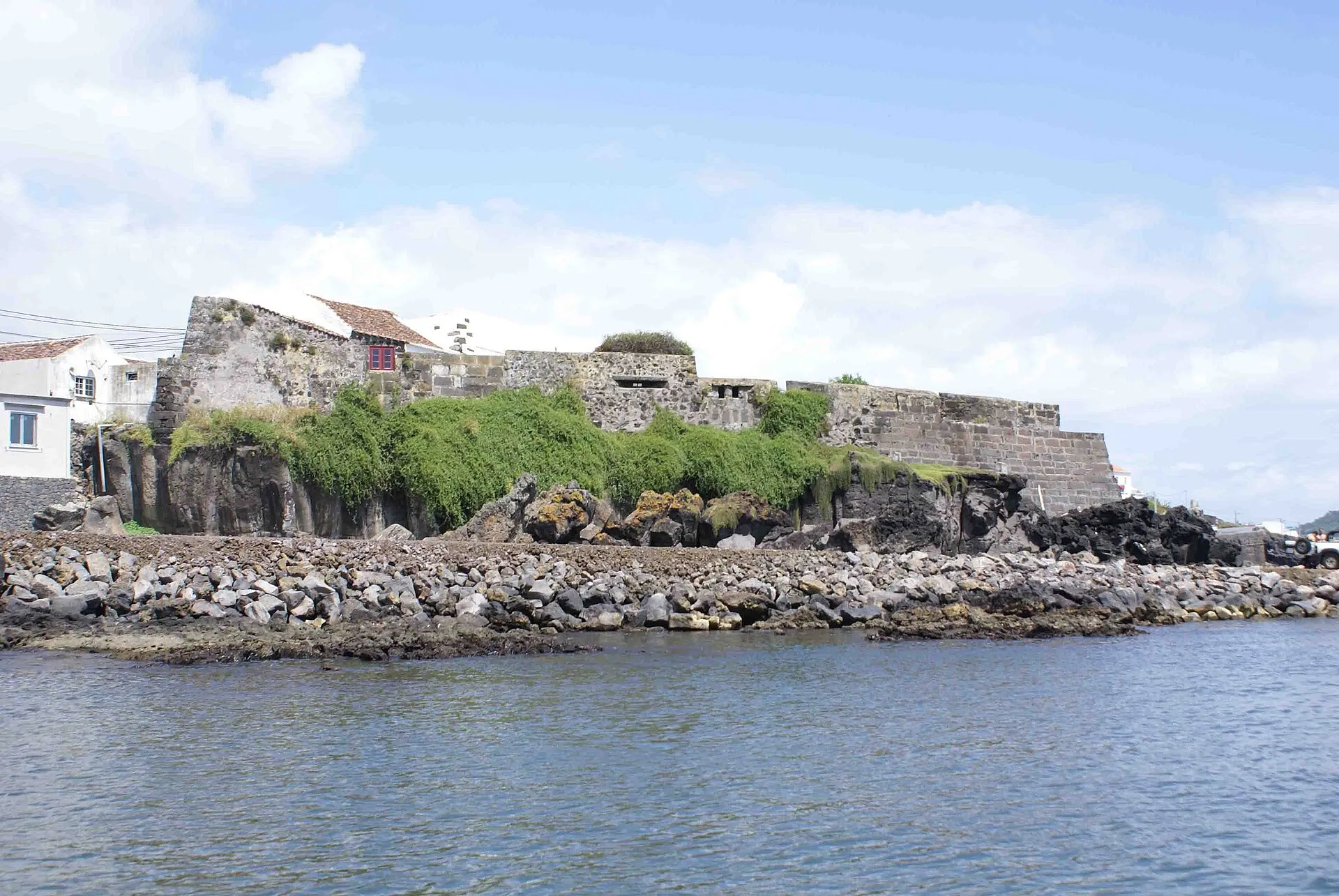
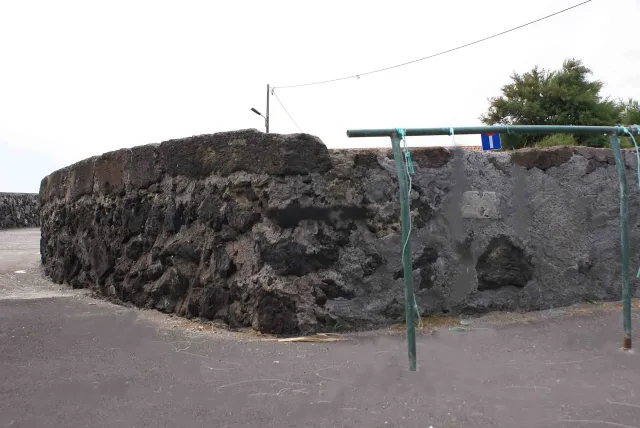
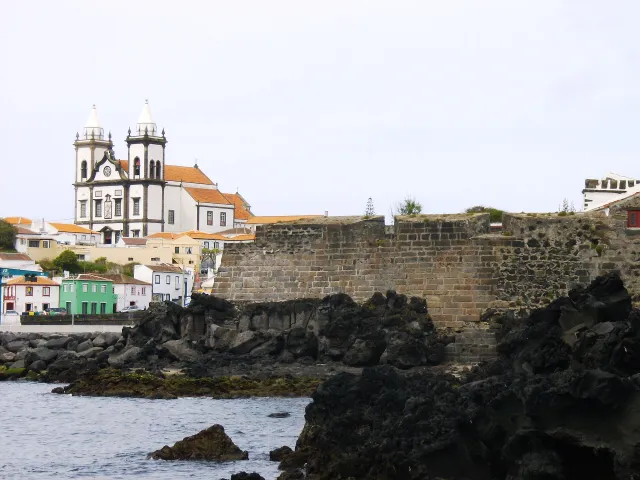
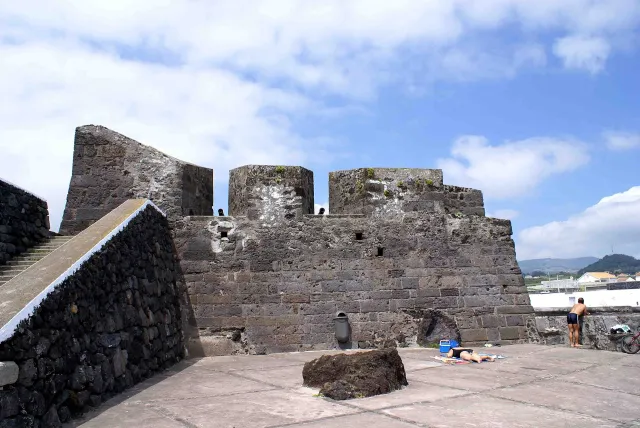
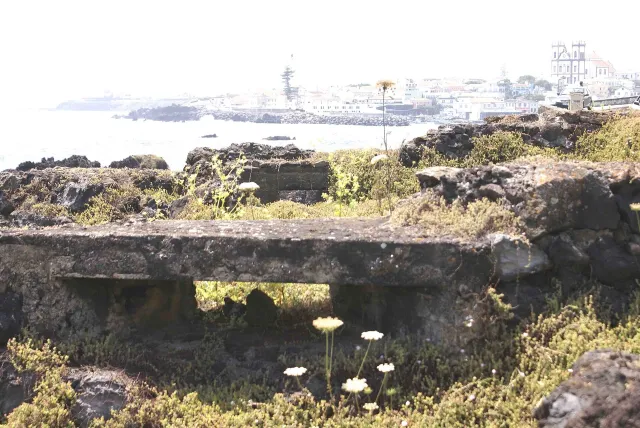
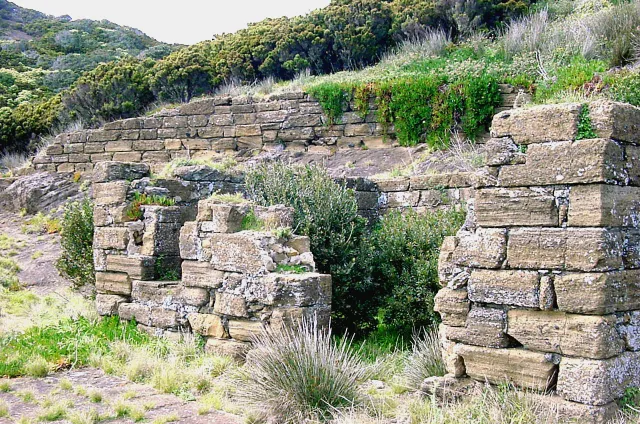
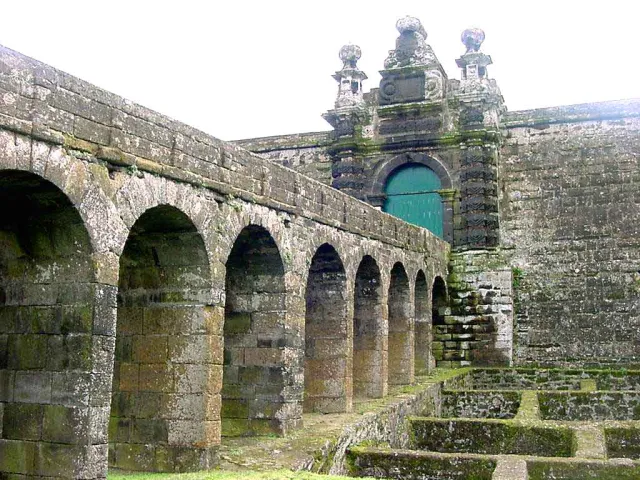
It was in the shadow of the fort, that the carracks from Indian trade routes would appear, making landfall for the first time.
With the installation of the Captaincy General of the Azores, its state was described in the following terms (1767):
Fort of Prainha of São Mateus. This is the largest (of the redoubt fortresses) that are on the west of the city of Angra and remodeled anew. It has six canons and requires another two and another six...another two with its emplacements and to garrison eight artillerymen and two auxiliaries.
It was referred to as Forte da Praya de S. Matheus, in the report Revista aos fortes que defendem a costa da ilha Terceira, by adjutant Manoel Correa Branco (1776), who indicated,...it is the best on the coast. This fort was rebuilt, and does not require reconstruction.
In 1767, in his Revista dos Fortes (Review of Forts), engineer/sergeant major João António Júdice, conducted a review and expansion under orders from the Captain-General of the Azores; in his plans he referred to the fort as the largest located to the west of the city of Angra. At that time, the fort was protected by between six and eight artillery pieces and 32 auxiliaries; it had six canons, equipped with pieces in steel, all in good condition. He concluded that the fort's artillery should be reinforced with two cannons and their respective equipment.
By the beginning of the 19th century, José Rodrigo de Almeida, developed a plan that included six cannons, each three in directed to the sea.
Between 1828 and 1834, the fort took on a great importance during the defense of the island, owing to the Civil War, when Terceira became the headquarters of the Regency supporting Queen Maria II. During this time (1830), the fort's plan was reinforced by José Rodrigo de Almeida.