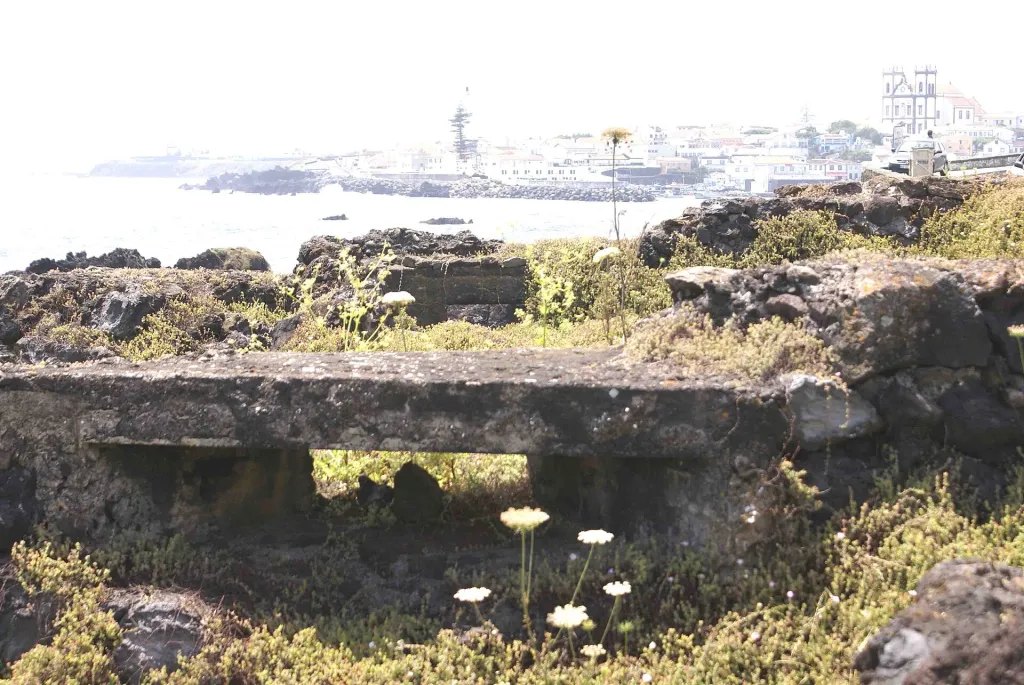
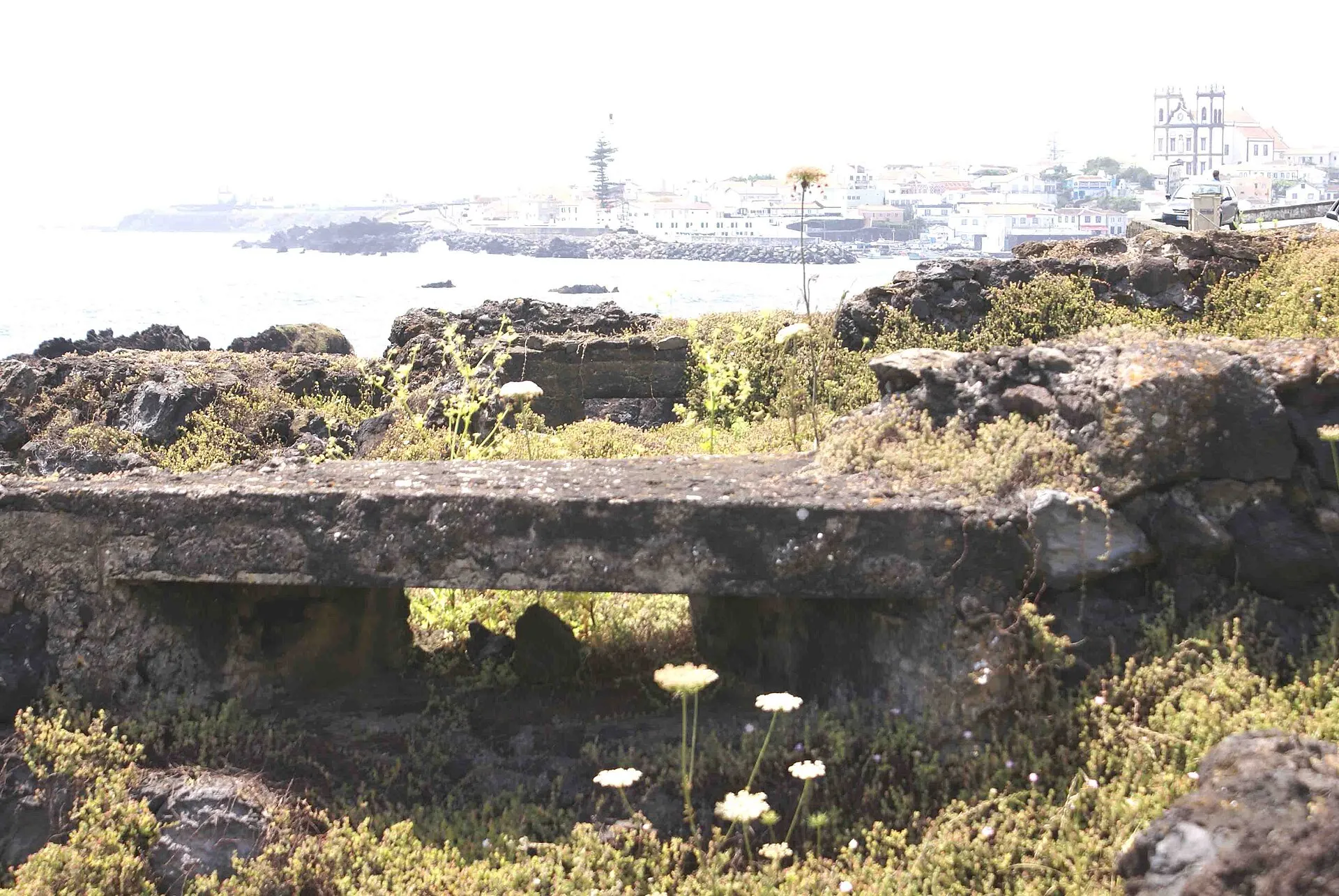
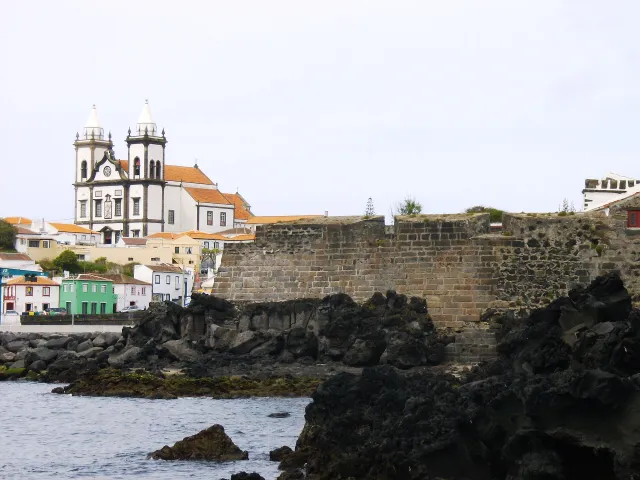
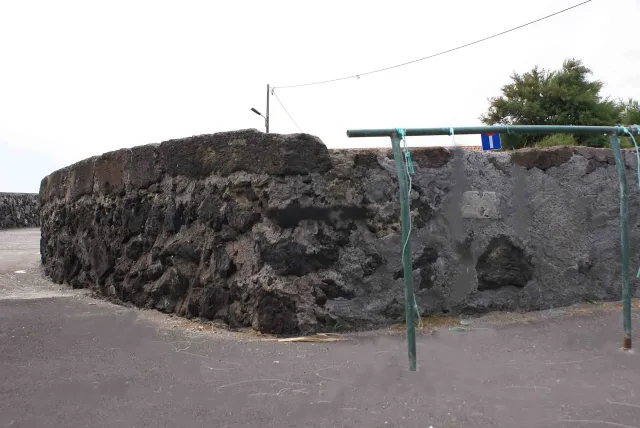
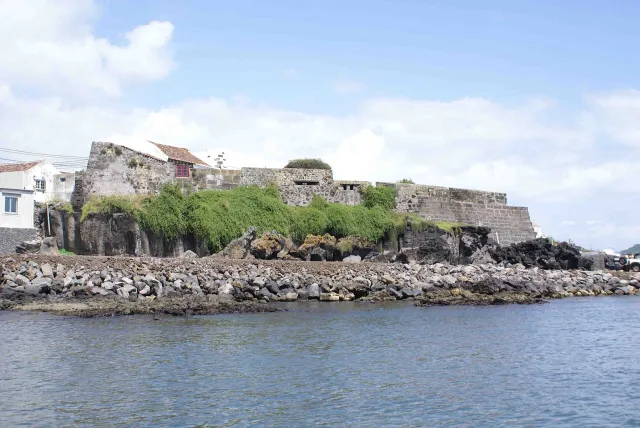
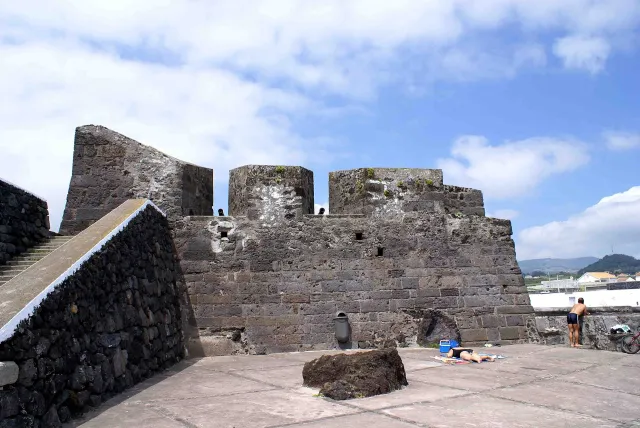
It is unclear when the fort was erected, although its design indicates that it followed the plans of engineer Tommaso Benedetto, of the mid-16th century. Therefore, for these reasons, likely remotes the period of the Corregedor of the Azores, Ciprião de Figueiredo e Vasconcelos (around 1581), or later, immediately after the Portuguese Restoration War, in 1640.
With the installation of the Captaincy-General of the Azores, the fort was referred in the following terms (1767):
"Redoubt of Má Ferramenta. Needs a new gate, it has three canon emplacements, three iron canons able, with their good repair, need to stave three and twelve auxiliary gunners."
A similar report (Revista aos fortes que defendem a costa da ilha Terceira) by Manoel Correa Branco, writing in 1776, found repairs were necessary at the site:
"...at the guards' barracks, which should be done at appropriate place and the gates' emplacements, which should have been positioned towards the land."
During the Liberal Wars (1828-1834), the site continued to be of strategic importance for the Liberal forces of Queen Maria II, which was mapped-out in 1830 by José Rodrigo de Almeida, in his "Colecção de Plantas e Alçados de 32 Fortalezas dos Açores"(Collection of Plans and Elevations of the 32 Fortresses of the Azores) found in the Gabinete de Estudos de Arquitetura e Engenharia Militar (Cabinet for Architectural Studies and Military Engineering) in Lisbon.
A report by Field Marshal Barão de Bastos in 1862, found that the fort "...is in a good state, but requires that its emplacements towards the sea should be raised to a greater height." He observed:
"Its only a barbette, where one finds placed a single 24-calibre piece and deserves to be conserved because this area of two miles to the point of São Diogo do Castello de São João Baptista, crosses effectively its fire with the said point, defending also the light's point and that of Silveira."