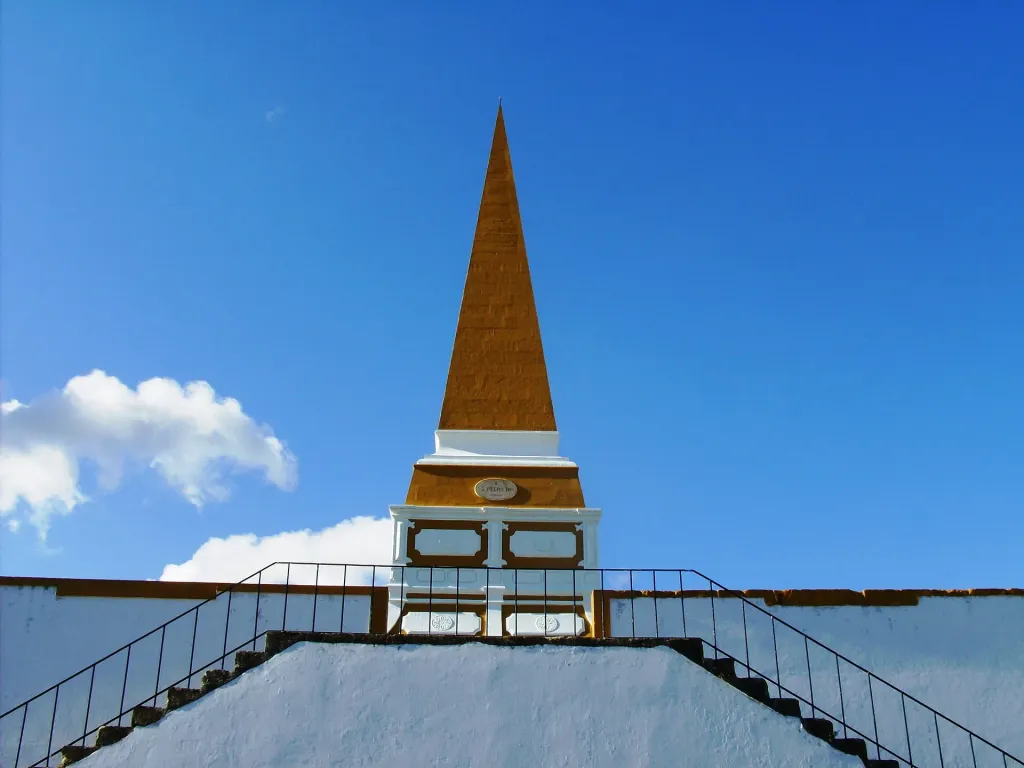
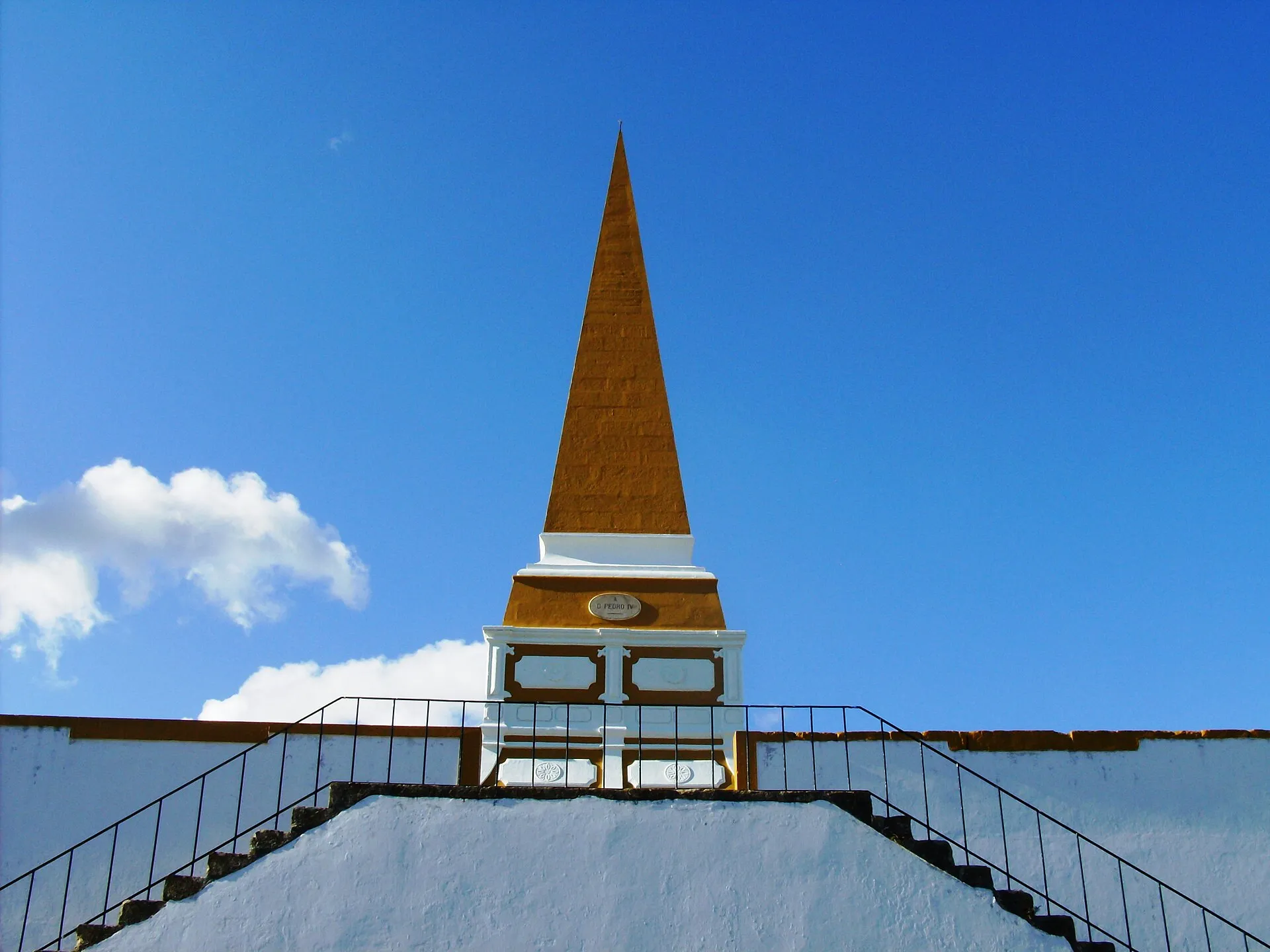
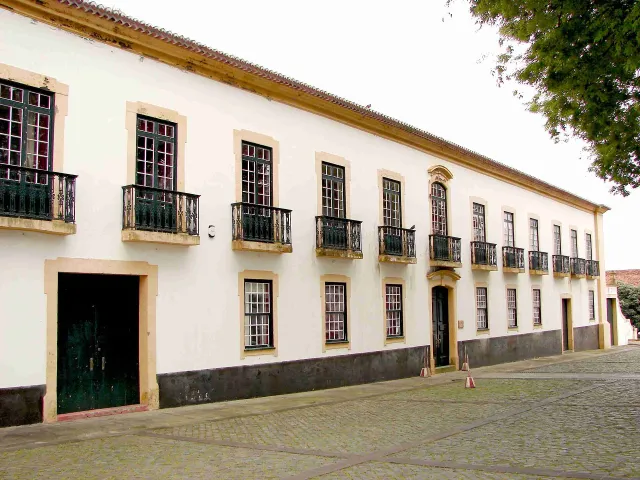
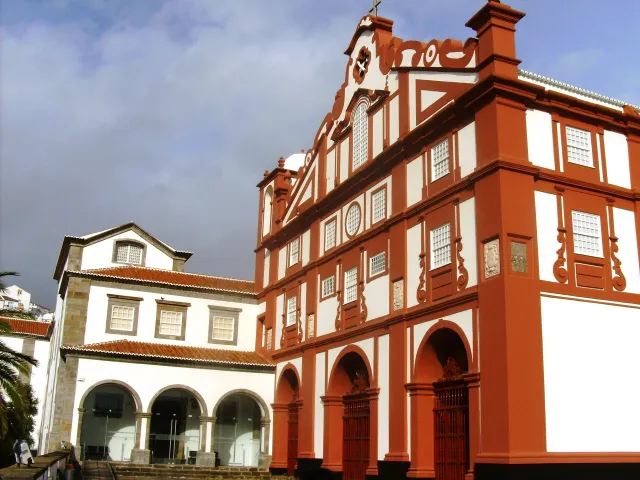
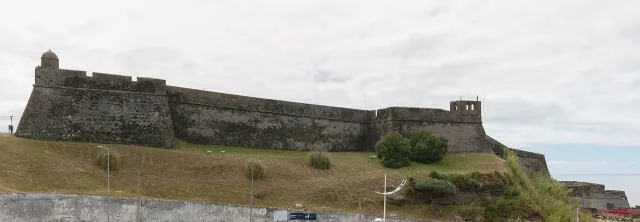
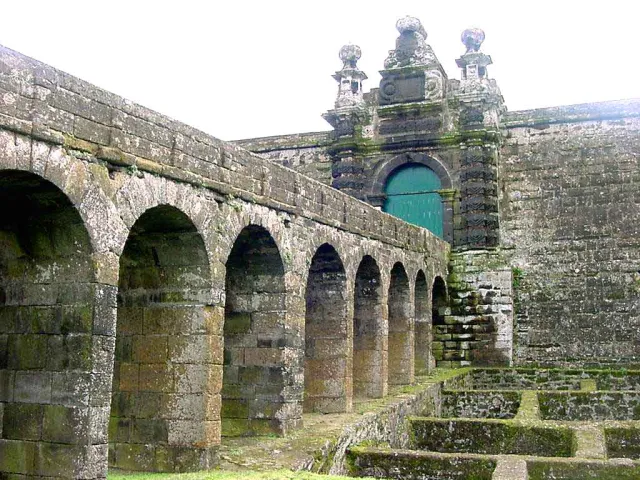
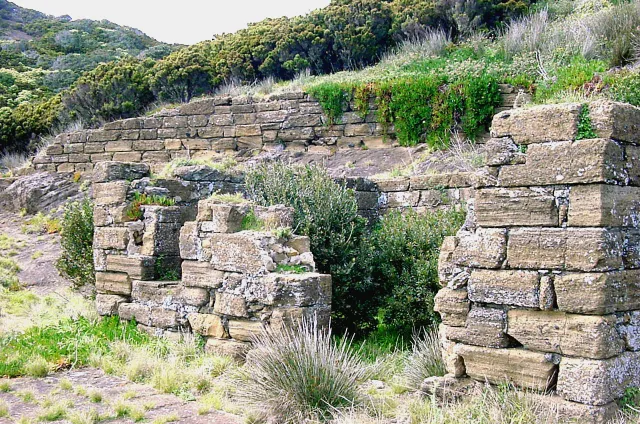
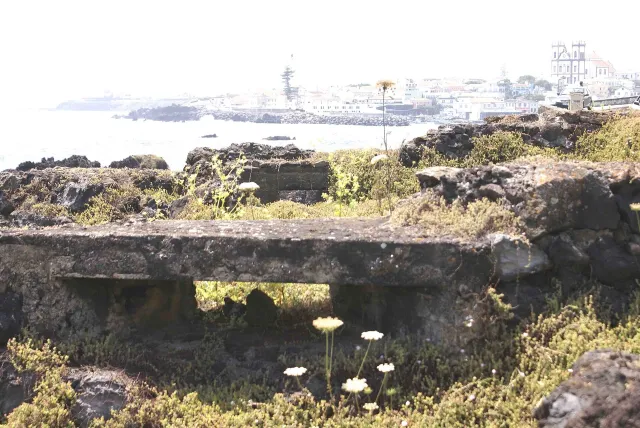
The first fort to be built in the archipelago, the Castle of São Luís was erected between the 1460 and 1470, by the founder of Angra, Álvaro Martins Homem. It was a fortification of modest proportions, established on a hilltop (the current Alto da Memória) with a dominant position over the valley, river and harbour. Its design was in keeping with the late-medieval military design and constructed on a high platform, within the earth and away from the sea. Its elevation and slope resulted in an artificial ravine, whose waters were captured by Álvaro Martins (1461) to move his milling wheels along its course; the fortification became popularly known as the Castle of Moinhos or Castle of Mills. Writing in between 1644 and 1711, Father Manuel Luís Maldonado wrote of the many waterways of Angra, noted several of the mills that dotted the path of the main ravine: the mills of Janela, Cova, Picão, Rego, Madeira, Calçada, Calçadinha, Fábrica, Muro, Duas Portas, São João de Deus and the Moinho Novo. Similarly, Gaspar Frutuoso mentioned these mills and waterways, noting that: in the hillock that circles Angra, in one of the higher hilltops to the north, is a castle fort with munitions and artillery, newly renovated and provisioned, which had earlier been weak, erected solely for the shelter and defense of its residents.
Although Álvaro Martins expected to receive the royal donation of lands in Angra in 1474, the King substituted he donation with the title of to the Captaincy of Praia. The first Captain-major of the Captaincy of Angra, João Vaz Corte-Real found no reason to continue the defensive fortification. Unfortunately, years later, the island was attacked by Castilian sailors that initially landed in Angra and then marched on Praia. For this reason, in 1482, the Infanta Beatrice, who governed the islands on behalf of her son (the Captain-Major D. Diogo), sent a letter to Álvaro Martins, warning him that Castilian vessels continued to haunt the seas of the Azores. In order to reinforce coastal defenses, she sent Pedro Anes Rebelo (as provider of fortifications), to guide Martins in the defense of his village.