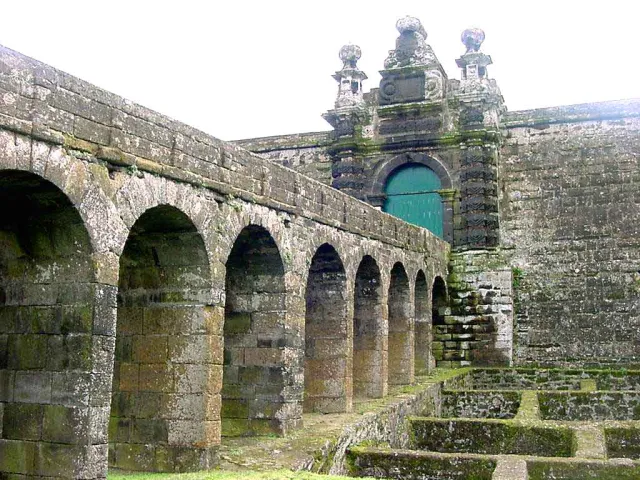
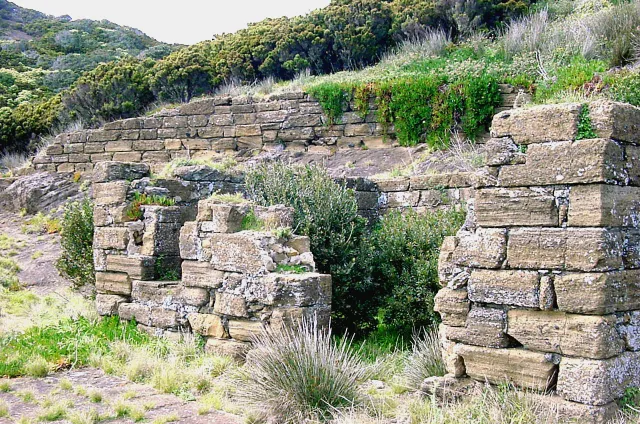
"There didn't exist at that time [during the Succession Crisis of 1580] all along the island coast some fortress, except that of São Sebastião, that if along the southern curtain there had been a few redoubts and stations, in the areas susceptible to enemy disembarkation, due to the indications and plan of engineer Timás Benedito, that in his diligence he undertook in the year 1567, after which, the French, led by the terrible pirate Caldeira, barbarously sacked the island of Madeira, and intended to do the same on this island, where it appears they were repelled at force of arms."
Drummond described the fort in this context:
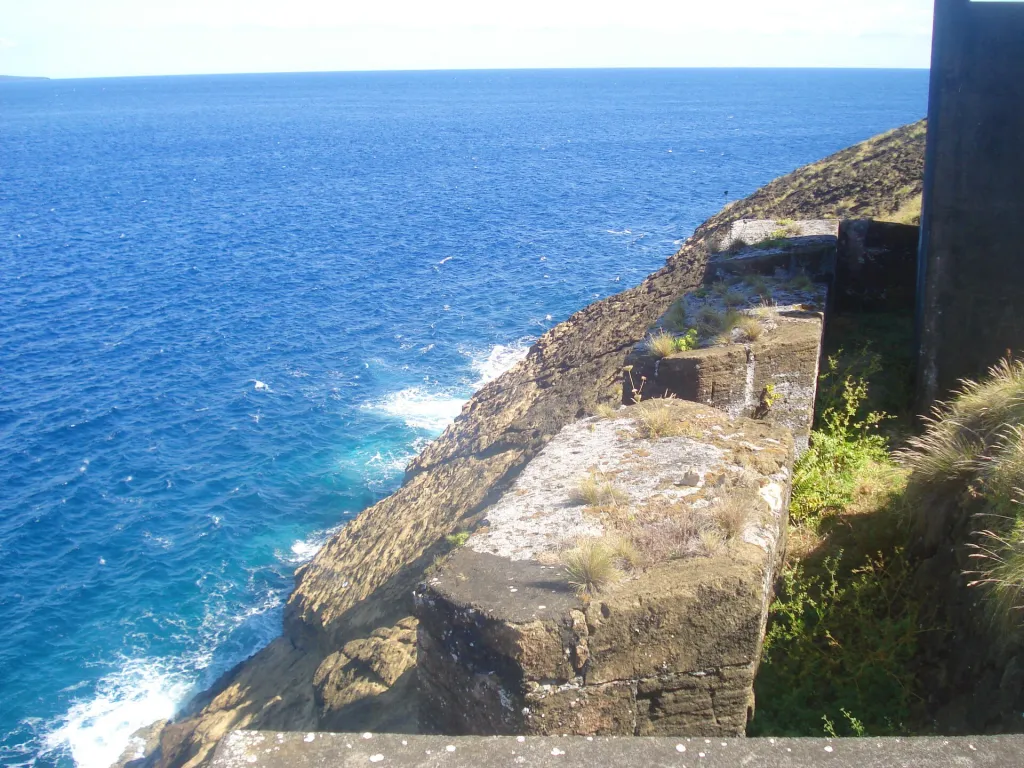
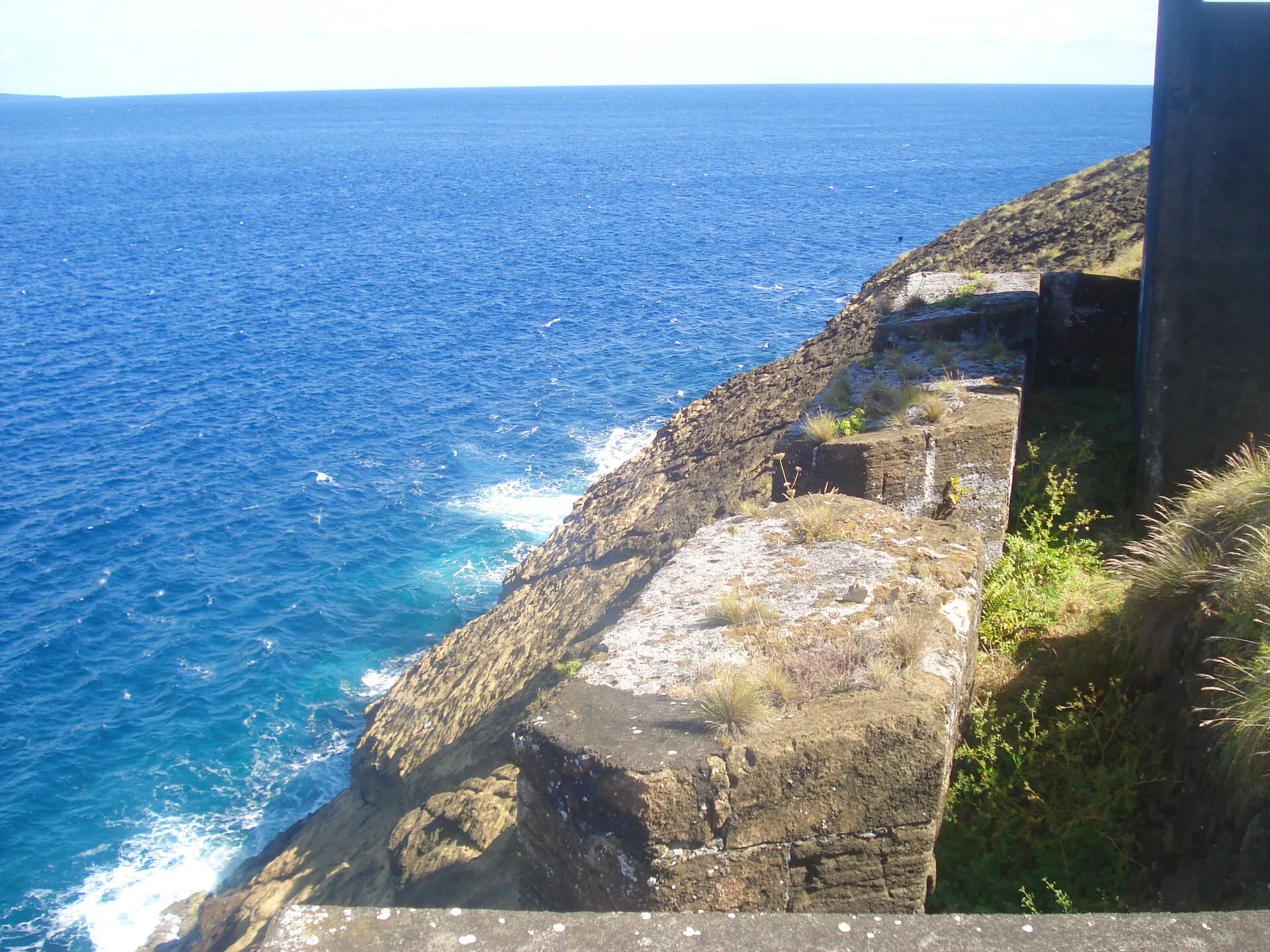
In the bay...das Mós, which is the deepest of the island, and where the Minas islets, well recognized in the maritime charts, they constructed the fort of Greta; and the Fort of Santa Catarina das Mós, for their situation and construction could be considered a castle; and a wall fortification to enclose it, whose remains there exist; and the islet created a bastion, in the locality where for years in front, the Municipal Hall ordered construct the Fort of Bom Jesus.
It was successful in the defense of D. Pedro de Valdés forces in 1581, following the Battle of Salga on 25 July 1583, but was unable to impede the landing along the Bay of Mós between 26 July and 27 July 1583 by Spanish forces under the command of D. Álvaro de Bazán. This larger force was responsible defeat the military resistance on the island of Terceira during the Conquest of the Azores.
During the War of Spanish Succession (1702-1714) the fort was referred to as the Redoubt of Greta, in the Fortificações nos Açores existentes em 1710.
Following the installation of the Captaincy-General of the Azores the fort was described in 1767 as: