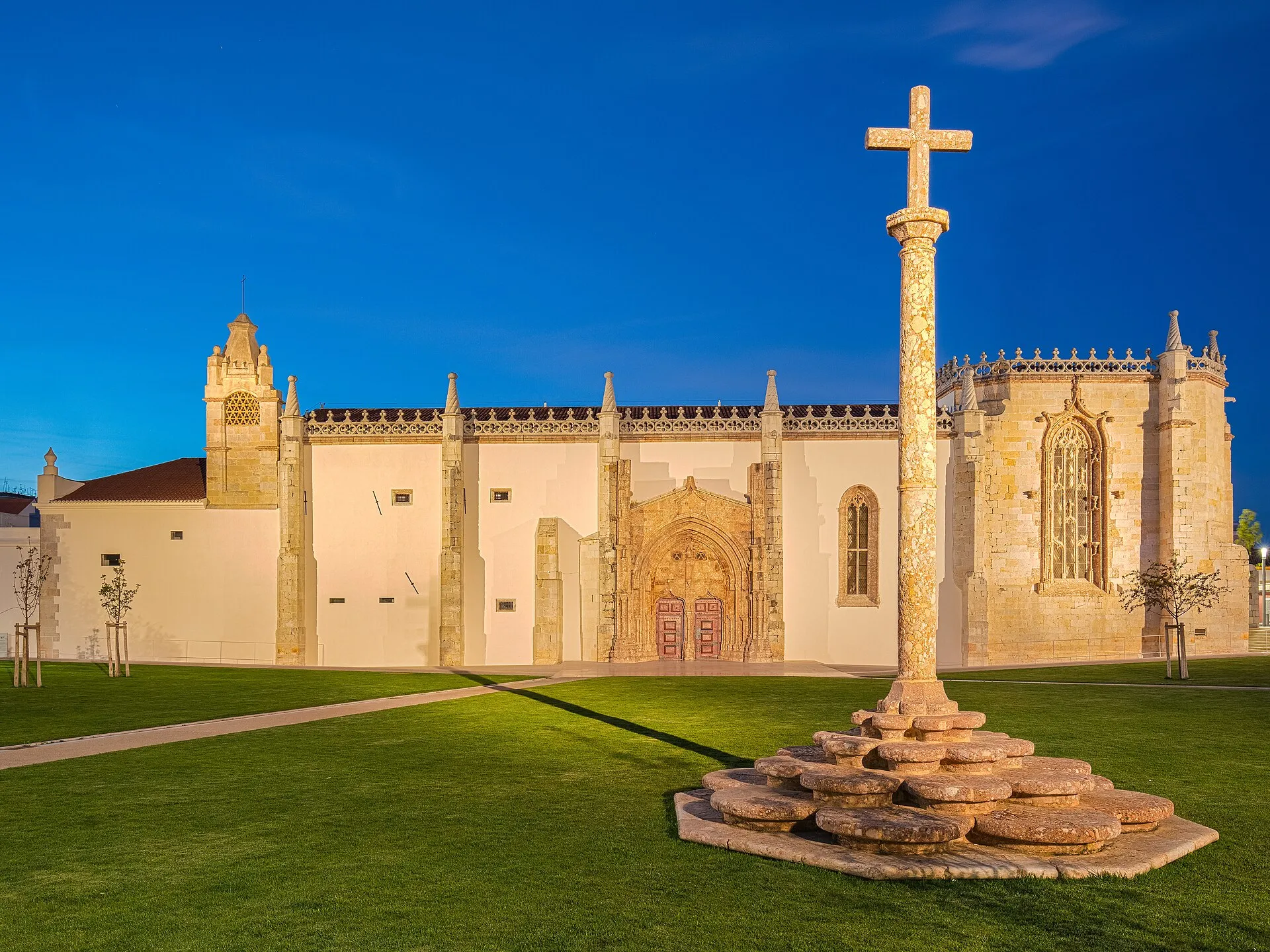
The monastery was founded around 1490, outside the city walls of Setúbal, by Justa Rodrigues Pereira, a noblewoman of the Portuguese royal court. After 1491, King John II started sponsoring the building of the monastery, which he commissioned Diogo de Boitaca (or Boytac), an architect of unknown origin, possibly French. After the death of John II in 1495, King Manuel I continued supporting the construction works through an annual payment to Boitaca for his work on the church.
Most of the church was built between 1490 and 1495, and in 1496 the nuns of Order of Poor Clares were already living in the monastery. After 1495, under Manuel I, the nave of the church was covered with stone vaulting, replacing the wooden ceiling originally planned. It is believed that, in the 1510s, King Manuel I ordered the apse of the church to be rebuilt, although this is contested by some authorities. Founder Justa Rodrigues Pereira and her family were buried in the crypt of the church, located in the main chapel.
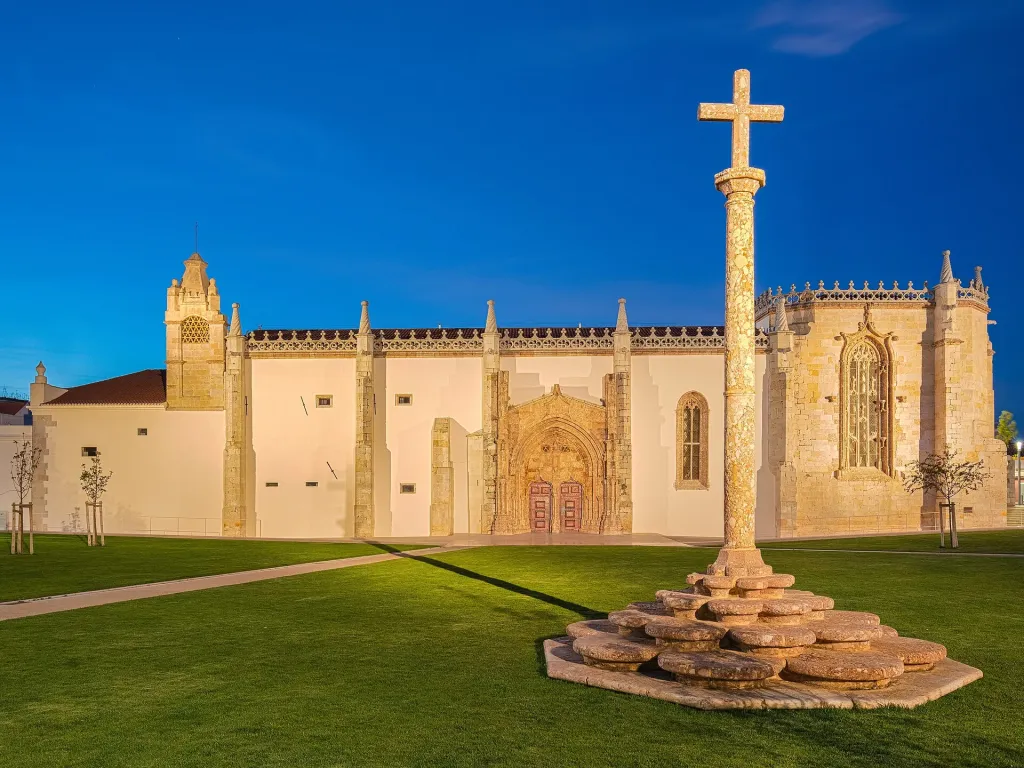
During the first half of the 16th century, Jorge de Lencastre, bastard son of King John II and Master of the Order of Santiago, donated to the monastery a large area in front of the South façade, known as Terreiro de Jesus (Jesus' Square). He commissioned an elegant cross in honour of the patron of the monastery, Jesus Christ, which was placed near the apse of the church. In the 19th century the cross was moved to the middle of the square.
The church and monastery were severely damaged by the Great earthquake of 1755. The earthquakes of 1531, 1858, 1909 and 1969 inflicted minor damage.
In 1992, IGESPAR, under the Cultural Ministry of Portugal, declared the monastery to be a national monument holding intangible value to Portuguese heritage.

 1 / 2