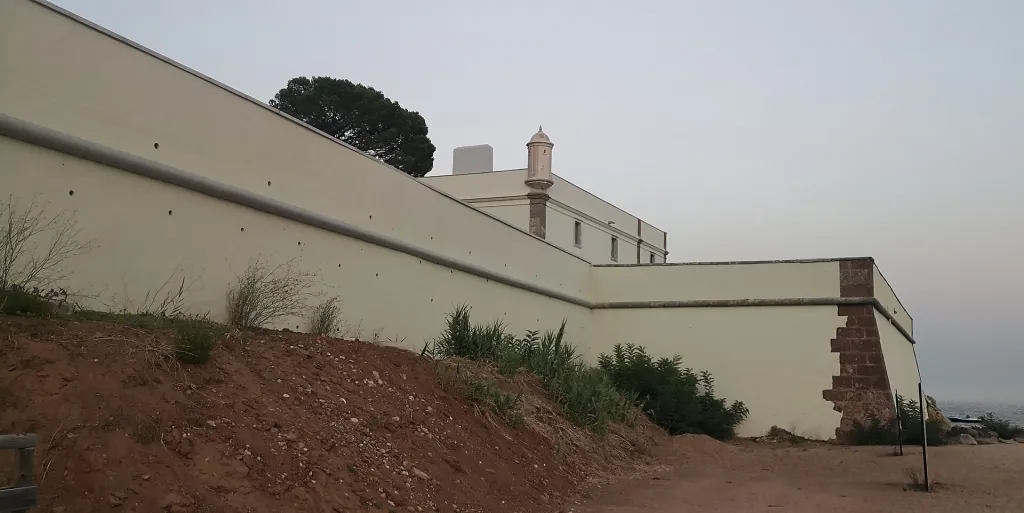
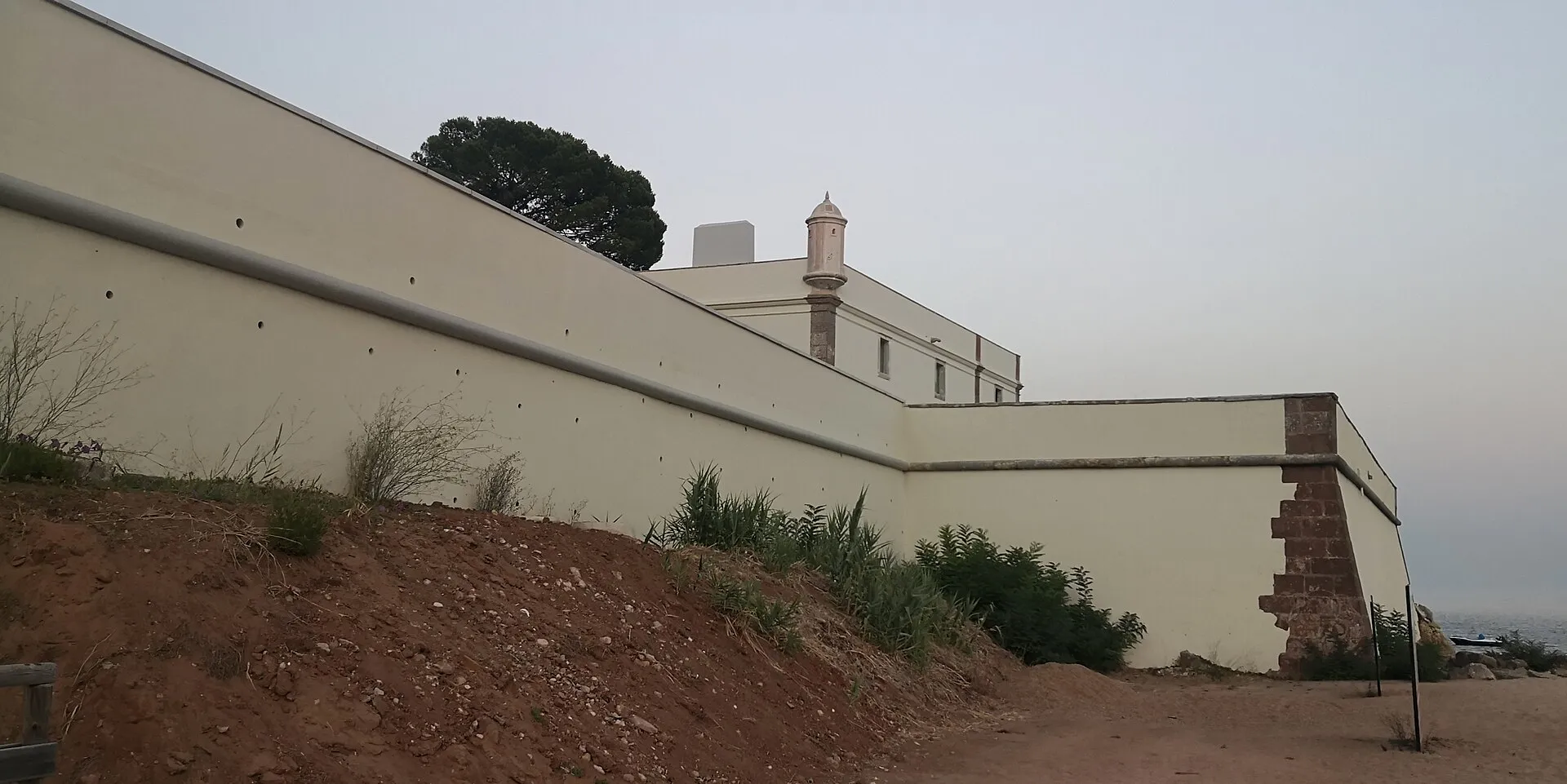
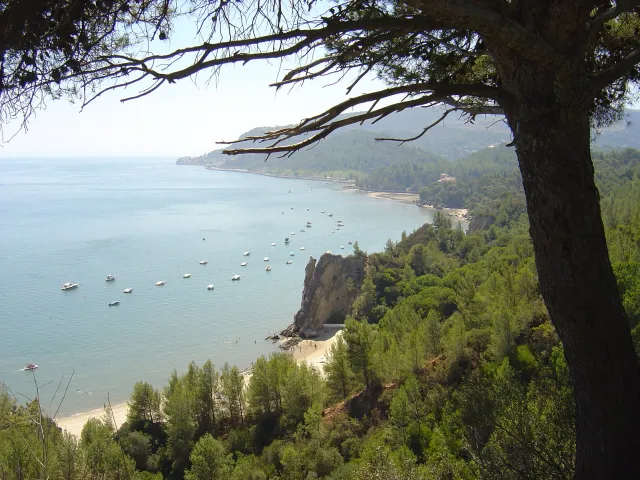
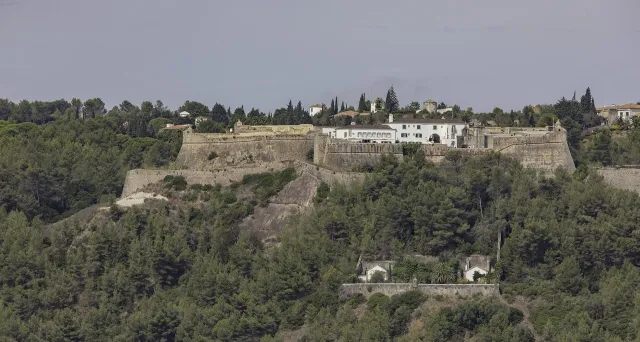
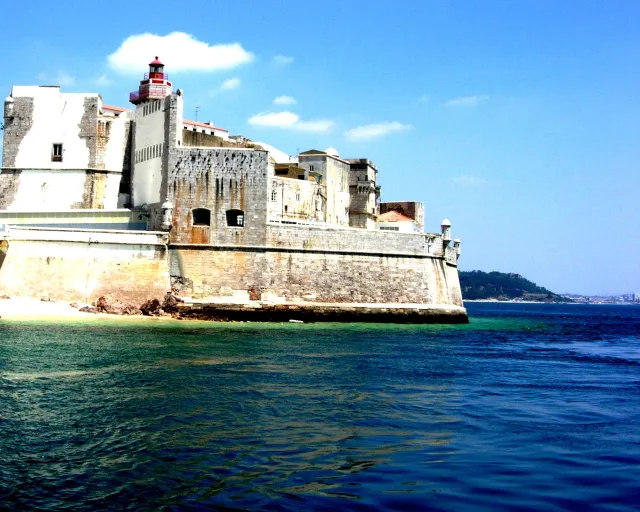
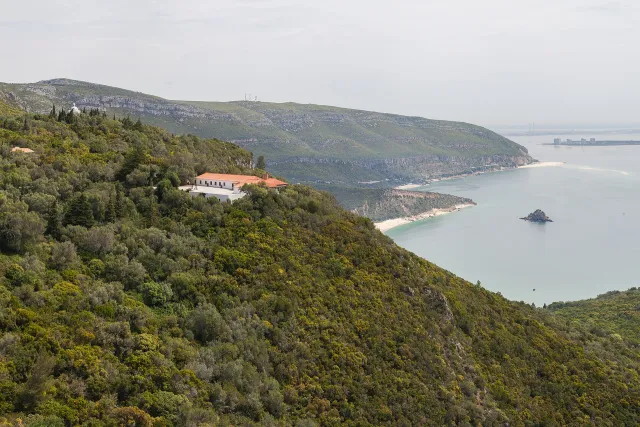
In the context of the complete remodeling of the defensive strategy of the kingdom implemented under the reign of John IV (1640-1656), included in the defense of the bar of Setúbal, this maritime fortification was initiated, alongside the Fort of Santiago do Outão. Work began in 1643 and its purpose was to reinforce the neighboring Fort São Filipe de Setúbal.
At the time, the owners of the salt pans and the sailors of the brotherhood of Casa do Corpo Santo contributed to the works of this fort, like those of Outão, and was completed under the reign of Peter II (1667-1706).
The Governor of the Fort of Albarquel, was inherently the Chief-Guardian of the Salt de Setúbal, a hereditary position belonging to the Botelho de Moraes Sarmento family. The title of Guarda-Mor do Sal de Setúbal, was granted by King Philip IV of Spain, and rectified by John IV to Diogo Botelho de Moraes Sarmento, 1st Guarda-Mor of the Salt de Setúbal, António Manoel Botelho de Moraes Sarmento, 6th Guardian-Major of the salt of Setúbal having been the last Governor of the Fort of Albarquel in this family.
Owned by the Ministry of Defence, until 1999 it was part of the nearby Coast Artillery Regiment of the Portuguese Army, with the designation of Oitava Bataria, now extinct.
After World War II, an underground fort was erected on the hill behind the fort, with three 150 mm Krupp cannons, and garrisoned by about 30 men. The new facilities included barracks, messhall, magazines, electrical power-station and warehouses and formed part of the Barron Plan for the defence of Lisbon and Setúbal.
In 2001, by Notice of the Council of Ministers dated 21 June, the land would pass to the Municipality of Setúbal, which would take possession of it in 2015. At the beginning of 2004 it was abandoned, its requalification as a hotel being considered.
The fortification was provided free of charge by the Government to the Municipality of Setúbal in January 2015 and will remain in the possession of the municipality for 32 years. Renovation was in part funded by the foundation of the English philanthropist Helen Hamlyn.