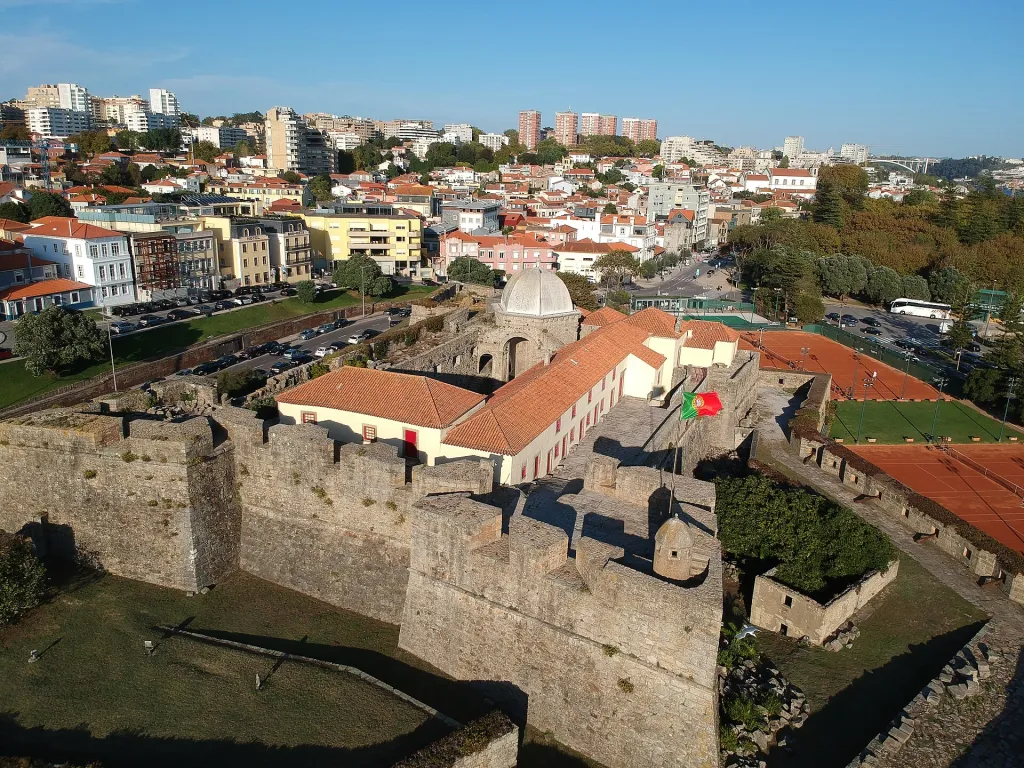
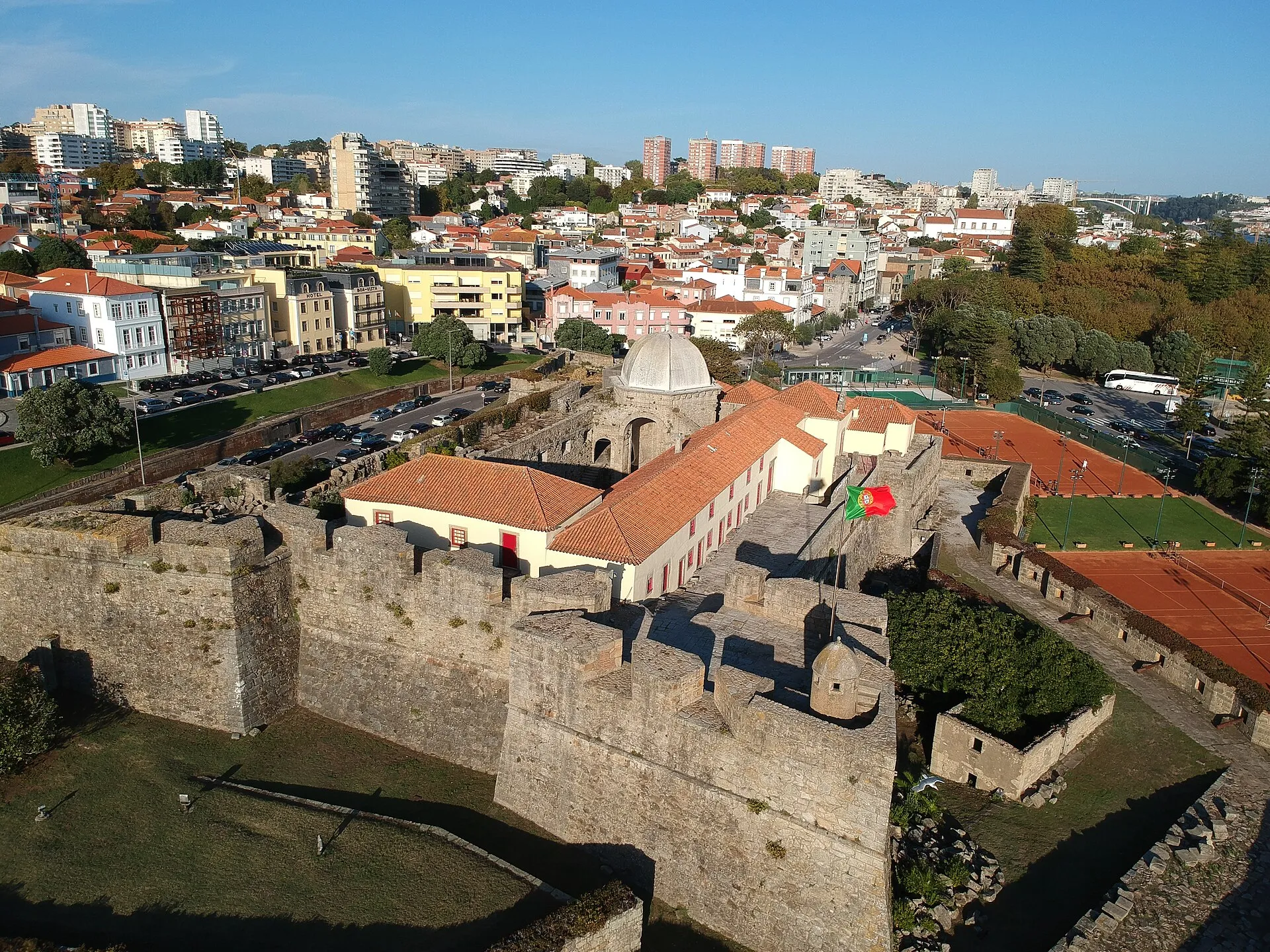
The abbot of Santo Tirso monastery and bishop of Viseu, Dom Miguel da Silva, had a church and abbots residence built where the fort now stands, for which he resorted to the services of the Italian architect Francesco de Cremona. Together with the São Miguel-o-Anjo Lighthouse (completed in 1527 a few hundred meters away from the fort), they were the first manifestations of Renaissance architecture in Northern Portugal).
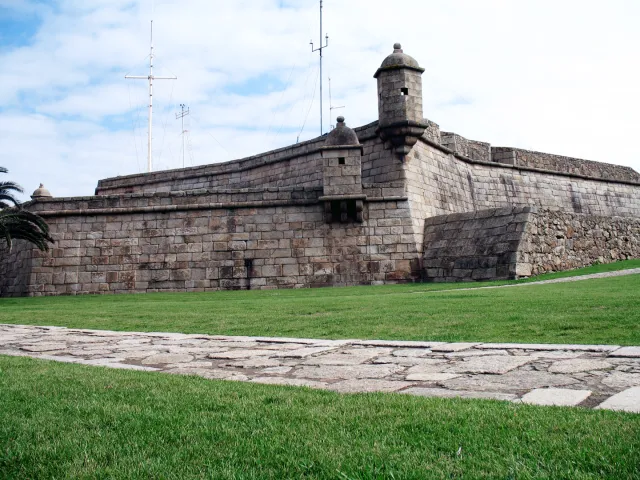
The fort was commissioned in 1567, one year after an attack by French pirates on Madeira. Construction of the fort began during the reign of King Sebastian (1557–1578), in 1570, and took eight years, under the supervision of João Gomes da Silva, a diplomat and trusted man of the Court and designed by the master of fortifications Simão de Rouen, son of Jean de Rouen, it consisted of a simple bastioned structure, surrounding the old medieval structures of the hospice, monastery, and the church of the Benedictines of Santo Tirso.
With the War of Restoration of independence, the remodeling of the fort was deemed necessary. Fearing a Spanish invasion along the northern border of the kingdom, King John IV (1640–56) dispatched the new Chief Engineer of the Kingdom, the French Charles Lassart, to the city of Porto in 1642. He had the opportunity to verify, in loco, the ineffectiveness of the 16th-century structure in the face of 17th-century offensive means, and he prepared a new project that expanded and reinforced it. The works were in charge of the Benedictine architect João Turriano. However, problems raised by the source of funds at the Porto City Council and personal problems of the forts Lieutenant-Governor Pinto de Matos (1643–1645) significantly delayed the start of the works.
With the appointment of Martim Gonçalves da Câmara, as a replacement for Pinto de Matos (May 1646), work finally started, with the demolition of the Old Church in the same year. The chancel and nave of the church, with the involvement of the bastioned structure and the dismantling of the cover, functioned as the fort's courtyard. Made a priority in the face of the invasion of Minho by Spanish troops, they were completed in 1653.