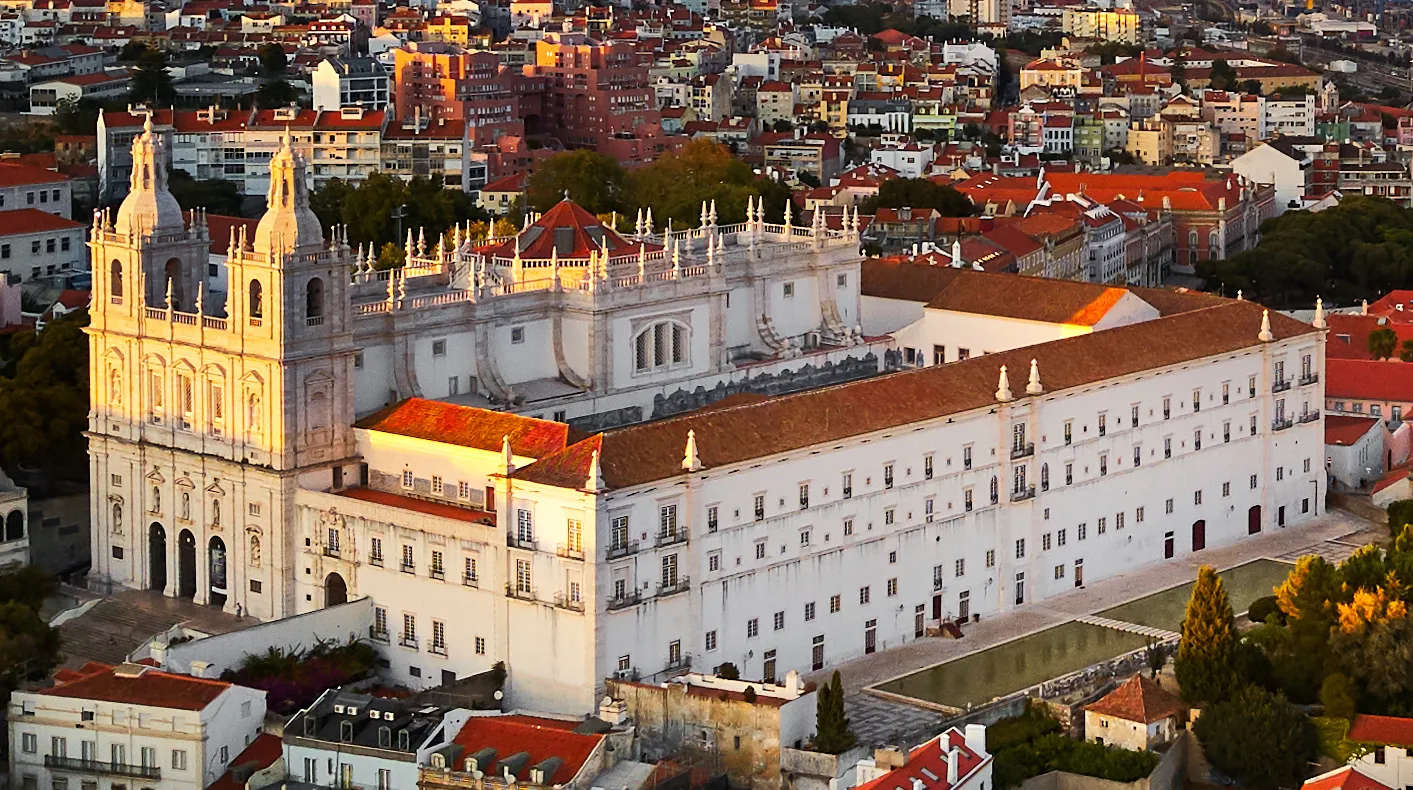
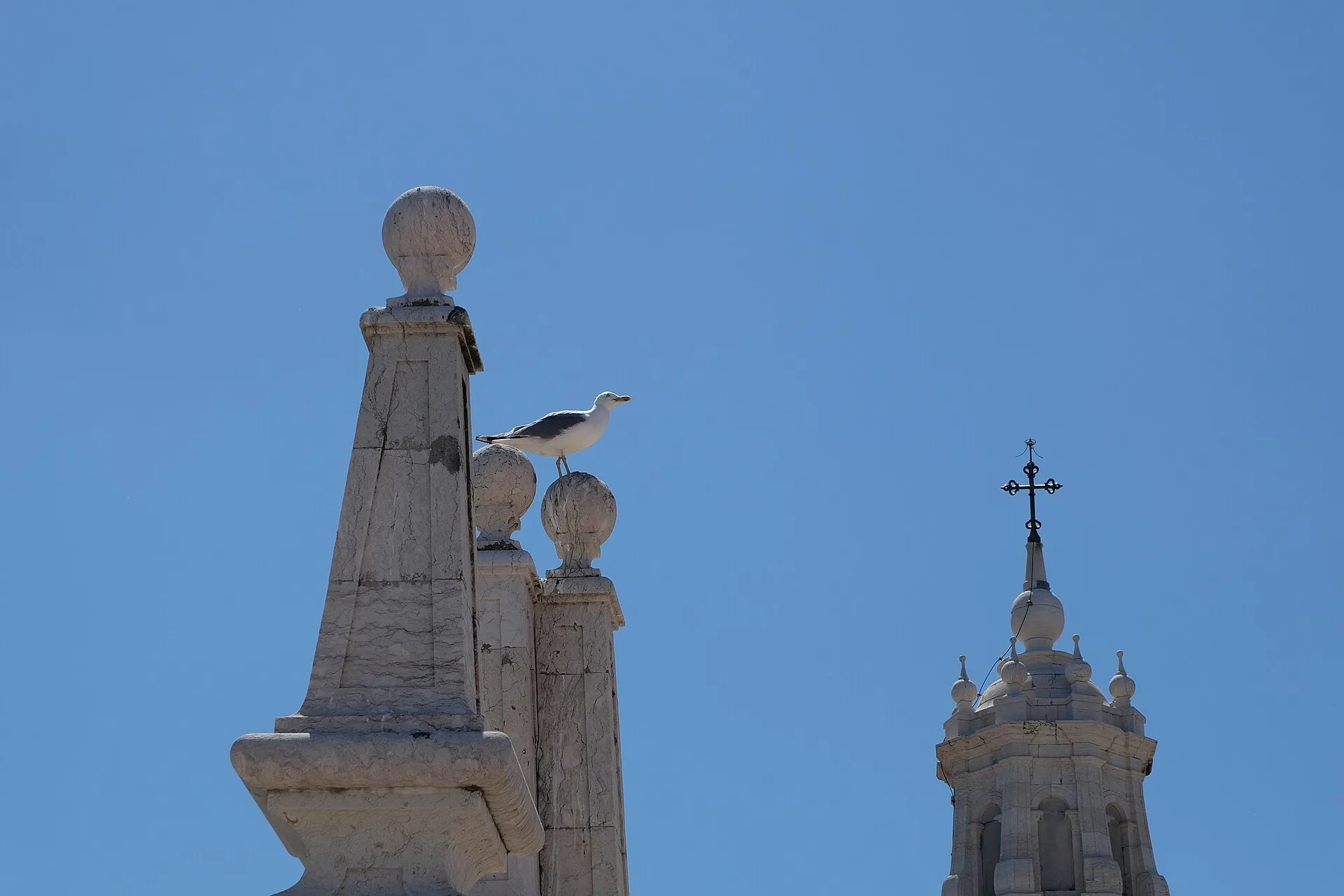
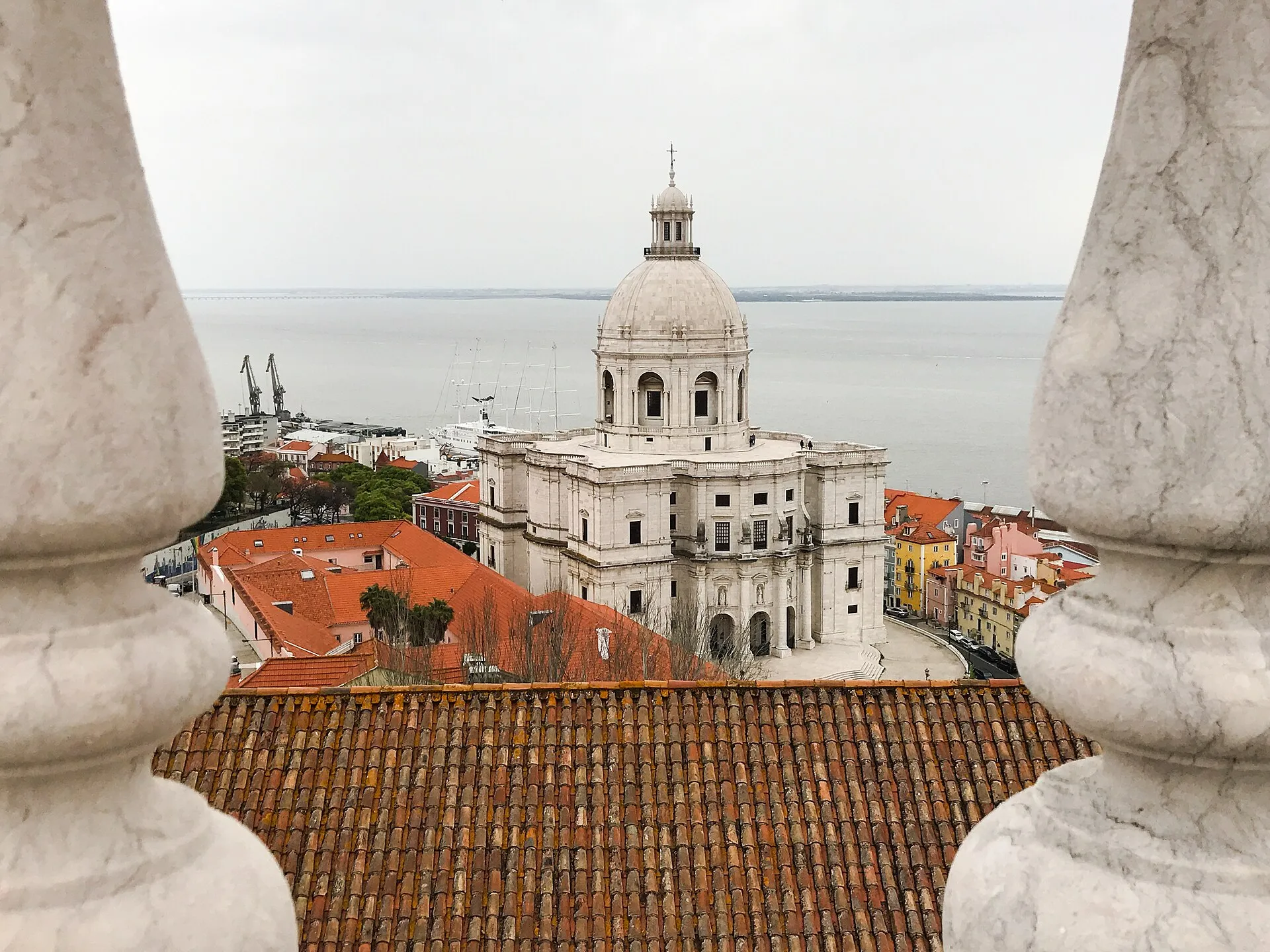
The original Monastery of São Vicente de Fora was founded around 1147 by the first Portuguese King, Afonso Henriques, for the Augustinian Order. Built in Romanesque style outside the city walls, it was one of the most important monastic foundations in medieval Portugal. It is dedicated to Saint Vincent of Saragossa, patron saint of Lisbon, whose relics were brought from the Algarve to Lisbon in the 12th century.
The present buildings are the result of a reconstruction ordered by King Philip II of Spain, who had become King of Portugal (as Philip I) after a succession crisis in 1580. The church of the monastery was built between 1582 and 1629, while other monastery buildings were finished only in the 18th century. The author of the design of the church is thought to be the Italian Jesuit Filippo Terzi and/or the Spaniard Juan de Herrera. The plans were followed and modified by Leonardo Turriano, Baltazar Álvares, Pedro Nunes Tinoco and João Nunes Tinoco. In 1755, an earthquake hit Lisbon, causing damage to the church which then needed reconstruction.
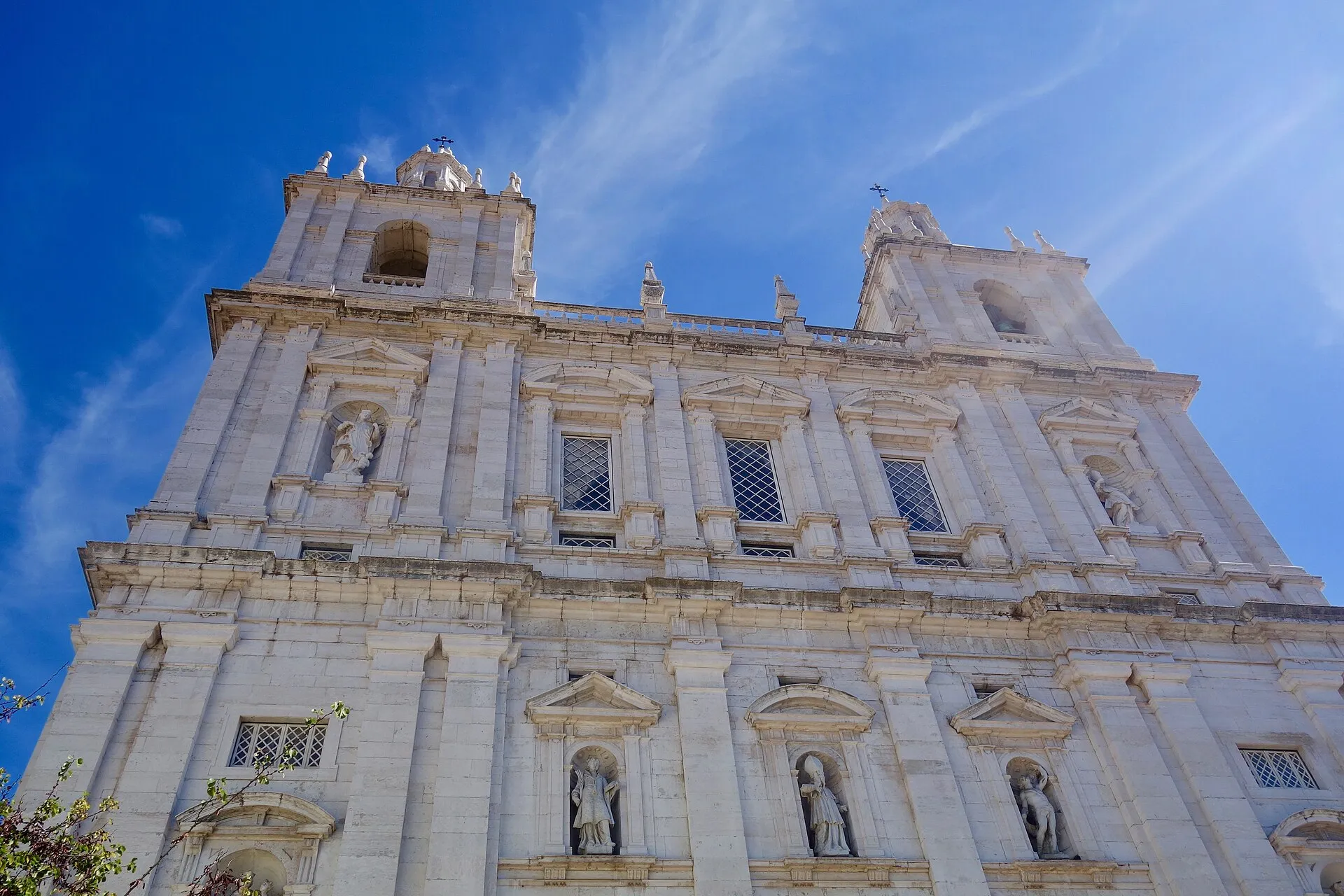
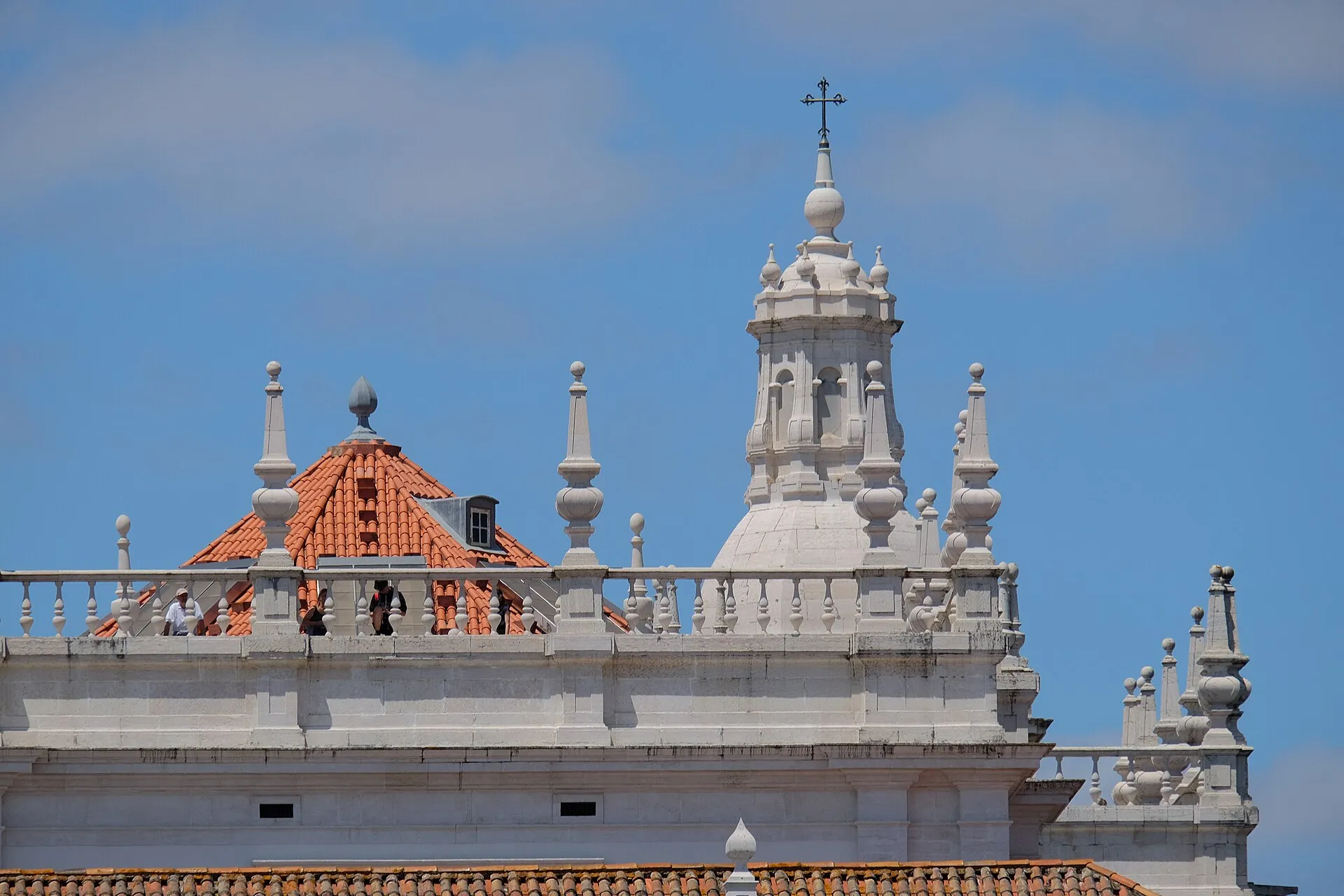
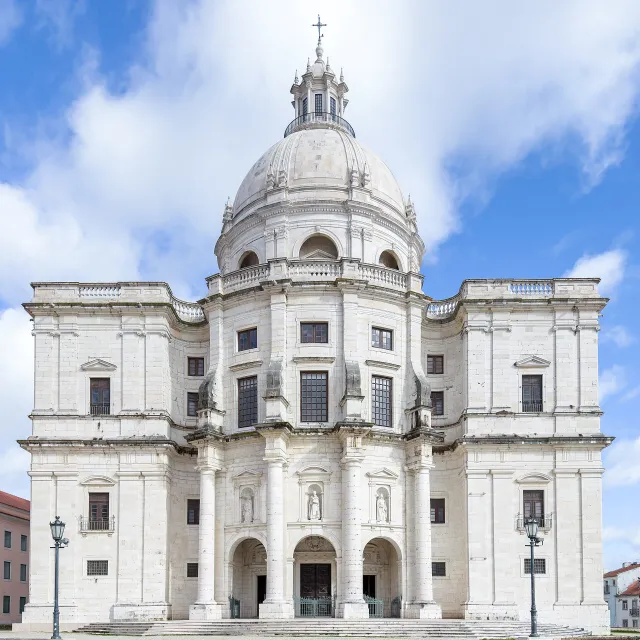
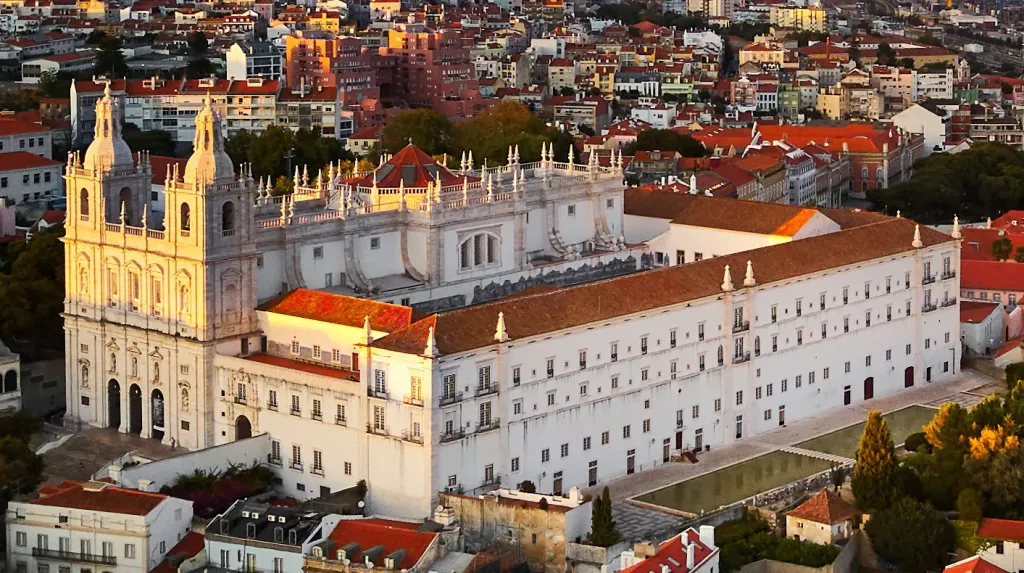
The church of the Monastery has a majestic, austere façade that follows the later Renaissance style known as Mannerism. The façade, attributed to Baltazar Álvares, has several niches with statues of saints and is flanked by two towers (a model that would become widespread in Portugal). The lower part of the façade has three arches that lead to the galilee (entrance hall). The floorplan of the church reveals a Latin cross building with a one-aisled nave with lateral chapels. The church is covered by barrel vaulting and has a huge dome over the crossing. The general design of the church interior follows that of the prototypic church of The Gesù, in Rome.
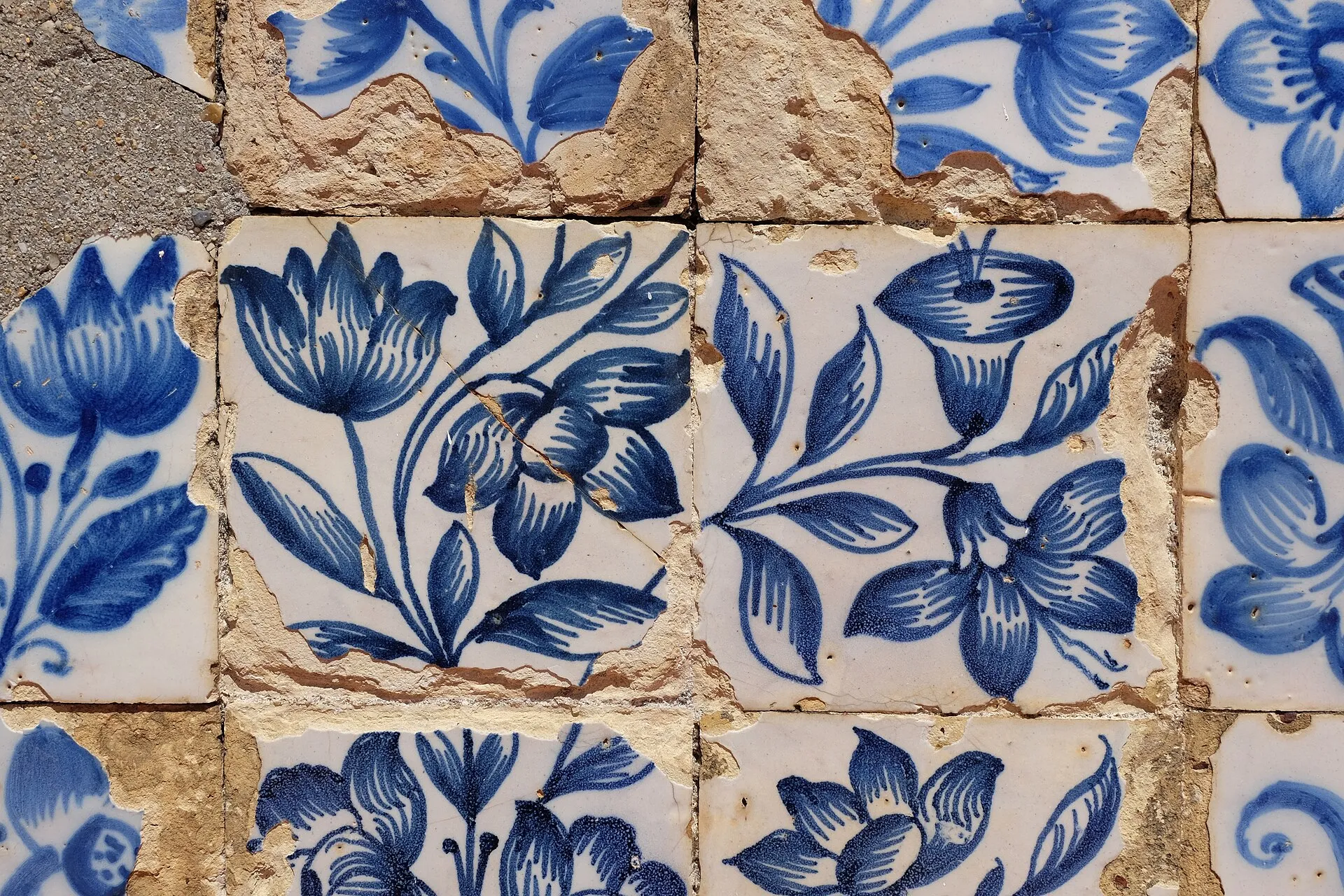
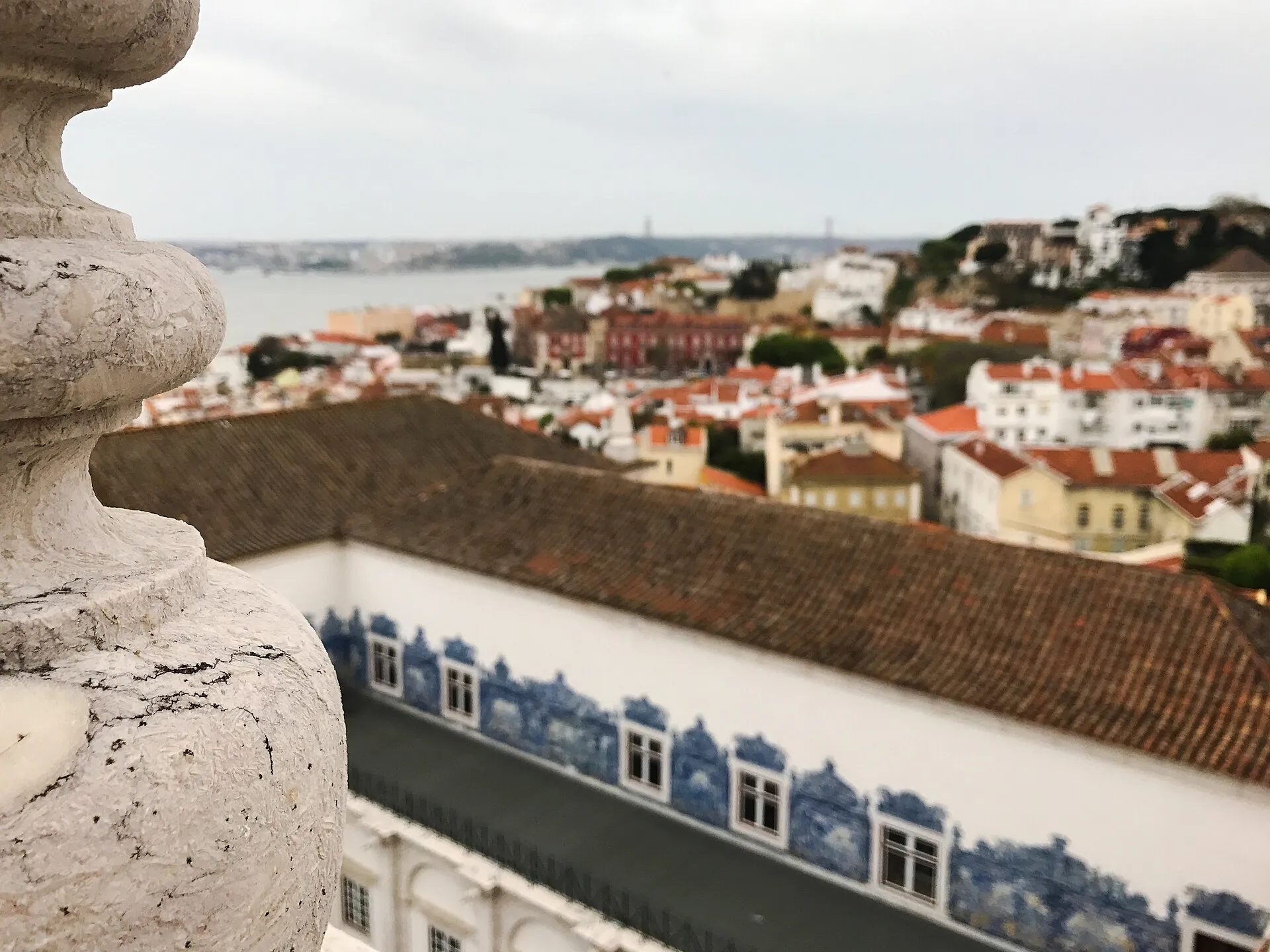
Within the monastery are ceramic tiles formed into panels that depict several different scenes. The ceramic tiles that were created are called azulejo. The tiles were created and painted for the monastery during two separate periods established by Santos Simoes. The first period was from 1700 until 1725 and was called the "great painting period," during King Joao V's reign.

 1 / 7