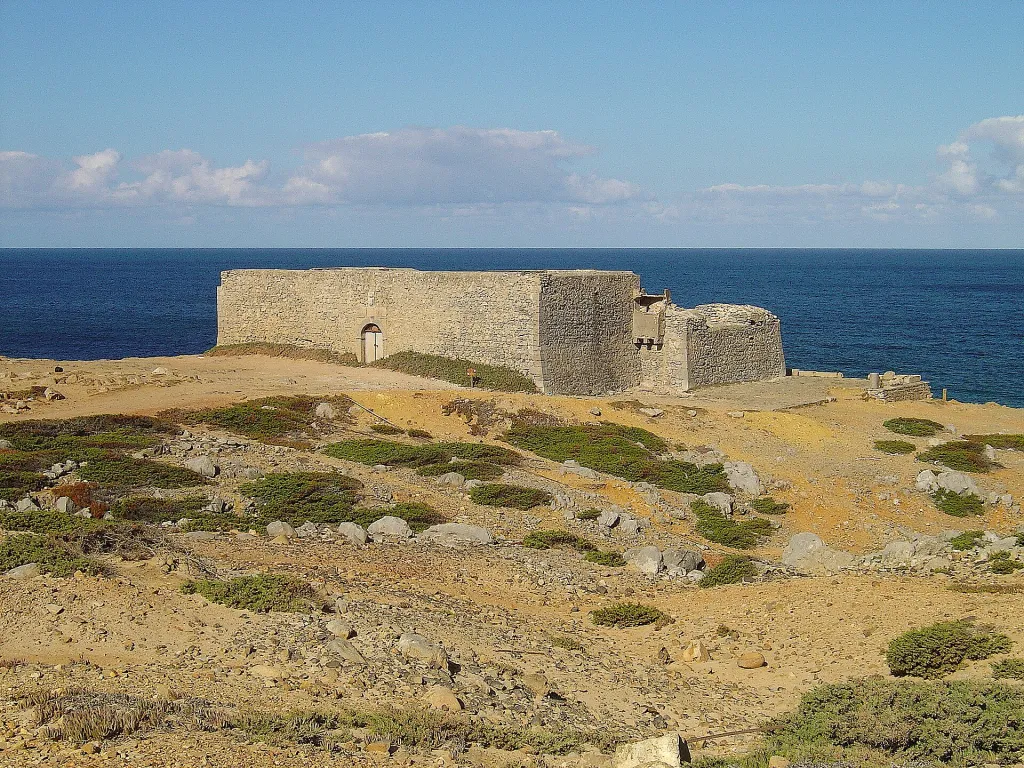
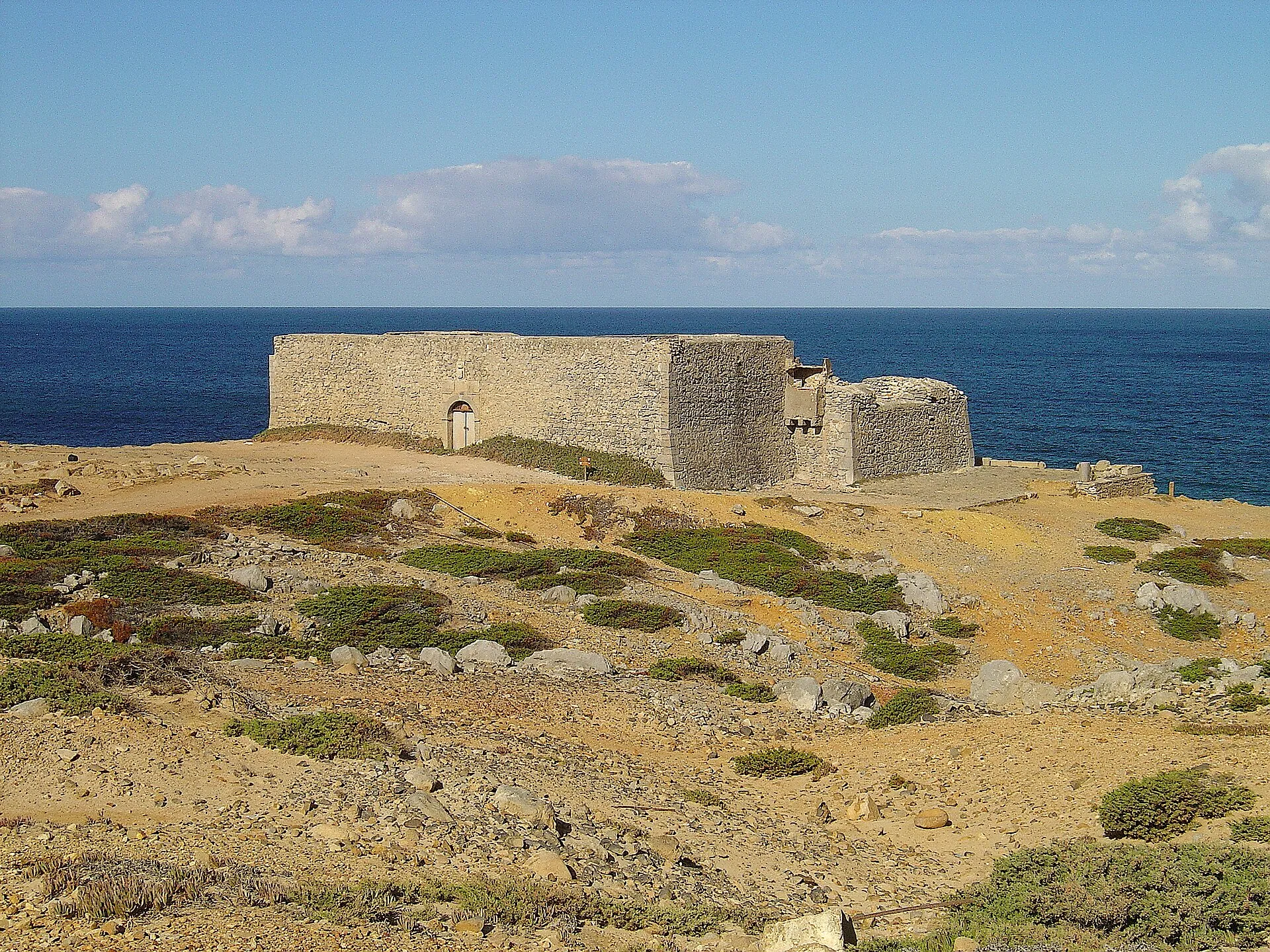
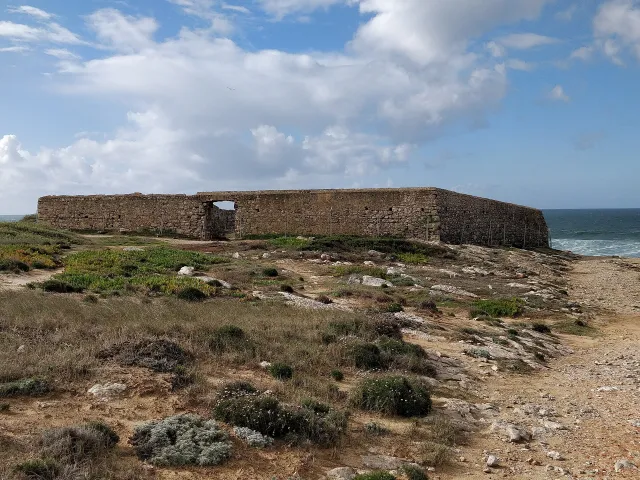
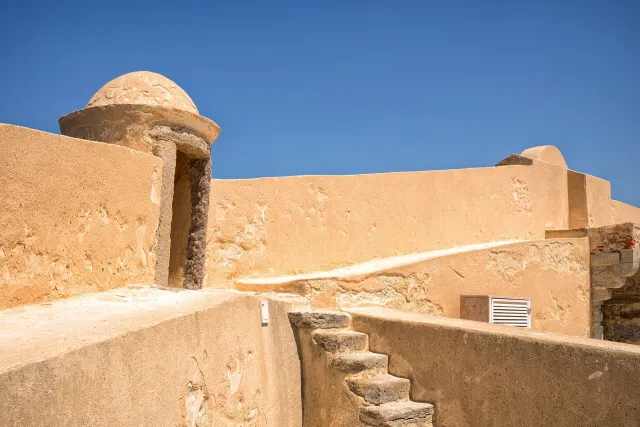
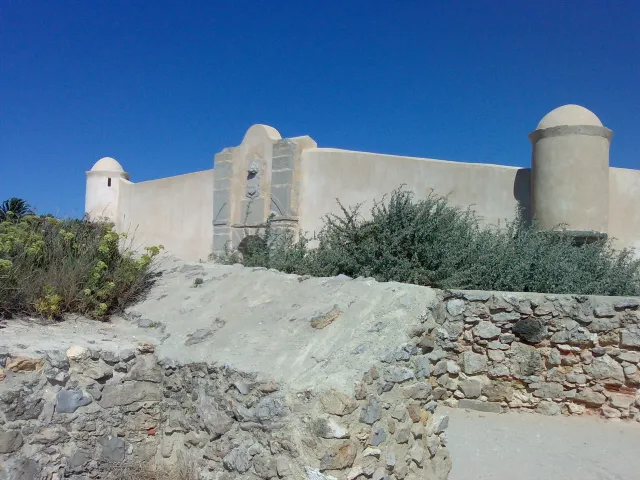
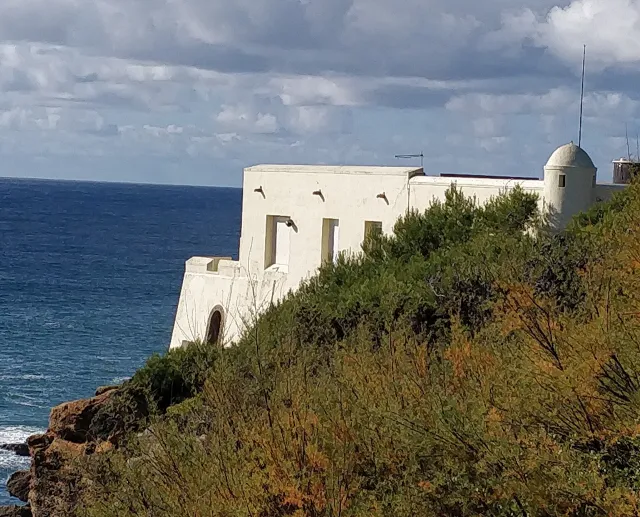
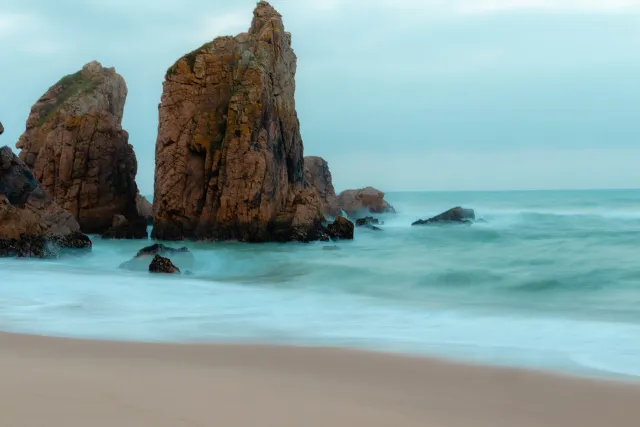
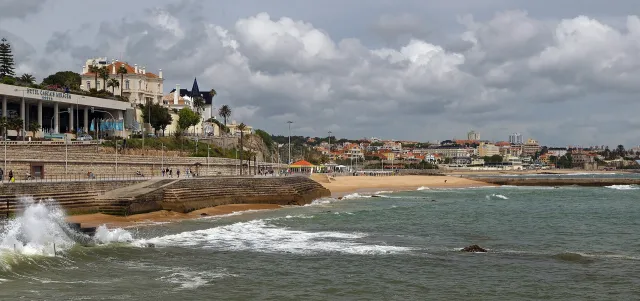
Construction of the fort took place during the 1640s, with it becoming integrated into a group of fortifications that formed a defensive belt along the Cascais coast to the north of the River Tagus estuary. Construction was ordered by António Luís de Meneses, governor of Cascais during the post-Restoration era. It was a strategic point north of the Tagus River, and used to watch for ships on the high-seas and protect against disembarkation on Guincho beach. Its cannons intersected with those of the battery of Galé to the south of the beach, the site of which is now covered by a hotel.
The first reference to a completed fort guarding the coast in this area dates back to 1675, in an inspection report that indicated that the fortification was guarded by the 3rd Cascais regiment and supported by seven cannons. A similar survey report by architect Mateus do Couto was completed in 1693.
In a report dated 29 June 1720, Colonel João Xavier Teles documented the extent of repairs necessary to maintain the walls and quarters and to replace the main gate and bunkers. Although he provided quotes as to these costs, there are no indications as to whether the projects were completed. At the time of this assessment, the garrison was composed of a commander, three soldiers and two artillery gunmen, placed in weekly rotation. The artillery pieces, which included one iron (out of use) and two bronze (operational) cannon, were considered inadequate by the Colonel, who urged that four new cannon should be sent to the fort to reinforce the garrison. In 1751 and 1758, there were new references to the inadequacy of the post, referring to the need to repair the walls of the fortification, the chimneys in the kitchens, the guardhouse and the barracks. At the time of the latter report, only two cannons continued to be operational. But, to some degree, this had changed by 1777 when the fort was, generally, reported to be in a good state of repair, although it required some small repairs to the quarters and cistern.