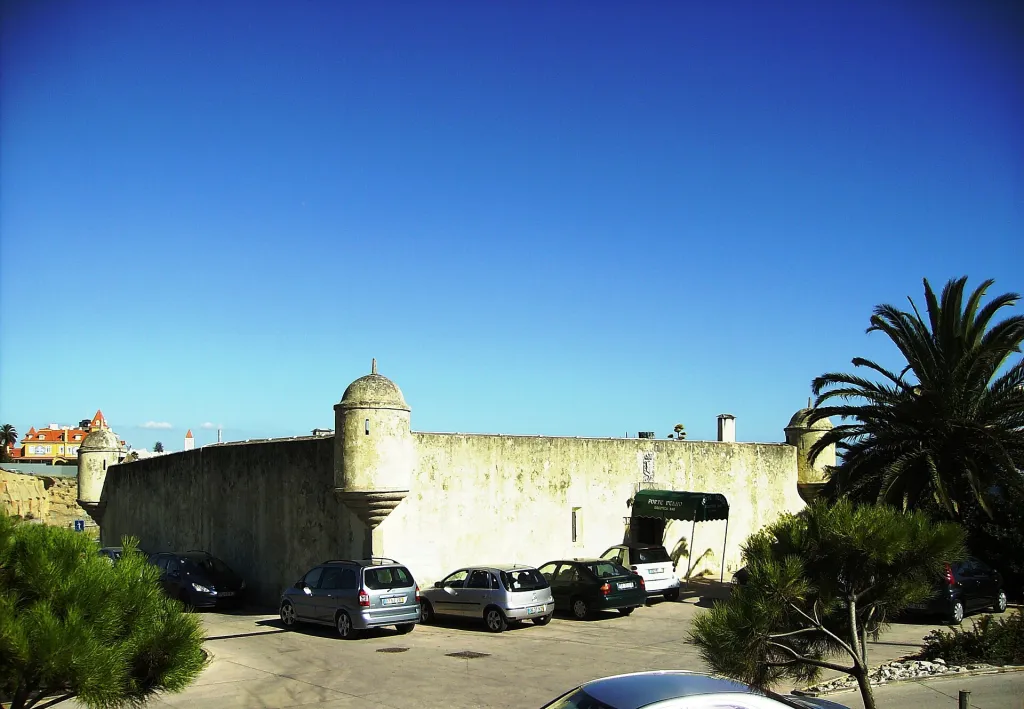
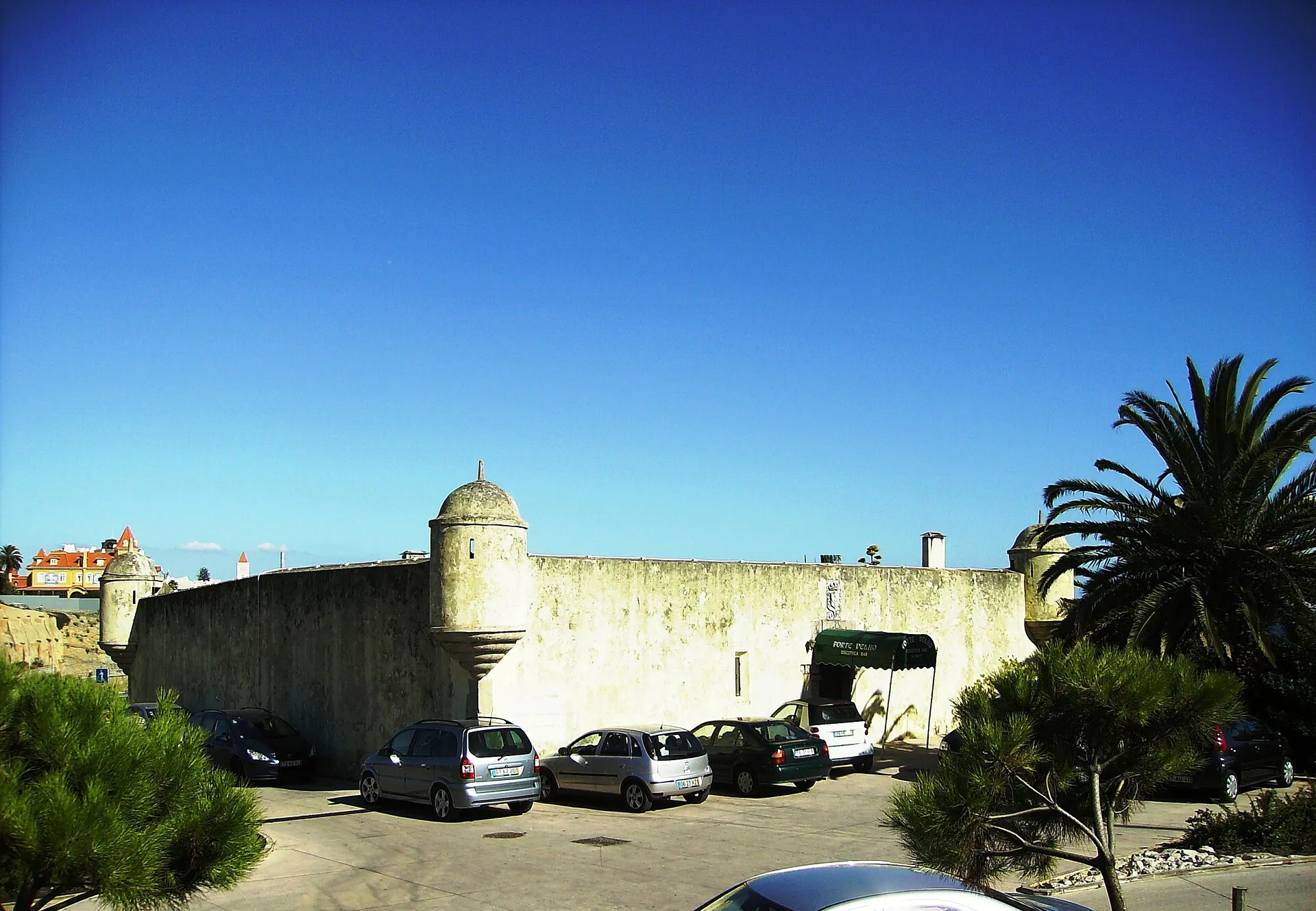
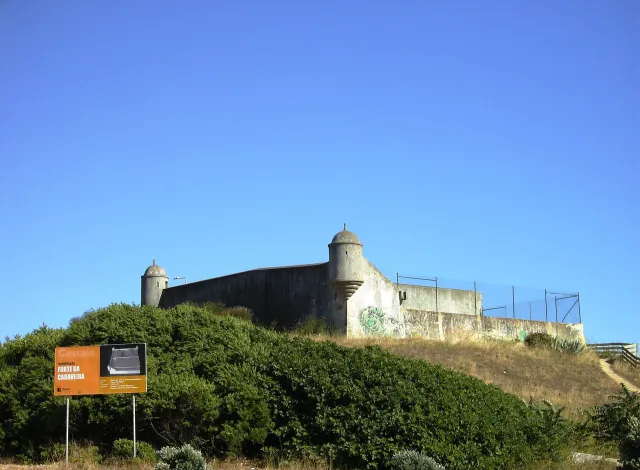
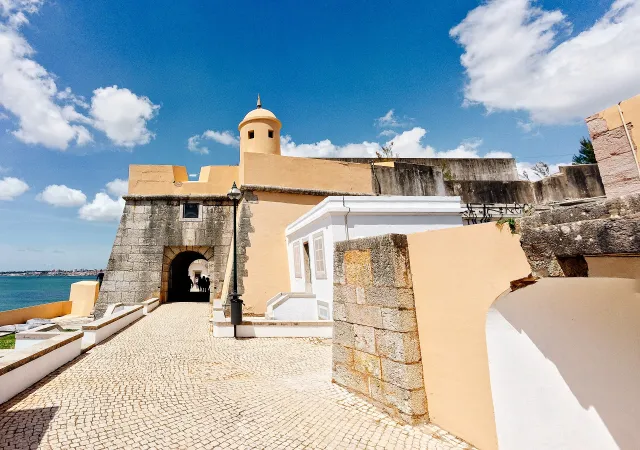
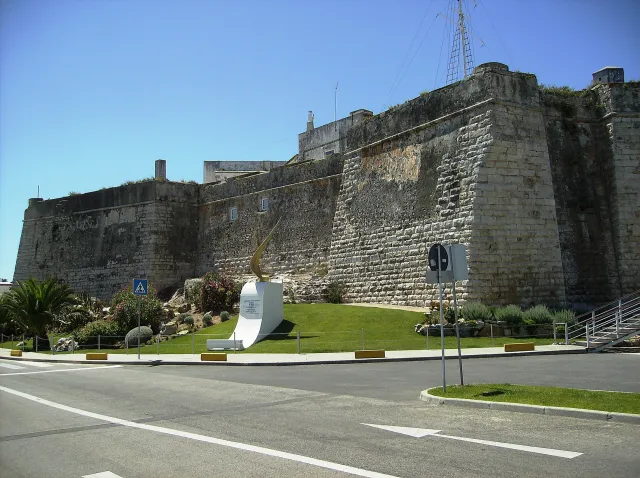
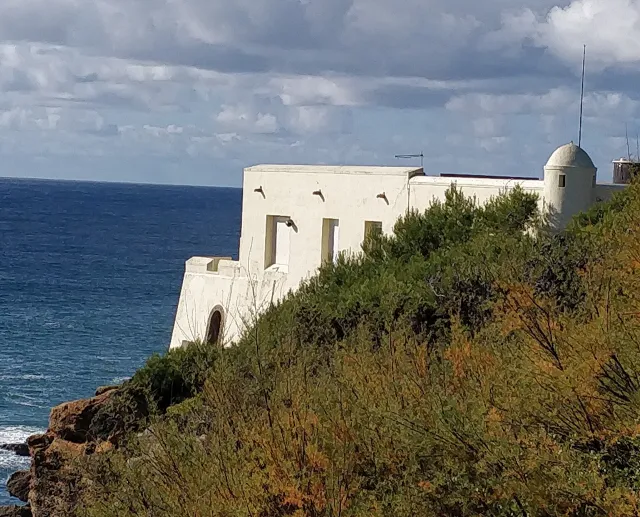
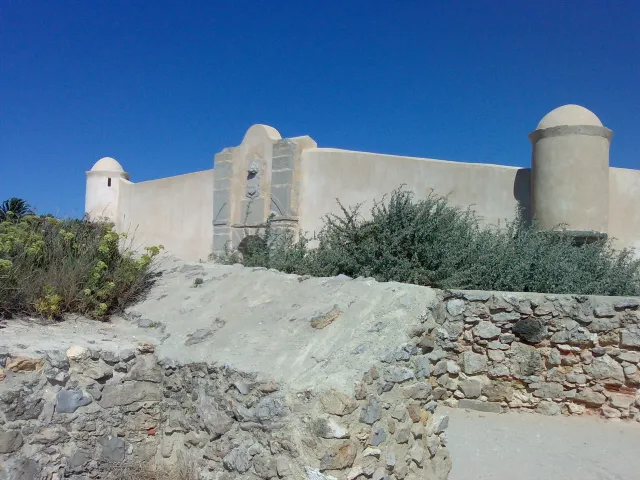
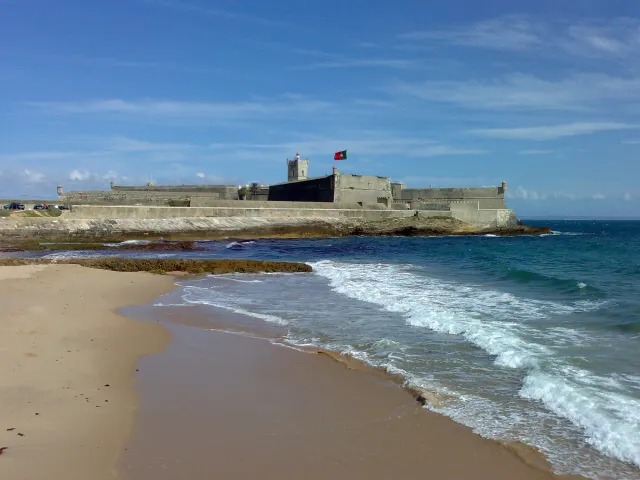
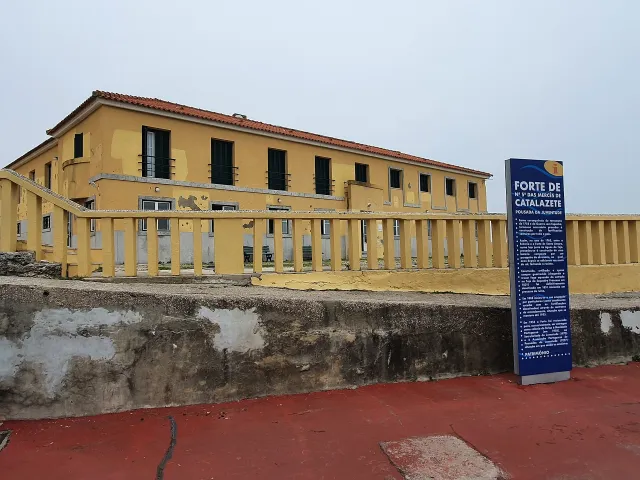
The fort was begun on 5 April 1642 (from an inscription over the portico), and completed in 1643, initially named Forte de São Teodósio (Fort of Saint Theodosius), under the supervision of António Luís de Meneses, governor of the Fort of Cascais. It was likely named in honor of the first male heir of King John IV of Portugal. This first plan of the fort was elaborated by architect Mateus do Couto, at which time it was referred to as Forte de Santo António da Cruz da Assubida. During the 17th century, the port consisted of a long battlement, where the artillery was organized towards the east and southern facades. Along the western wall, oriented toward the land, were barracks. In the middle of the building was the main gate, where the intermediary courtyard allowed access to many of the fort's spaces: to the left, the first division served as quarters and kitchen, and in front, the main battery emplacement; from an eight-degree staircase along the guardhouse wall, troops could access to the a floor over the quarters, which was used by the fusiliers; and the angular parapets, along the northern and western orientations of the fort, which acted as the main defensive battery.
In the 18th century it began being referred to as Forte de São Pedro (Fort of Saint Peter). In 1720, the fortification was commanded by commander José Martins, who lived onsite, but without permanent garrison. Shortly later, it was encountered closed and with need of some public work, namely the walls, chimney in the guard post, a new door for the warehouse and gunpowder magazine (all budgeted at 70,000 réis). Its artillery included two iron cannons, which served the purpose, but were nonoperational due to their lack of repair/maintenance, gunpowder and mechanisms.
By 1735, there were already three cannons, but still incapable of meeting its needs, and needing "total repair". In 1751, its degradation was accentuated, and needed approximately 200,000 réis worth of repairs. The trench that linked to the fort was in ruins, while the walls required 230,000 réis worth of reconstruction.