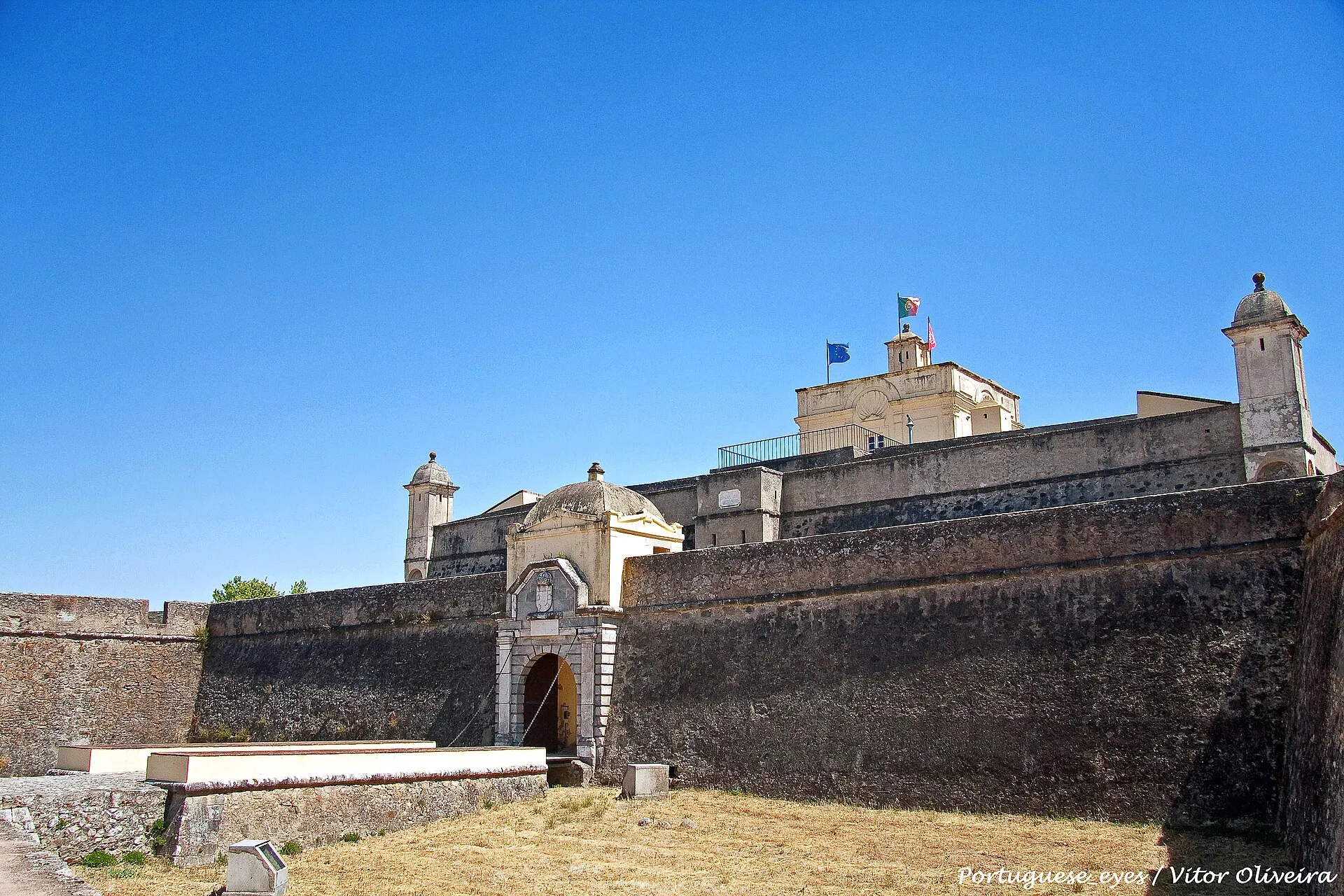
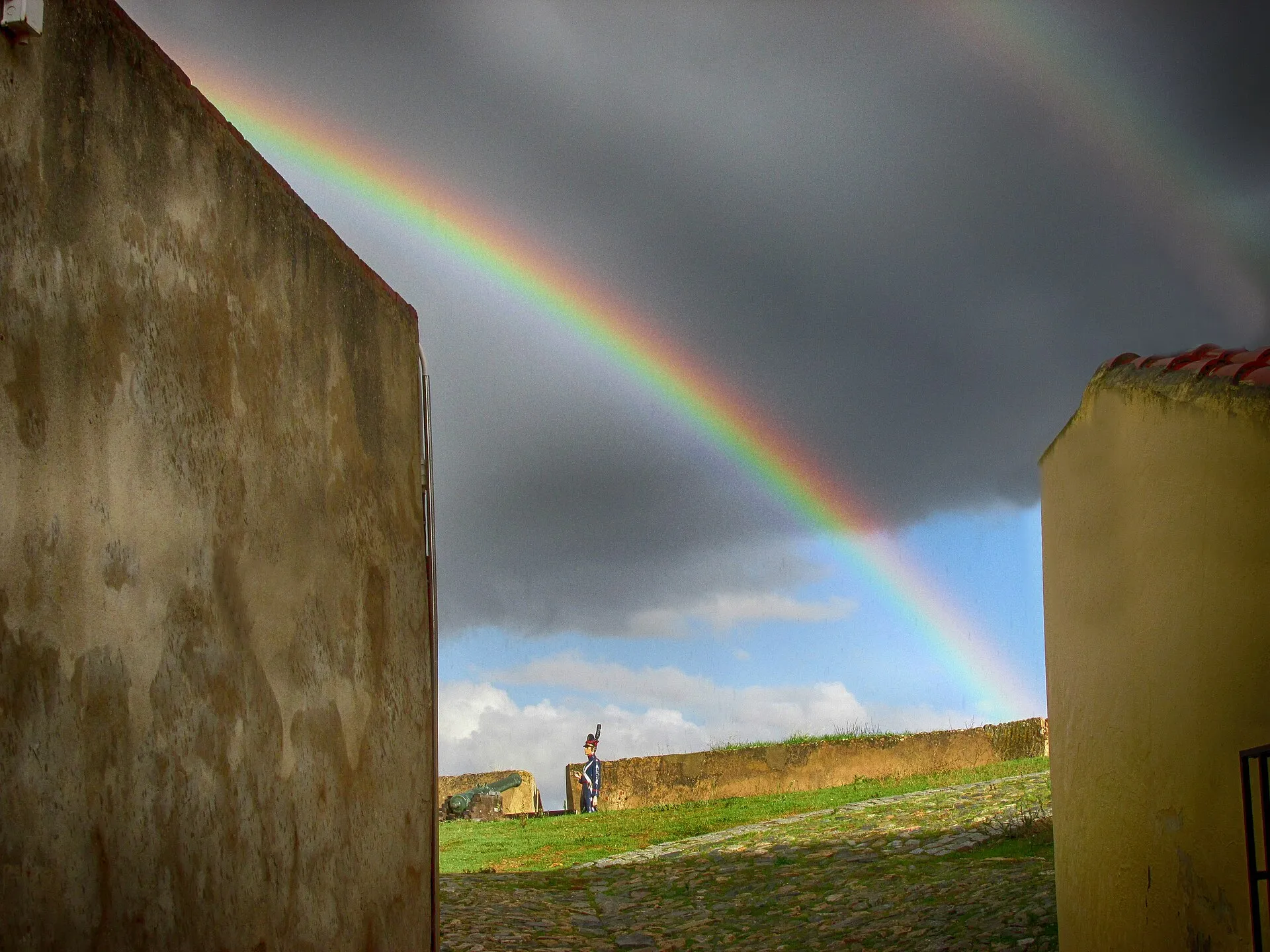
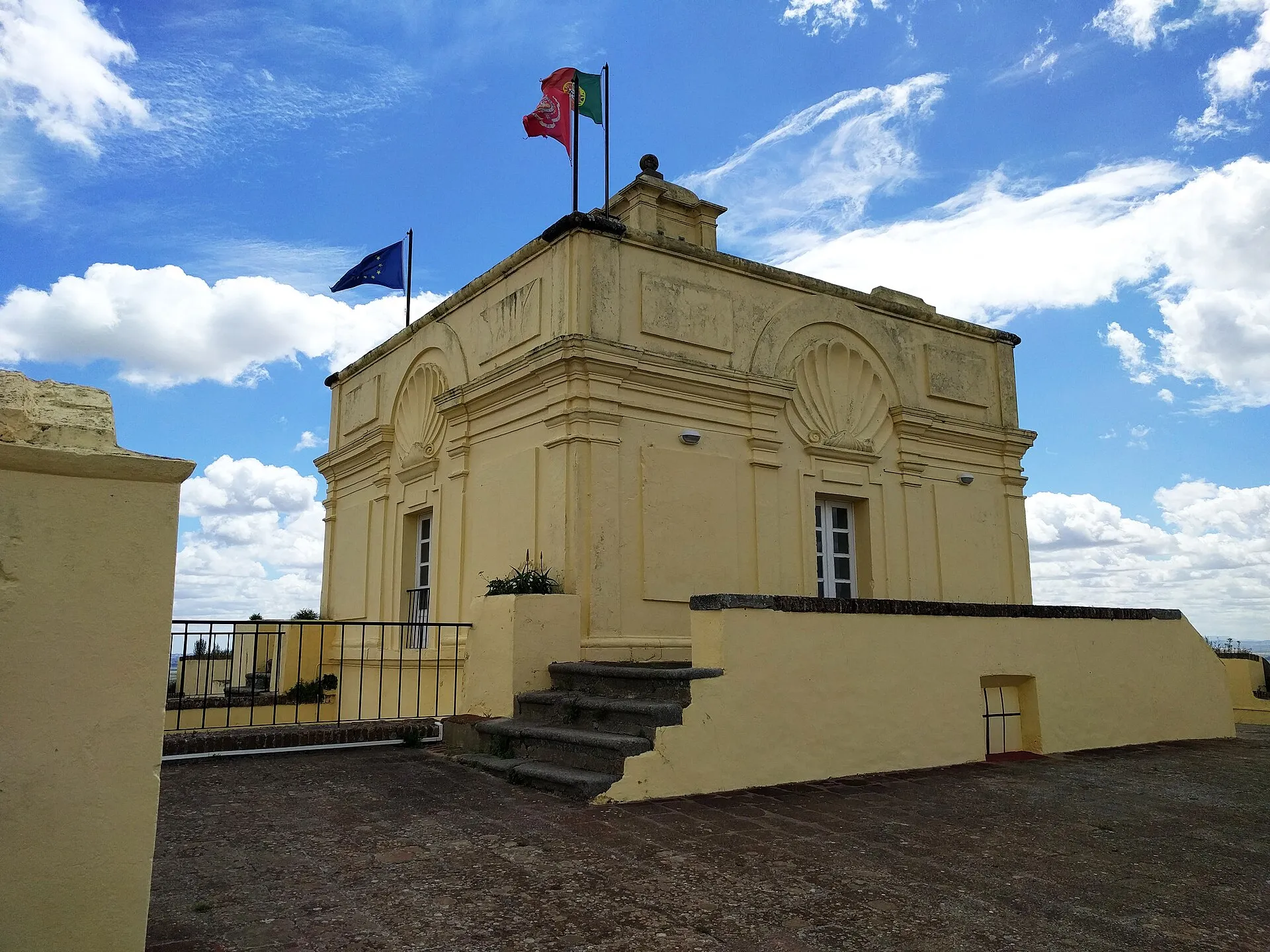
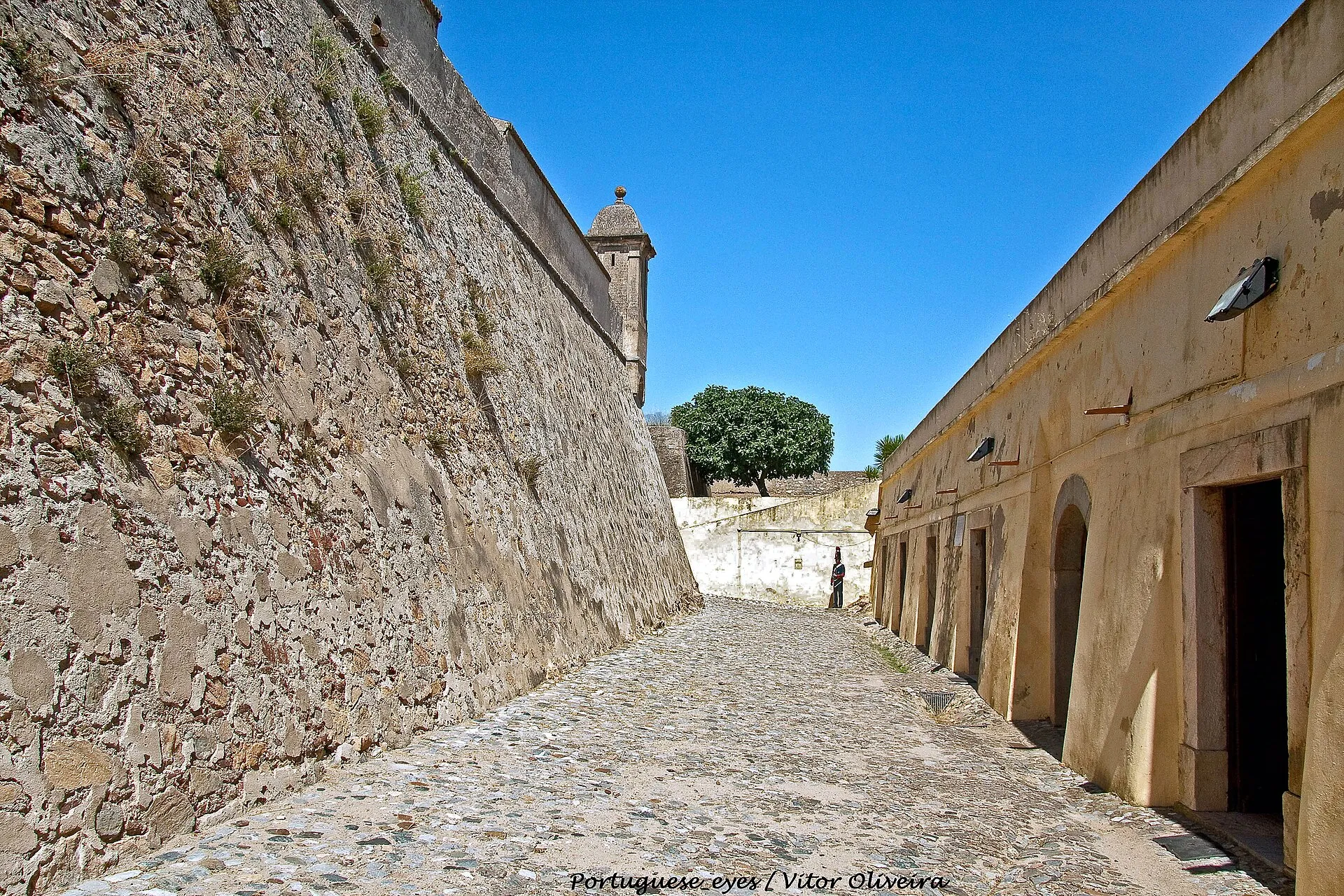
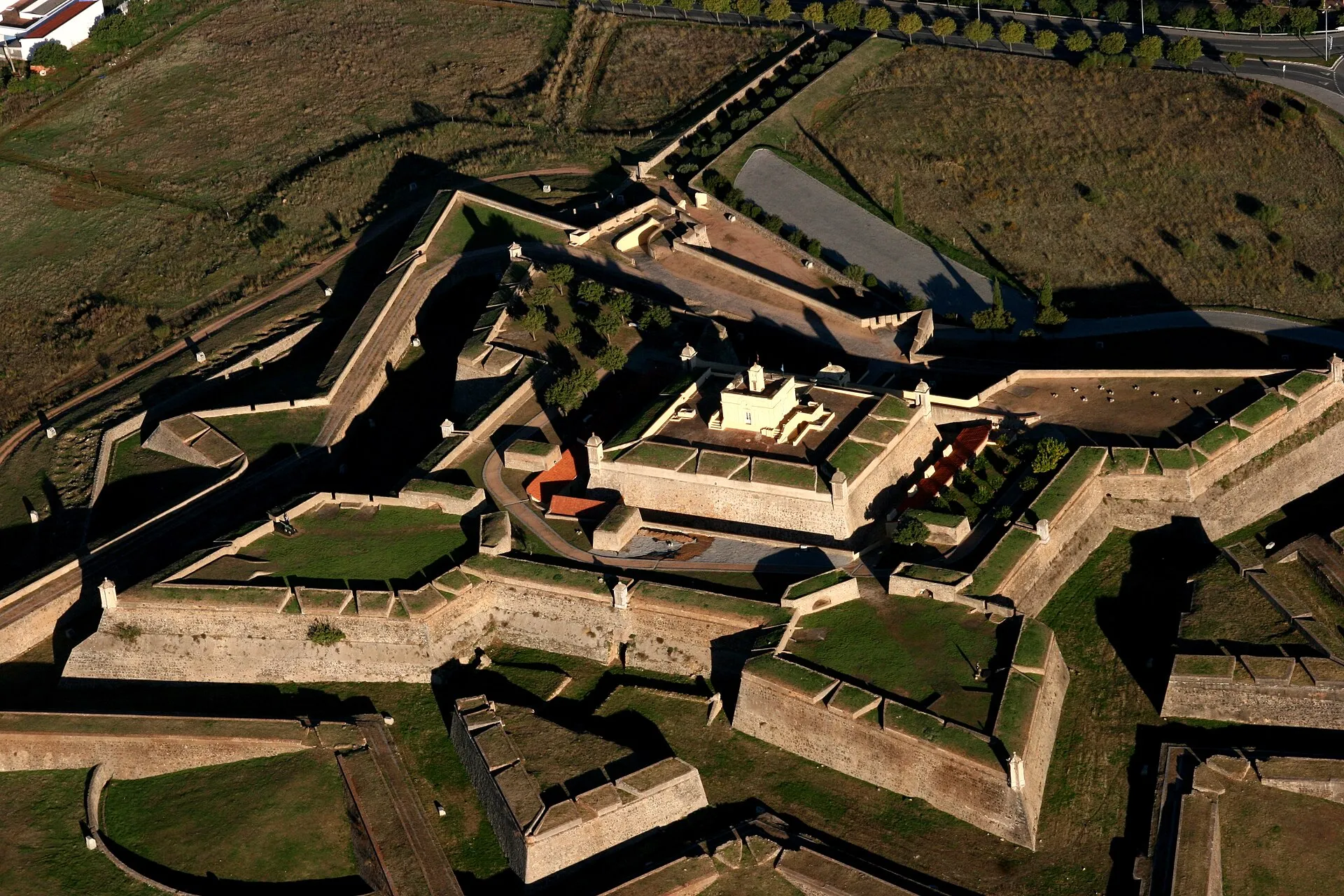
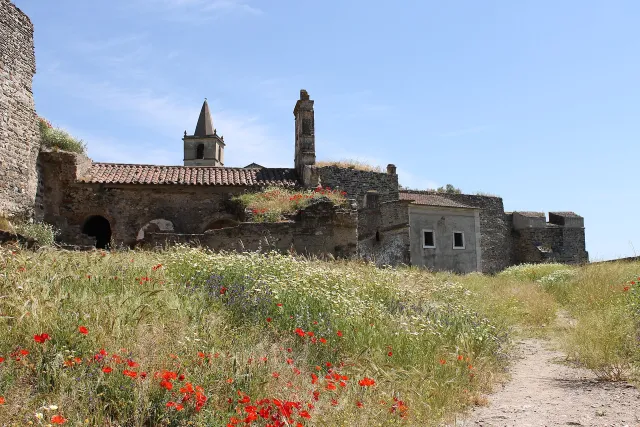
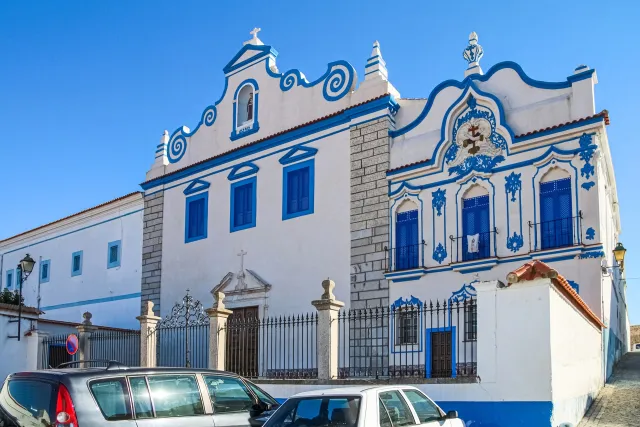
Repeatedly besieged during the War of Restoration of Independence, it was during the siege of the city of Elvas, led by the Spanish commander Don Luis de Haro in 1658, that the fort stood out for its defenders heroic resistance. The siege of 1658 preceded the Battle of the Lines of Elvas on 14 January 1659.
In 2014, Fort Santa Luzia was integrated into a new project by the Portuguese Ministry of National Defense, created with the support of Turismo de Portugal, called Turismo Militar, which features historical itineraries based on Portuguese military history.
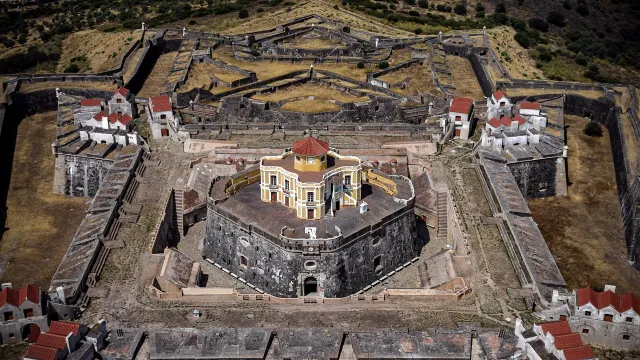
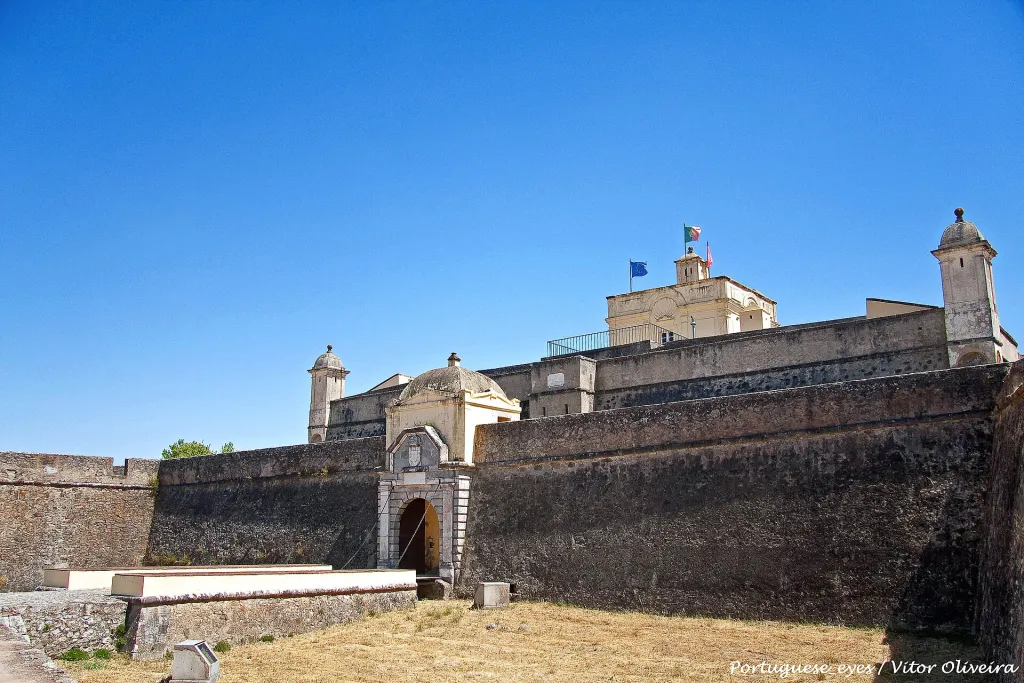
The fort dates back to the context of the War of Restoration of Portuguese independence, having been commenced in 1641 by the initiative of governor-of-arms Matias de Albuquerque, who provided an initial sketch for a fort capable of housing 300 soldiers. That same year, it was redesigned by Sebastião Frias, as a star fort. The Genoese Hieronimo Rozzeti drew up a new project for it in 1642, which caused friction with other engineers, and which culminated in the discord of the French military engineer Charles Lassart. The controversy over the most adequate design of the fort was settled by the Flemish architect Cosmander who designed it with the support of the French engineer Jean Gilot. A larger "royal fort" (whose defensive perimeter matched the range of a musket) built in accordance with the architectural regularity of the "First Dutch Method of Fortification" was rejected in favour of a smaller "external fort" with greater military function, faster speed of construction but the same firepower. It incorporated several design novelties that preceded those put forward by Blaise Francois Pagan. The first stone was placed on April 1 of 1643, with the blessing of the bishop Dom Manuel da Cunha and the presence of the governor-general Martim Afonso de Melo, the masters-of-the-field Dom João da Costa and Dom João de Sousa, other ministers at arms and the local people and nobility. It's considered one of the finest examples of 17th century fortification works in Portugal.

 1 / 6