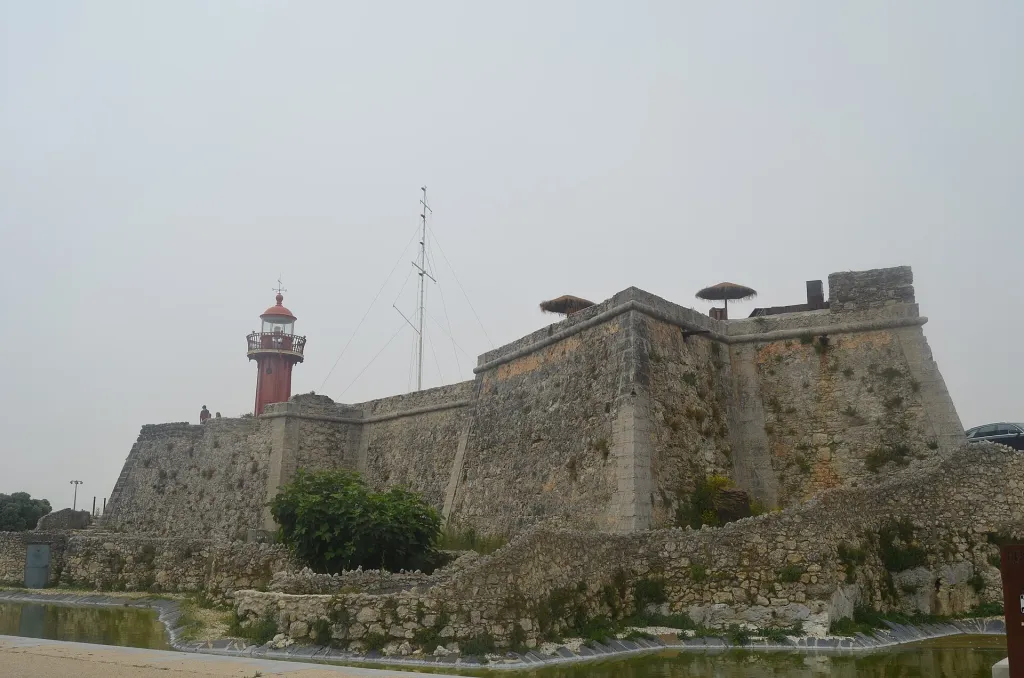
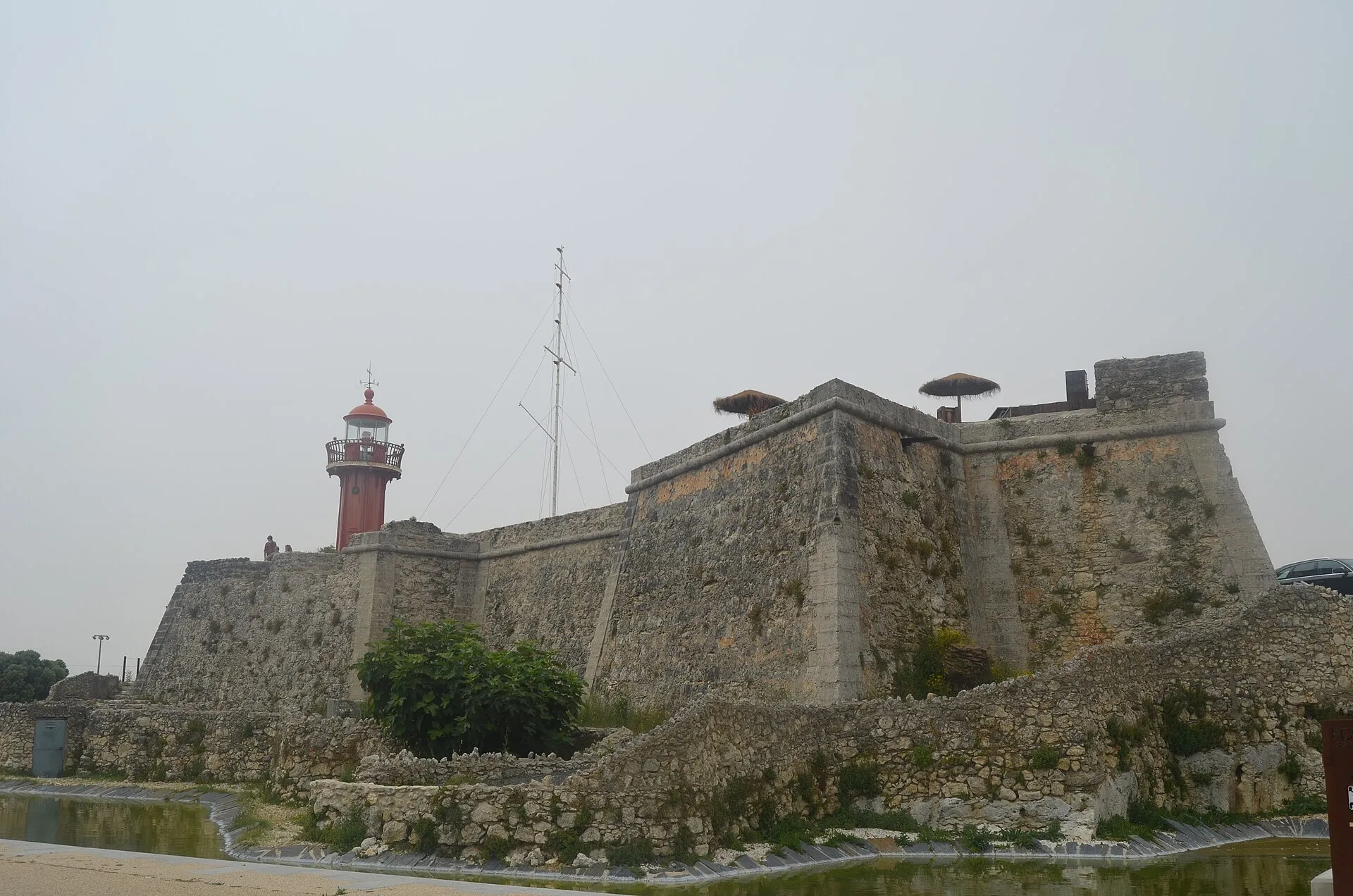
It is believed that the foundations of this fortification date back to the reign of King John I (1385-1433).
At the time Portugal was ruled by the Habsburg dynasty, in October 1585, some "good men" from the Coimbra city hall requested Philip I of Portugal (1580-1598) build a fort at the entrance to the mouth of the Mondego River, on the rocks known as Santa Catarina Hill. In response to this request, the construction work for the fort began some time later, with taxes of the town of Buarcos, the University of Coimbra, and the Monastery of Santa Cruz.
In 1602 the coast of Figueira da Foz was ravaged by English privateers, and this fort was looted.
In the context of the Restoration of Independence, with the reinforcement and modernization of the kingdom's strongholds having been determined by the War Council of King John IV (1640-1656), the defense of the maritime coast was not forgotten. Thus, in 1643, reinforcement works began on the Santa Catarina, when one of the fortification's walls was expanded, its artillery increased to 15 pieces of different calibers.
In a short time, however, despite the strategic importance of the defense of Mondego rivermouth, information shows that, in 1680, the fort's facilities were in ruins, and a budget was drawn up for its renovation. This ended up not happening since, the money destined to his works ended up being consumed in other expenses of the War of Restoration.
In 1808 the fort was occupied by Napoleonic troops under the command of Jean-Andoche Junot, during the Peninsular War. A few months later, a force of two dozen volunteer students from the University of Coimbra, under the command of Artillery Sergeant Bernardo António Zagalo (from Ovar) and Infantry Sergeant Inácio Caiola, at the head of 3000 people of differing military training, equipment and value, forced the French garrison of the fort to surrender on the 27th of June, taking it under arrest to Coimbra, where they had come from.