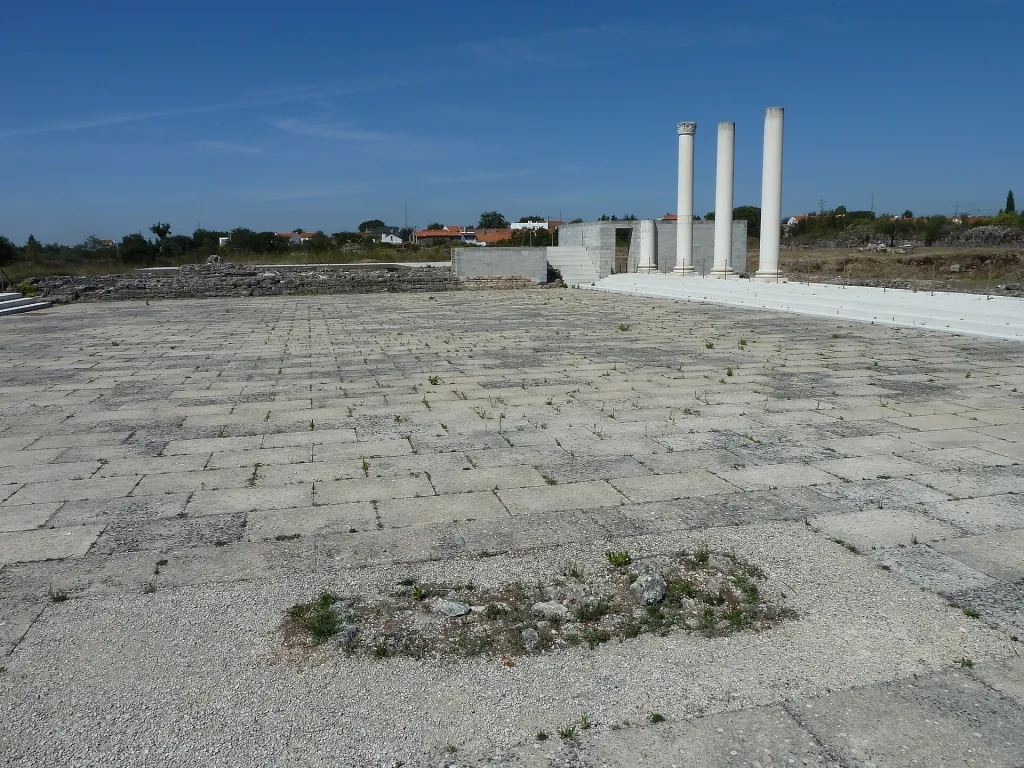
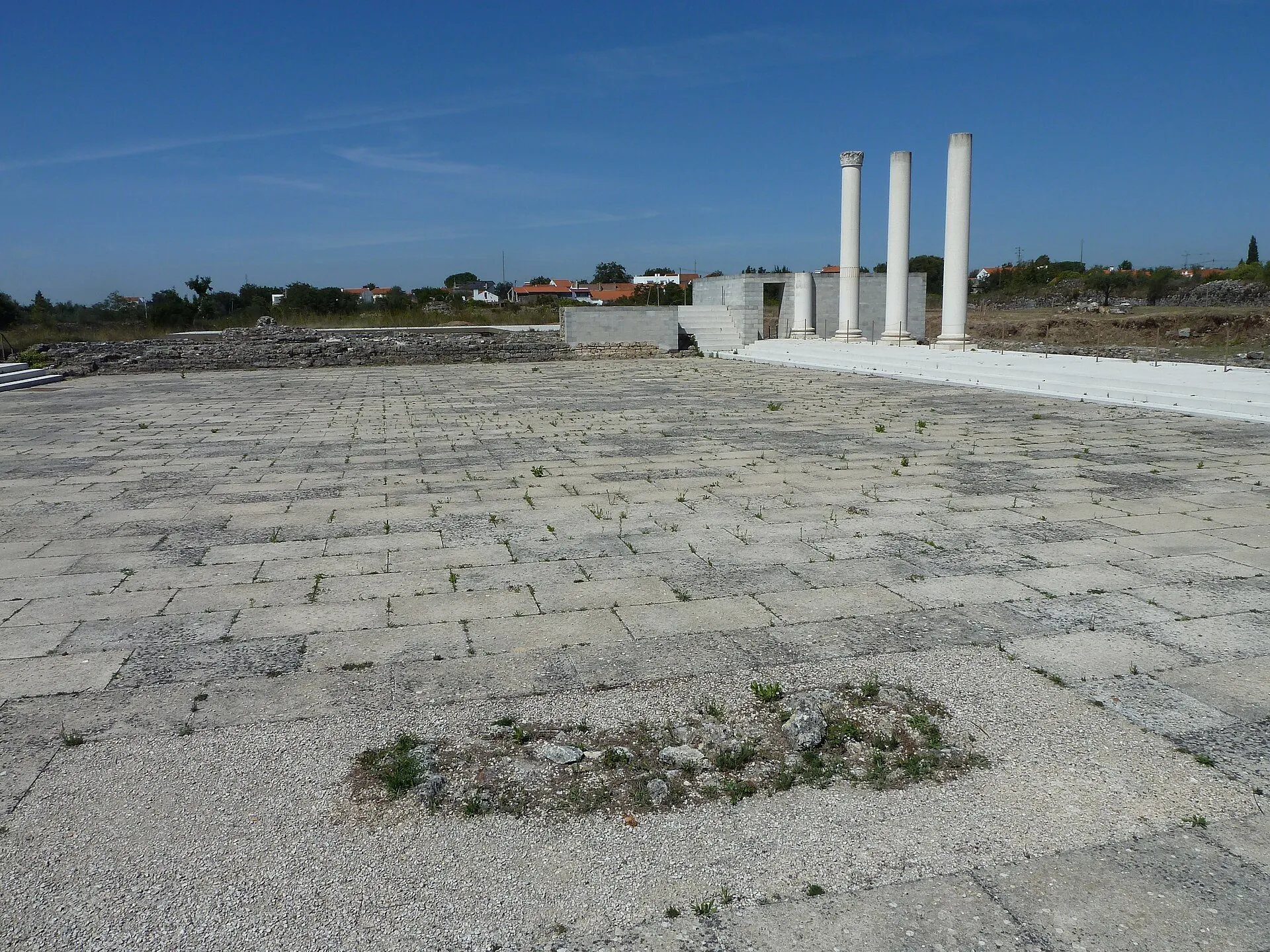
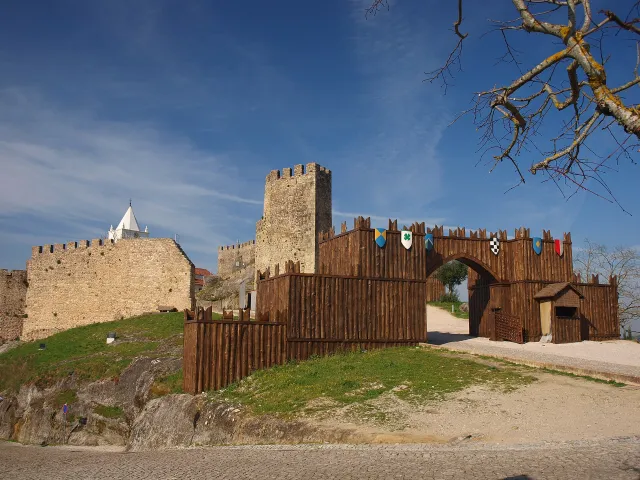
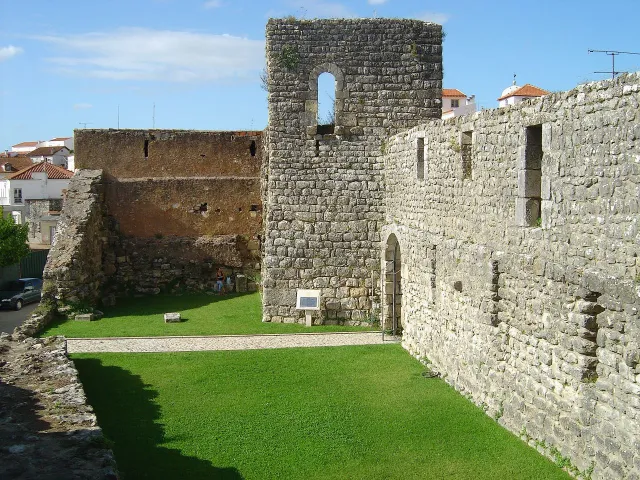
Conímbriga is a walled urban settlement, encircled by a curtain of stone structures approximately 1,500 metres (4,900 ft) long. Entrance to the settlement is made from vaulted structures consisting of two doors (one on hinges), at one time defended by two towers. The walls are paralleled by two passages, channelled to excavations, that remove water infiltration from the walls. The urban settlement consists of various structures, including a forum, basilica and commercial shops, thermal spas, aqueducts, insulae, homes of various heights (including interior patios) and domus (such as the Casa dos Repuxos and Casa de Cantaber), in addition to a paleo-Christian basilica.
A visitors' centre (which includes restaurant/café and gift-shop) was constructed to display objects found by archaeologists during their excavations, including coins, surgical tools, utensils and ceramics.
Like many archaeological sites, Conímbriga evolved sequentially and built up by successive layers, with the primary period of occupation beginning in the 9th century BCE; during this period the area was occupied by the Castro culture. Before the Roman occupation, the indigenous Conii peoples (who would later settle in southern Portugal) lived here.
The Conímbriga designation came from conim, used by indigenous peoples to designate "the place of rocky eminence," and briga, the Celtic suffix meaning "citadel". This site had become a junction between the road that linked Olisipo to Bracara Augusta, by way of Aeminium (Coimbra).
Around 139 BCE, Romans began arriving in the area, as a consequence of the expeditionary campaigns of Decimus Junius Brutus. At the time, Conímbriga was already a built-up settlement. The Romans introduced the formal organization of space to the settlement. Owing to the peaceful nature of rural Lusitania, Romanisation of the indigenous population was quick and Conímbriga became a prosperous town.
Between 69 and 79 CE, during the reign of Vespasian, Conímbriga was elevated to the status of municipium. At that time, new urban programs were initiated. Judging by the capacity of the amphitheatre, by this time the city had an estimated population of approximately 10,600.