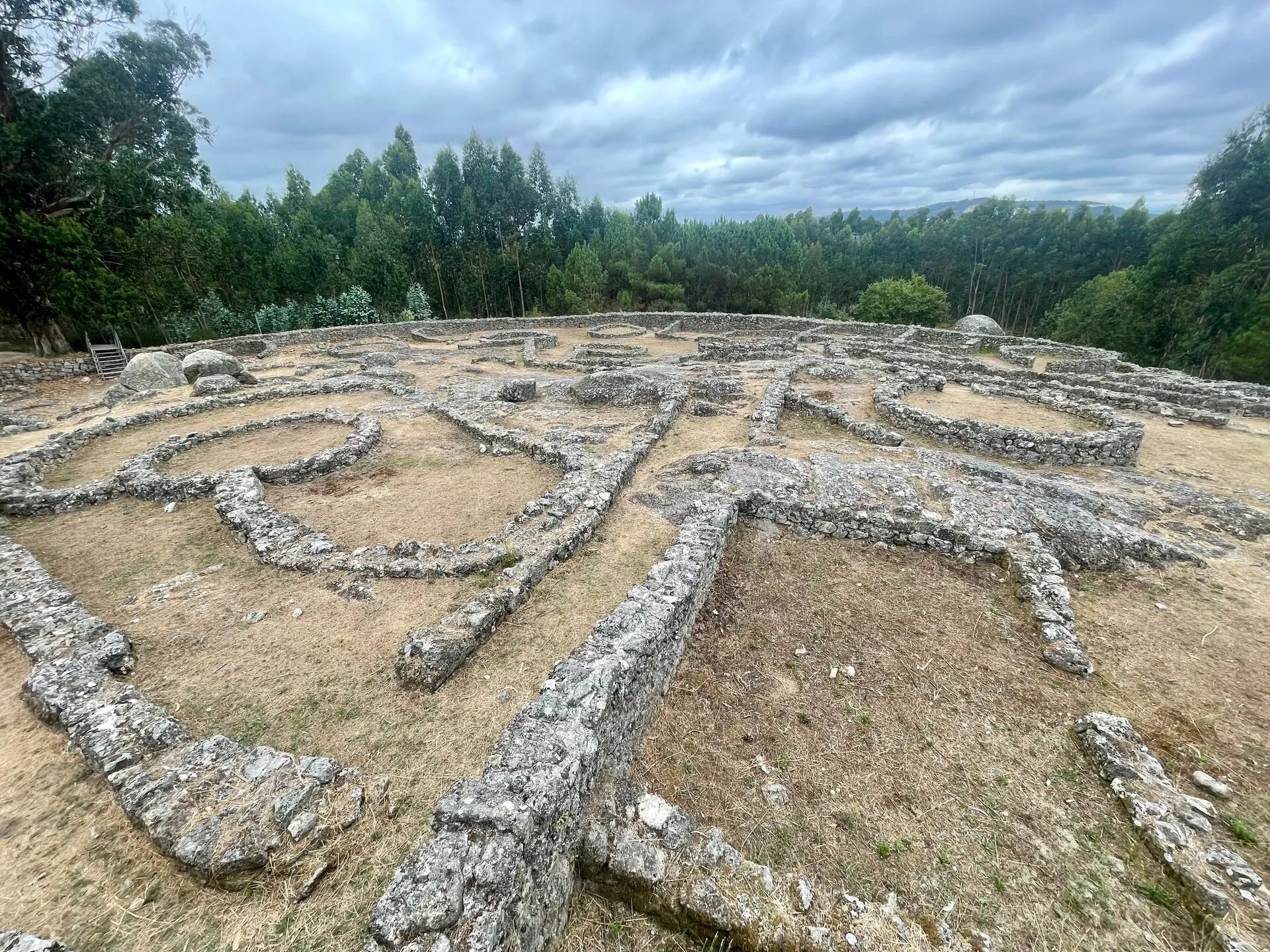
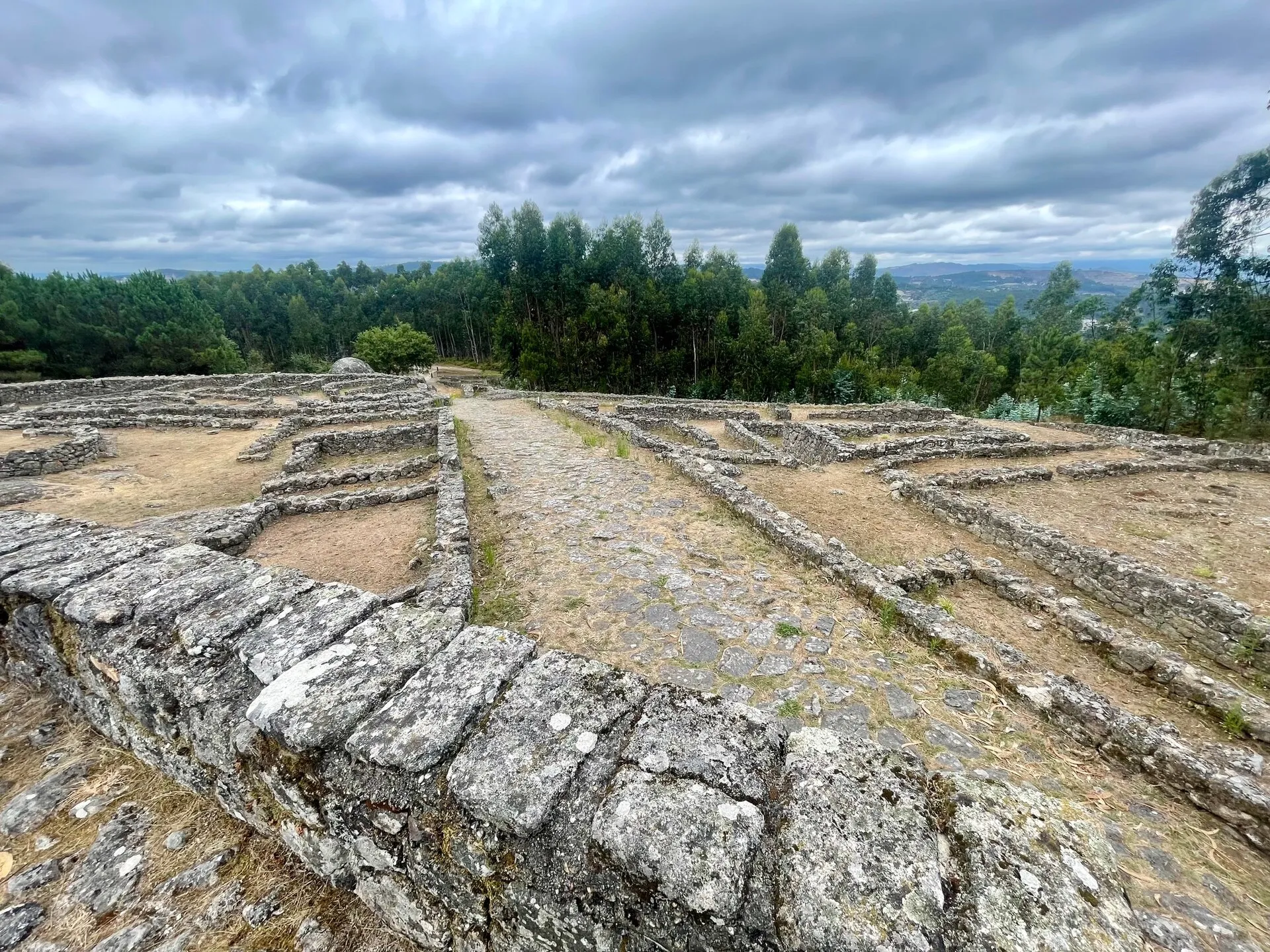
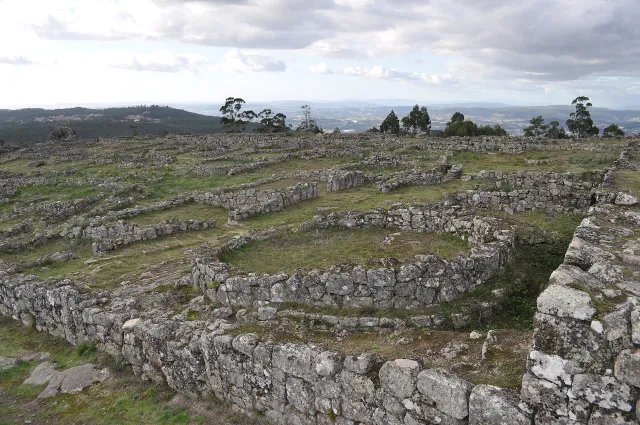
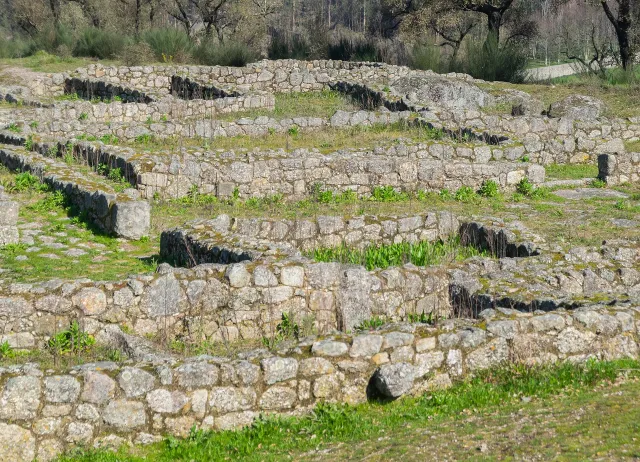
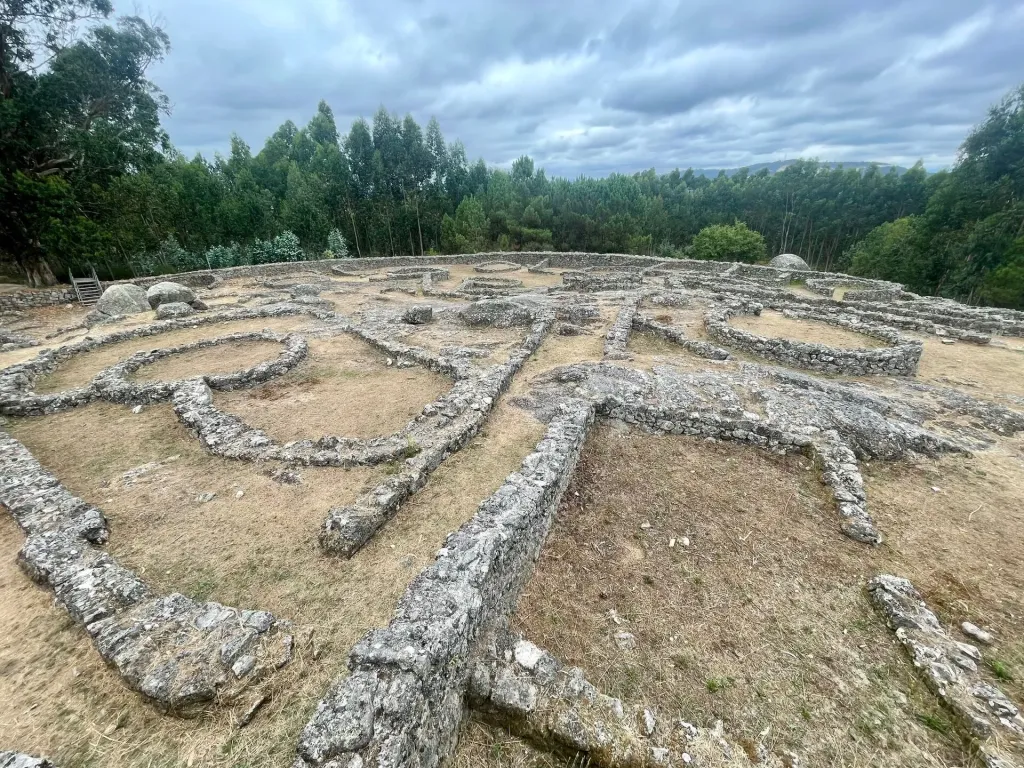
The site dates to a proto-historic period still largely undefined. Its first period of occupation can be traced to the 1 century BCE. Although with clear Roman structures, the original hillfort was flanked by statues of Gallaeci warriors, pointing to pre-Roman, Celtic settlements.
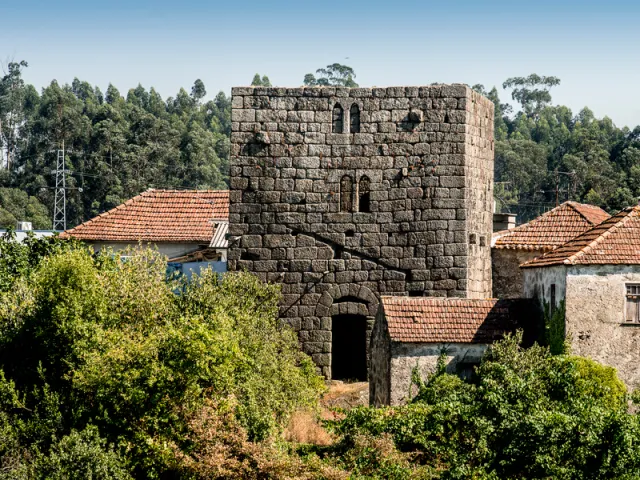
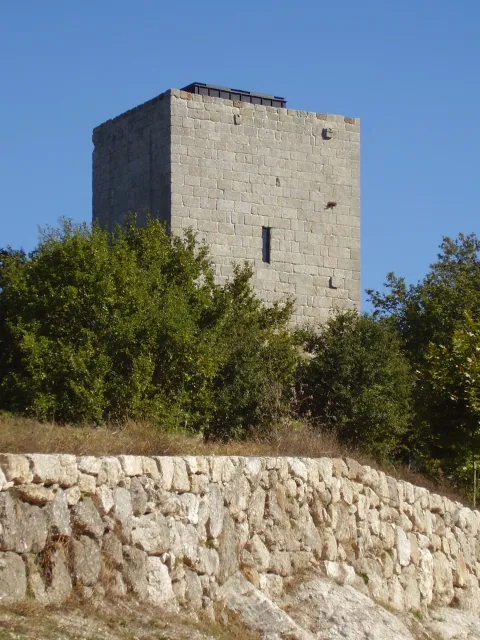
By the Middle Ages the site continued to be occupied by a small community.
On 8 November 2004, an interpretative centre was inaugurated by the Secretária de Estado das Artes e Espectáculos (Secretary-of-State for the Arts and Performances), Teresa Caeiro.
In 1930, archaeological excavations under the direction of Abílio Miranda. Excavations were continued in 1943, under the direction of Elísio Ferreira de Sousa, and in 1947, under the supervision of Fernando Russell Cortez.
Between 1974 and 1979, a new excavation was carried out by Carlos A. Ferreira de Almeida. A similar excavation began in 1982 (ending ten years later) by the archaeologist Teresa Soeiro.
The artefacts unearthed included fragments of ceramics dating to the Iron Age and Roman occupation, including pots, glass, Imbrex and tegula, millstones, coins and metallic elements (including artesanal, defensive and agricultural implements). In addition there were decorative jewellery in silver and bronze Transmontanan fibula (brooch), in addition to granite statuary and altars (an epigraph, fragment dedicated to Jupiter and another truncated to the foculus). These and other artefacts were housed and on display in the Museu Municipal de Penafiel (Penafiel Municipal Museum), Museu de Etnografia e História do Porto (Porto Museum of Ethnography and History) and the Museu de Antropologia da Universidade do Porto (University of Porto's Anthropologic Museum).

 1 / 2