The settlement developed around a crossing of the Tâmega River, which connects the coastal region of Minho with the mountainous interior of northern Portugal. Its medieval development is traditionally associated with São Gonçalo de Amarante, a Dominican religious figure who settled in the area during the 13th century and is credited with promoting the construction of a bridge across the river. His veneration subsequently made Amarante an important destination for pilgrims, while the construction of the Church and Convent of São Gonçalo established a major religious and architectural landmark in the town.
Amarante played a significant role in the Peninsular War, particularly during the Battle of the Bridge of Amarante in 1809, when Portuguese forces and local inhabitants resisted the advance of French troops across the Tâmega. The town subsequently developed as a regional commercial and cultural centre. Its cultural heritage is associated with Portuguese writers and artists including Teixeira de Pascoaes, Agustina Bessa-Luís, António Carneiro and Amadeo de Souza-Cardoso. The latter is commemorated by the Museu Municipal Amadeo de Souza-Cardoso, housed in the former Dominican convent. In 2017, Amarante became a member of the UNESCO Creative Cities Network in the field of music.
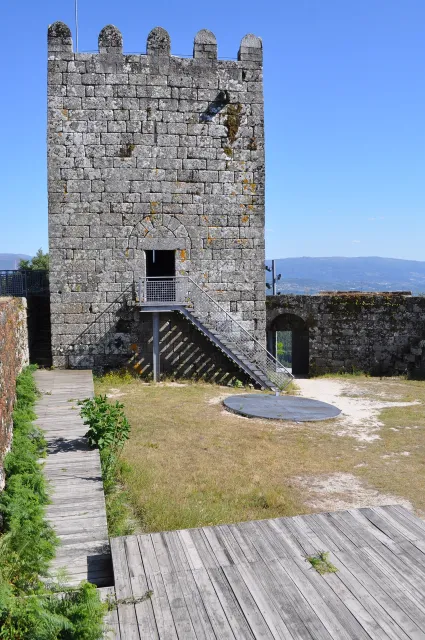
Human presence in the Amarante area is sparsely attested before the Iron Age, with only isolated finds. From the Iron Age onward, and more consistently during the Roman period, settlement becomes better documented. One of the main sites is the Castro de Ladário, a fortified hilltop settlement occupied from the 1st century BCE to the 5th century CE. It may have served as the main center of the Atucausenses, a local tribal group identified in a Roman inscription found nearby in Pascoaes.

 1 / 3