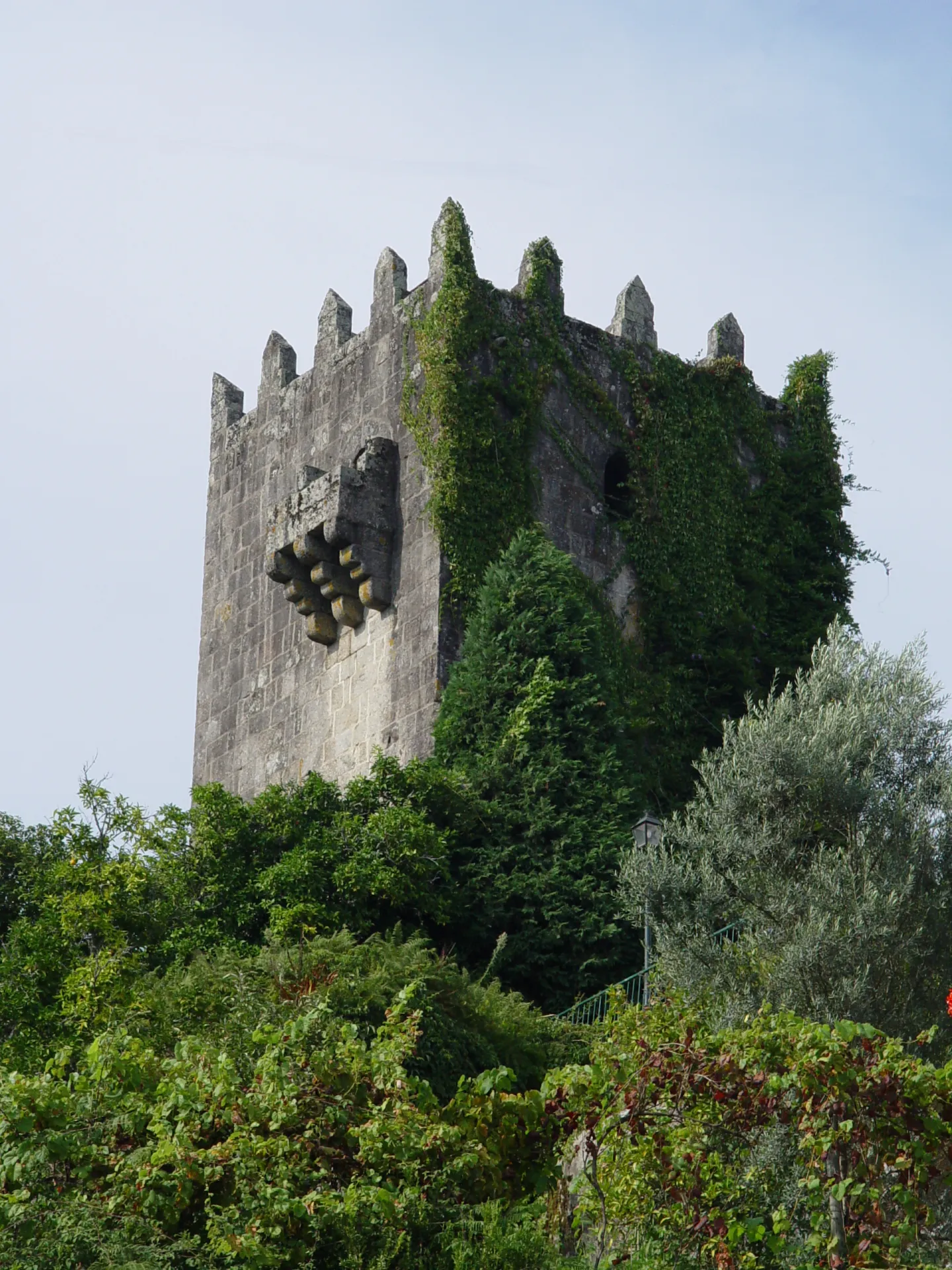
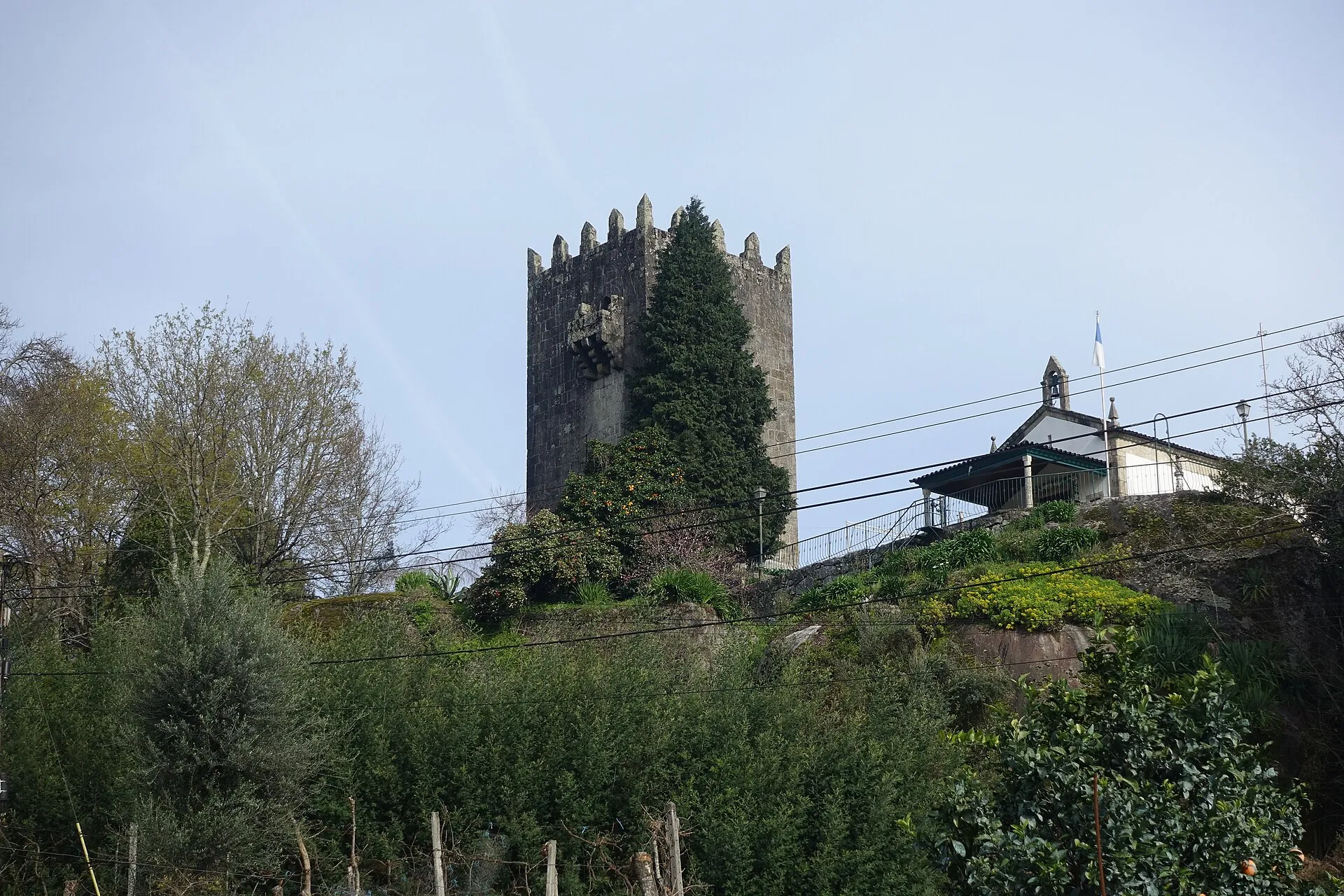
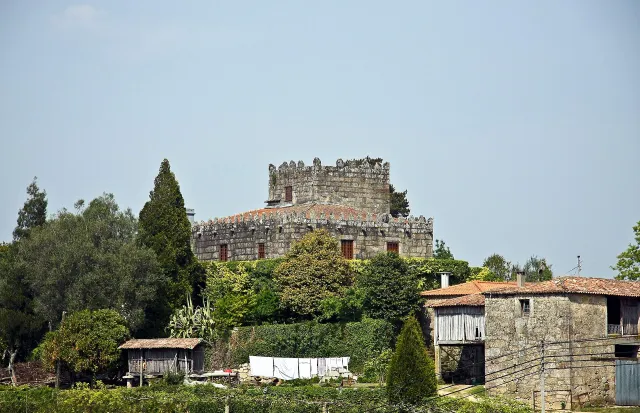
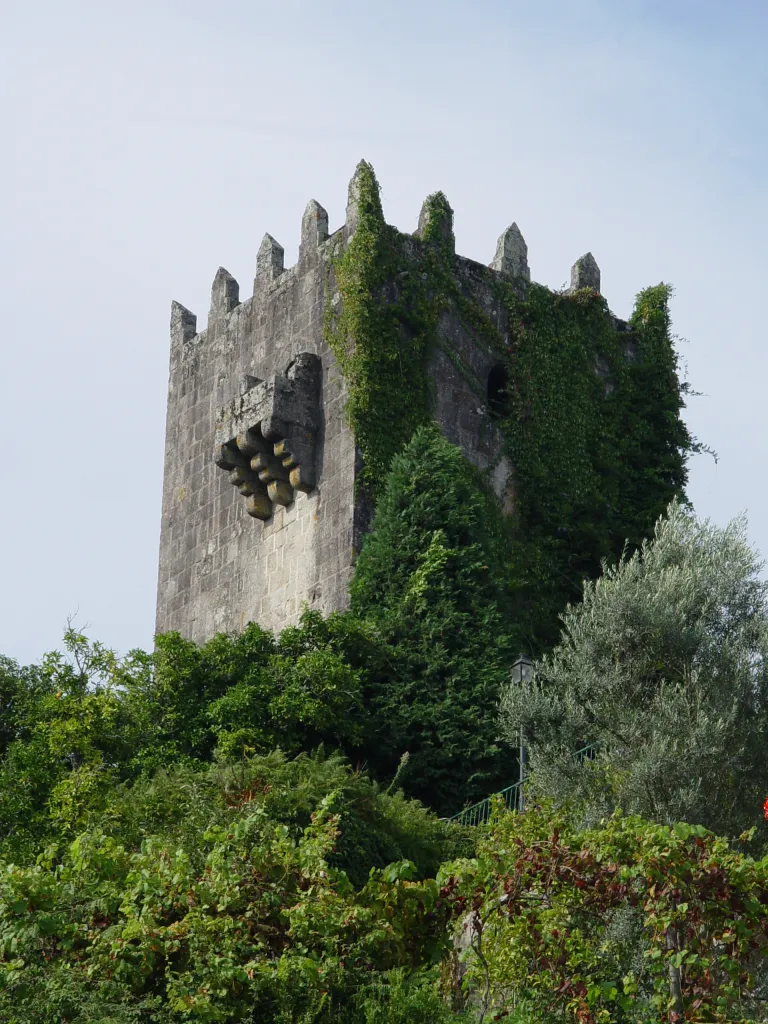
The tower was begun in 1322, by Mem Rodrigues de Vasconcelos, alcalde-mor of the Castle of Guimarães, after receiving a royal licence (for a domus fortis) from King Denis on 5 October 1322. Mem Rodrigues requested the dispatch, owing to problems found in occupying his title in the region of Entre-Homem-e-Cávado, the zone where royal judiciary had difficulties in imposing is authority owing to his uncle, Pedro Anes de Vasconcelos.
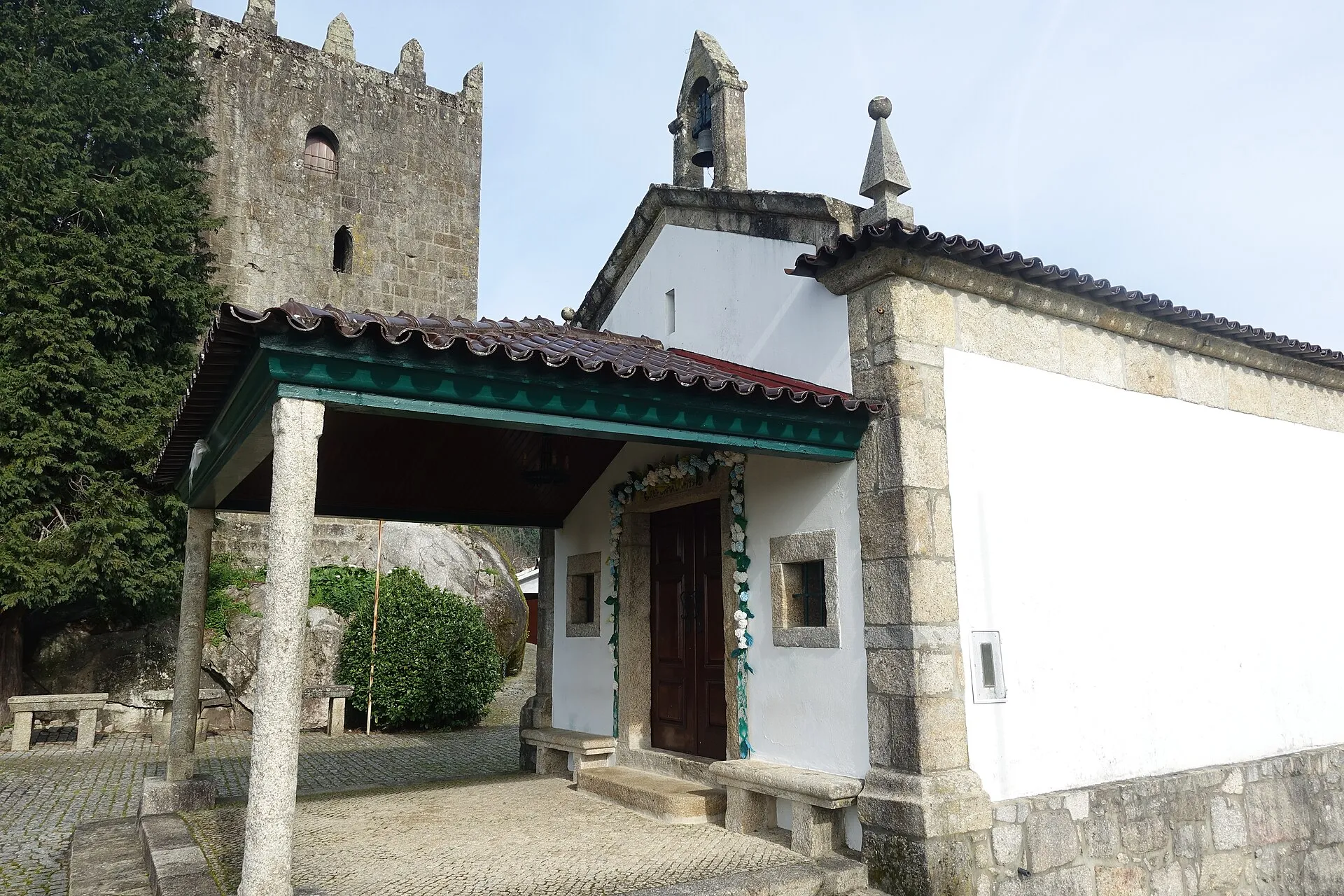
By 1668, Miguel Valadares, who was then the proprietor of the tower, died. The Chapel of Nossa Senhora da Penha was constructed in the 17th century, under his initiative (from the inscription along the principal facade). This nobleman, deacon of Guimarães and judge in Braga, was the descendant and heir of the building, and incorporated the chapel as a burial site.
In 1907, the tower was acquired by the father of the current property-owner.
In 1939, a house was constructed along the lateral wall of the tower.
The tower's age meant that local authorities were interested in classifying the tower, as a form of attracting local activity to the region. On 20 August 1986, municipal authorities deliberated a motion to propose to the IPPC, that the tower be listed as a National Monument. This was followed on 15 November 1988, with a proposal by the Câmara Municipal of Vila Verde to classify the structure. The process was opened by the president of the IPPC on 20 June 1990. But, many of these initiatives met with success, and Penegate remained unclassified by the beginning of the 20th century.
On 27 December 2011, the DRCNorte (Direcção Regional de Cultura do Norte) re-proposed classifying the structure as an MIP, or Monumento de Interesse Público (Monument of Public Interest). The proposal was met with a favorable response from the National Council for Culture SPAA on 23 January 2012.

 1 / 3