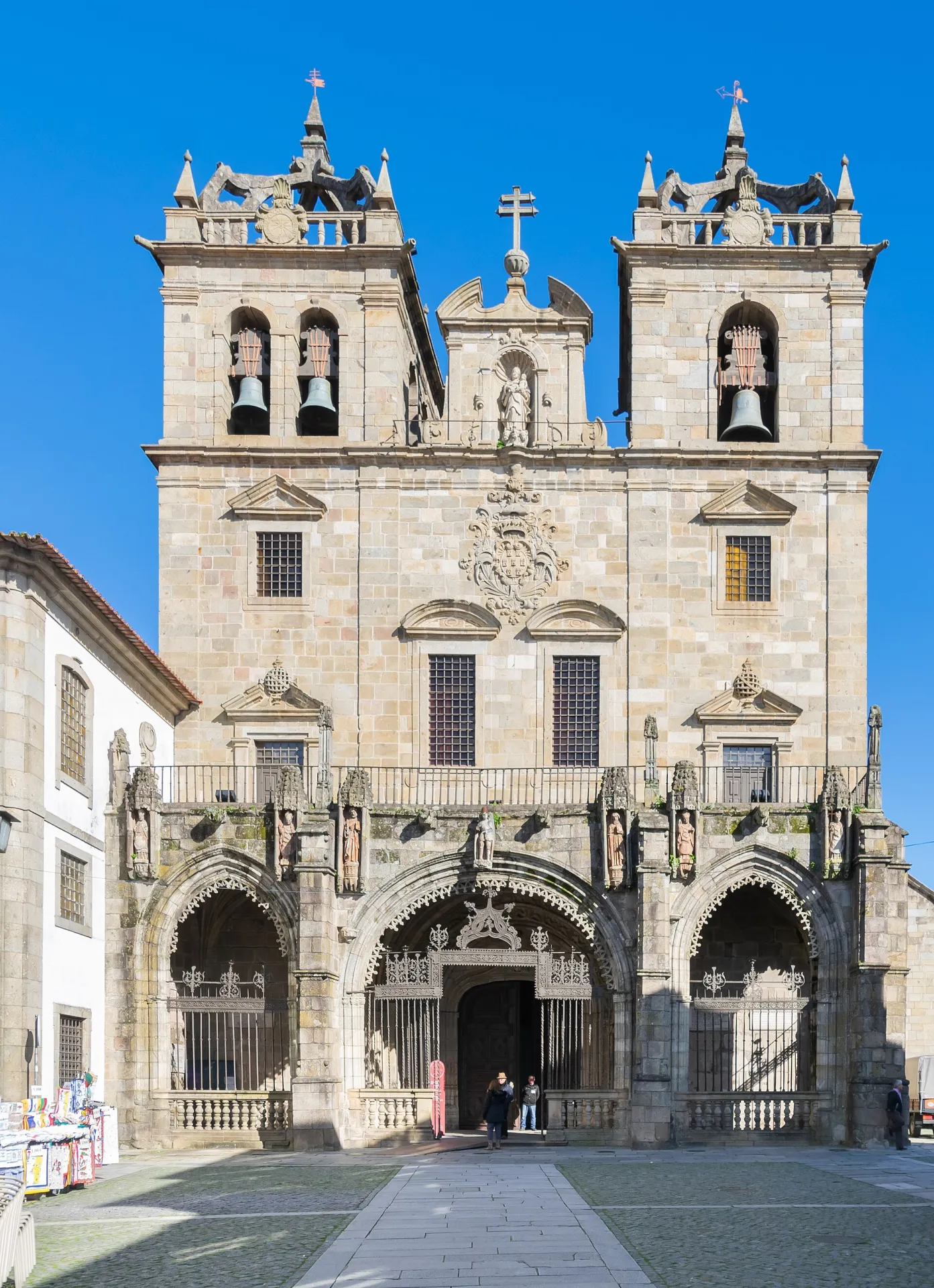
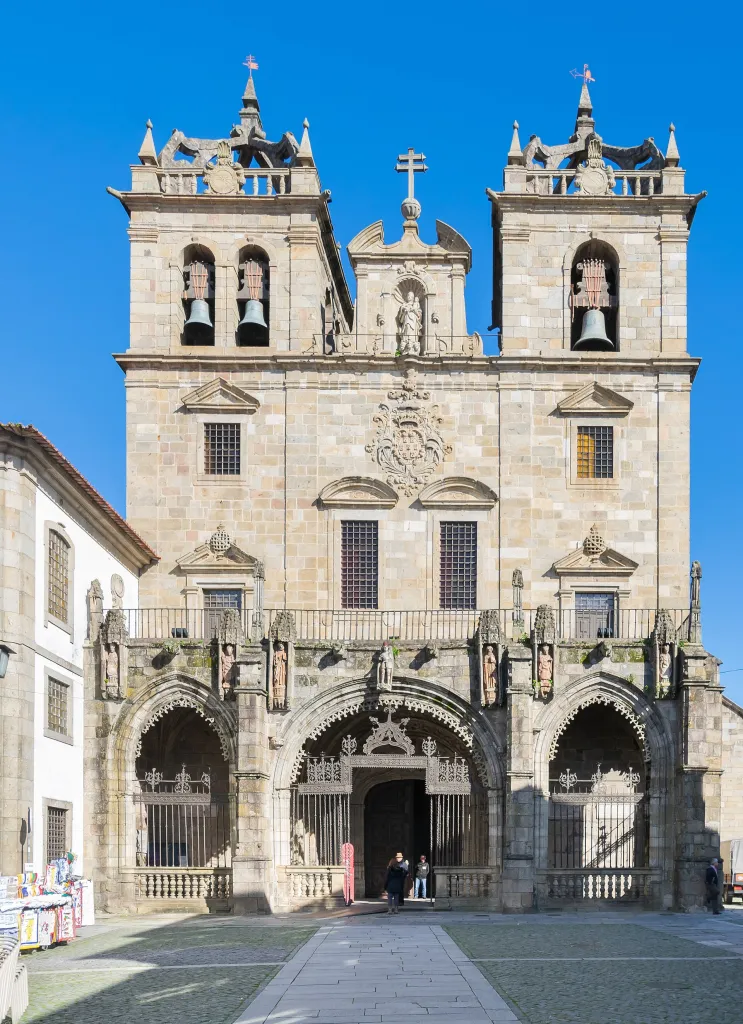
The cathedral has been classified as National Monument since 1910.
The Diocese of Braga dates from the 3rd century AD, being one of the oldest in the peninsula and the centre for the Christianisation of Gallaecia (Northwestern Iberia).
Saint Peter of Rates or of Braga, is traditionally considered to be the first bishop of Braga between the years 45 and 60. Tradition says he was a Jew that had recently died when Saint James the Great was in the area. The Apostle knowing him to be a man of intelligence and good will had him resurrected from the grave and ordained him to preach the glory of Christ. The same tradition holds that Peter of Rates was martyred while attempting to make converts to the Christian faith in northern Portugal.
When Roman power was being dissolved by invading Germanic tribes, Braga (then called Bracara Augusta) became the capital of the Suebi Kingdom (409 to 584). Bishop Martin of Dumio, a great religious figure of the time, converted the Suebi to Catholicism around 550. The importance of Braga diminished during Visigoth times, and after the arrival of the Moors (716) it lost its bishop seat.
The bishopric of Braga was restored around 1071, after the city was back into Christian hands, and Bishop Pedro started to build a cathedral, consecrated in 1089 (only the Eastern chapels were finished). Starting in 1093, the County of Portugal was ruled by Count Henry of Burgundy who, together with Bishop Geraldo de Moissac, managed to convince the Pope to turn Braga into an archbishopric in 1107. The archbishop of Braga had power over a large region in Northwestern Iberia, including most of Portugal and part of Galicia, in today Spain. The Cathedral of Braga was the first Portuguese cathedral, erected several decades before the founding of the country when it was part of the Kingdom of León. It was consecrated and dedicated to the Virgin Mary by Bishop Pedro in a solemn session on August 28, 1089.
Construction on the cathedral was then resumed and lasted until the middle of the 13th century, but the details are obscure. The original 12th century-building was built in the Burgundian Romanesque style of the monastery church of Cluny. It influenced many other churches and monasteries in Portugal in that period.

 1 / 3