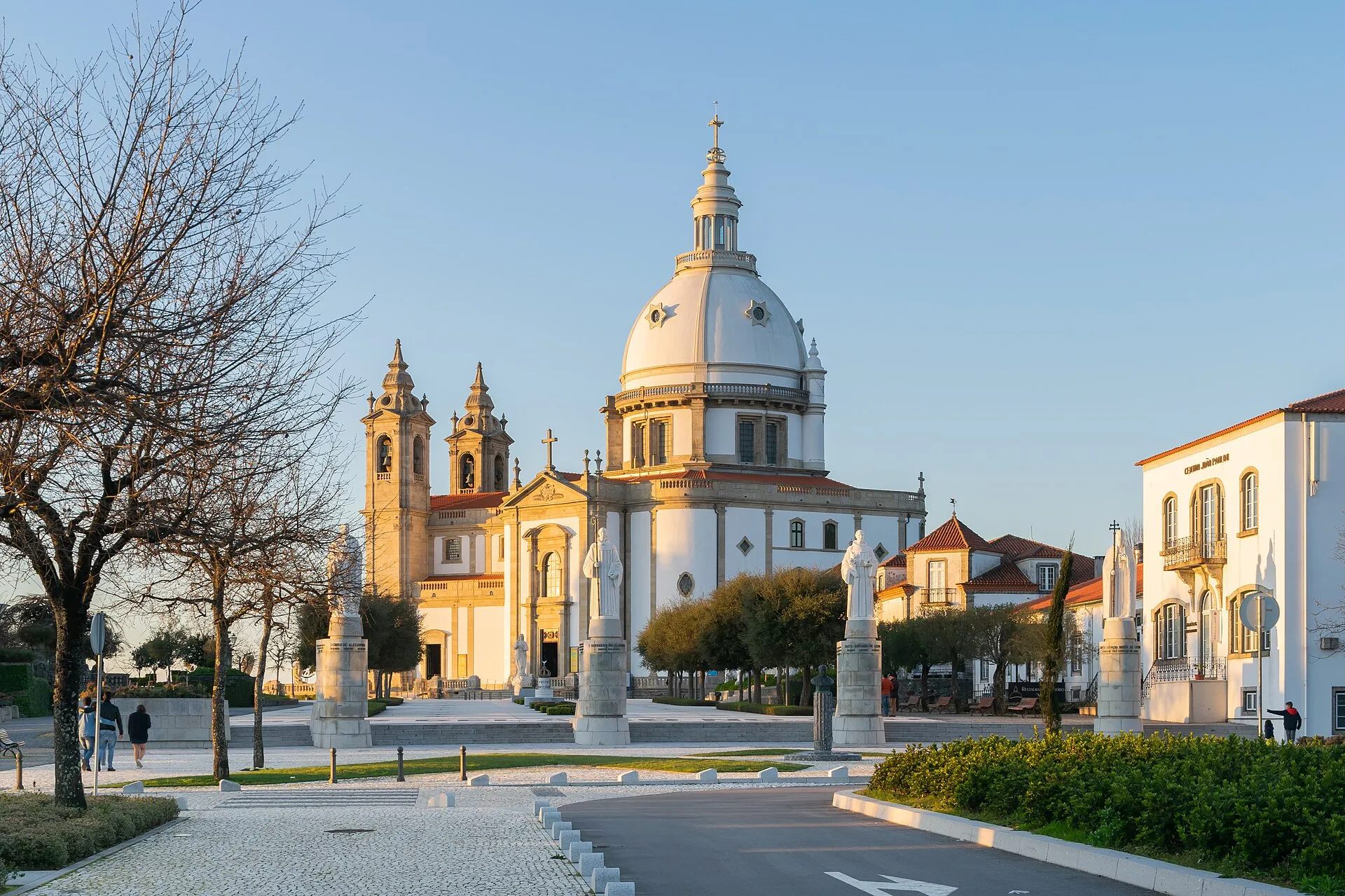
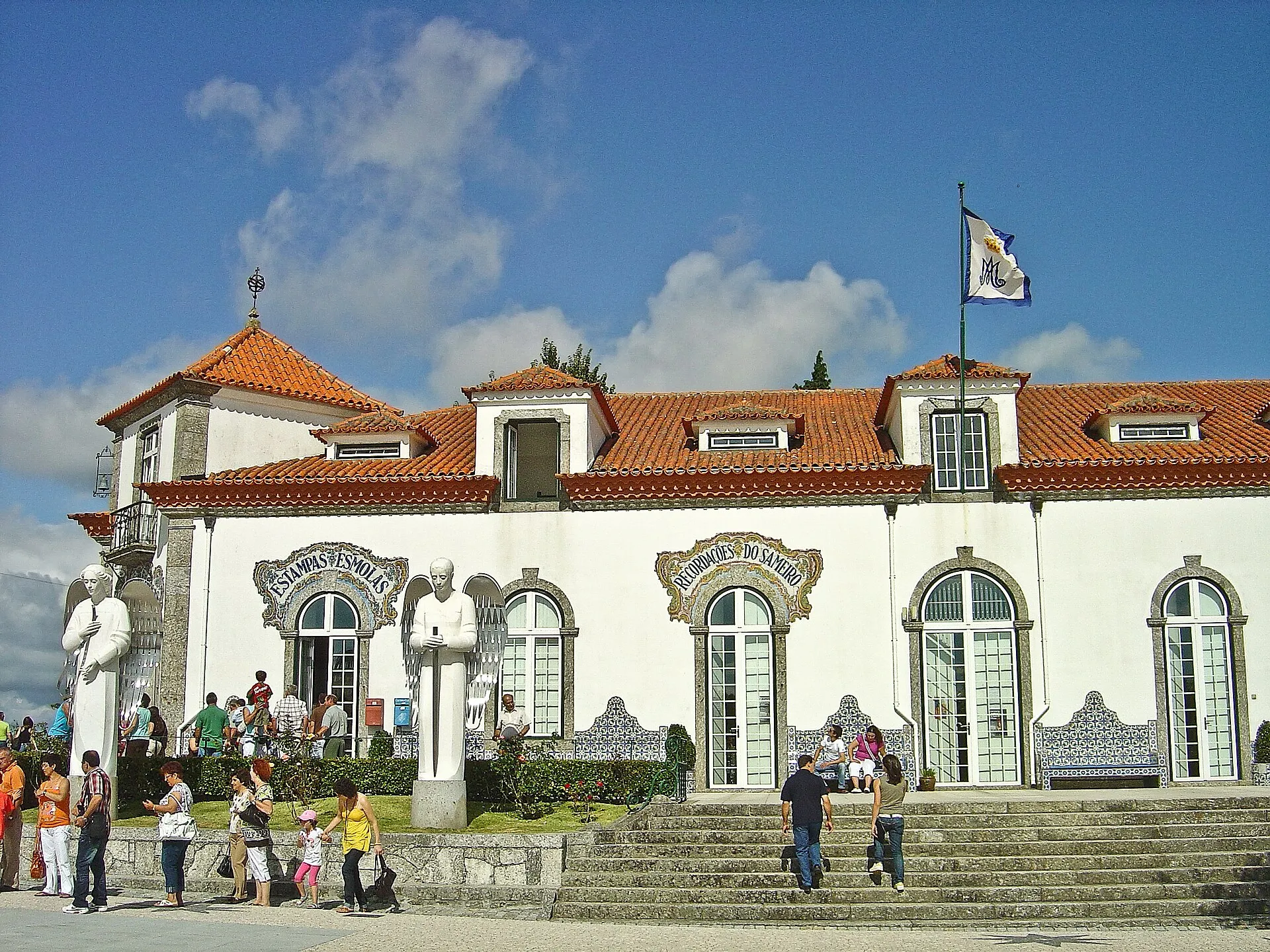
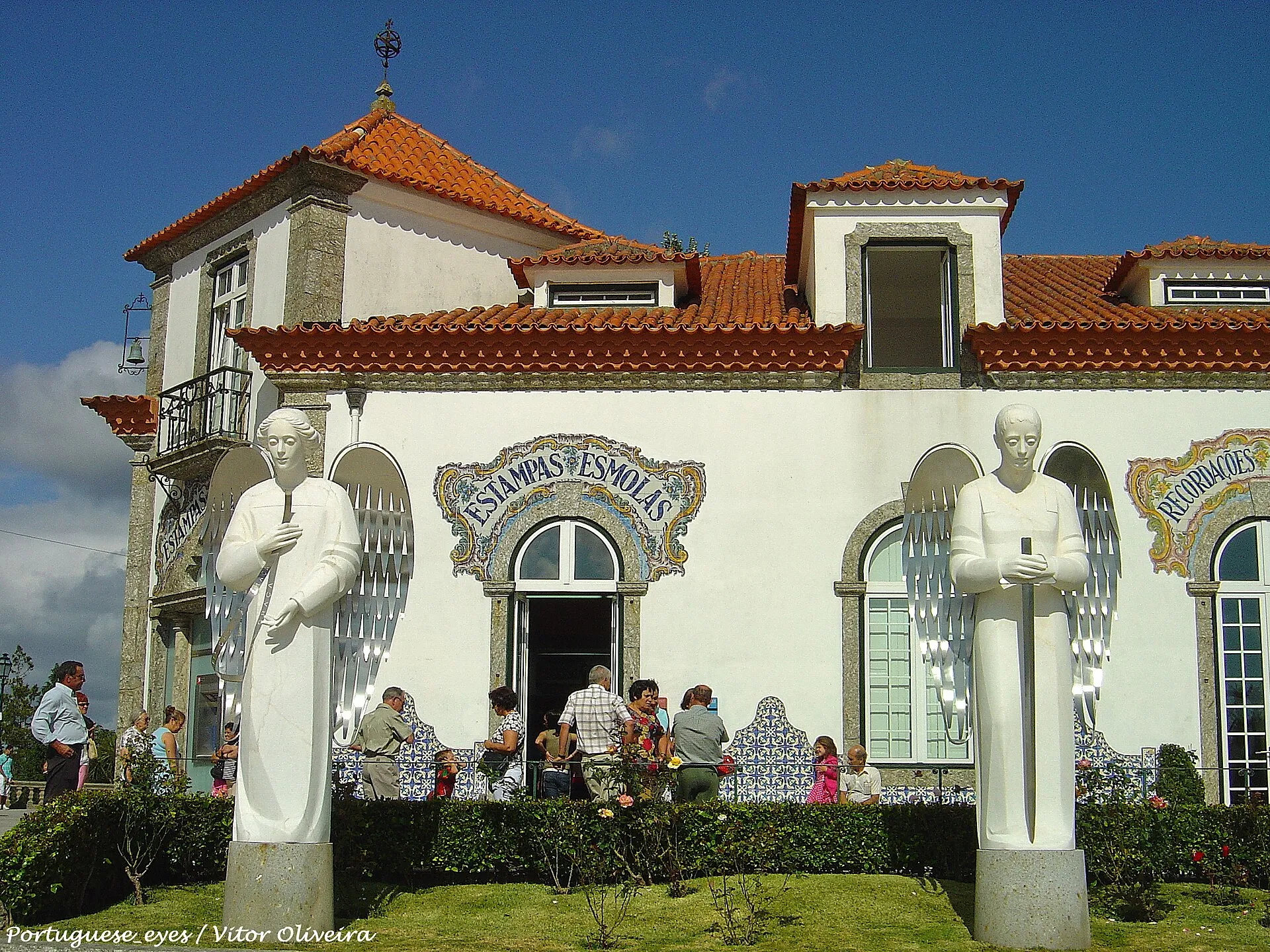
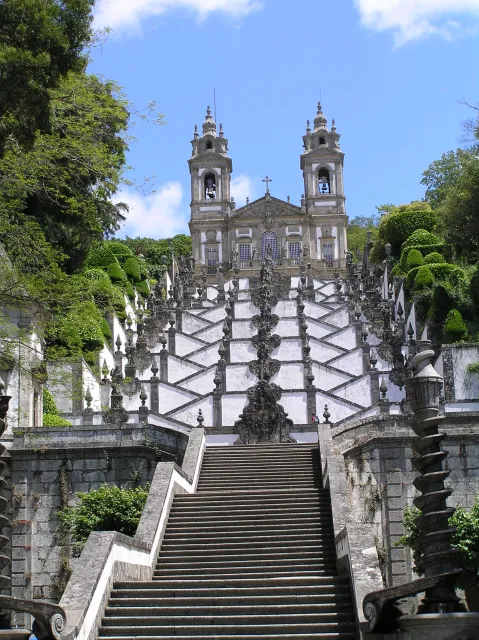
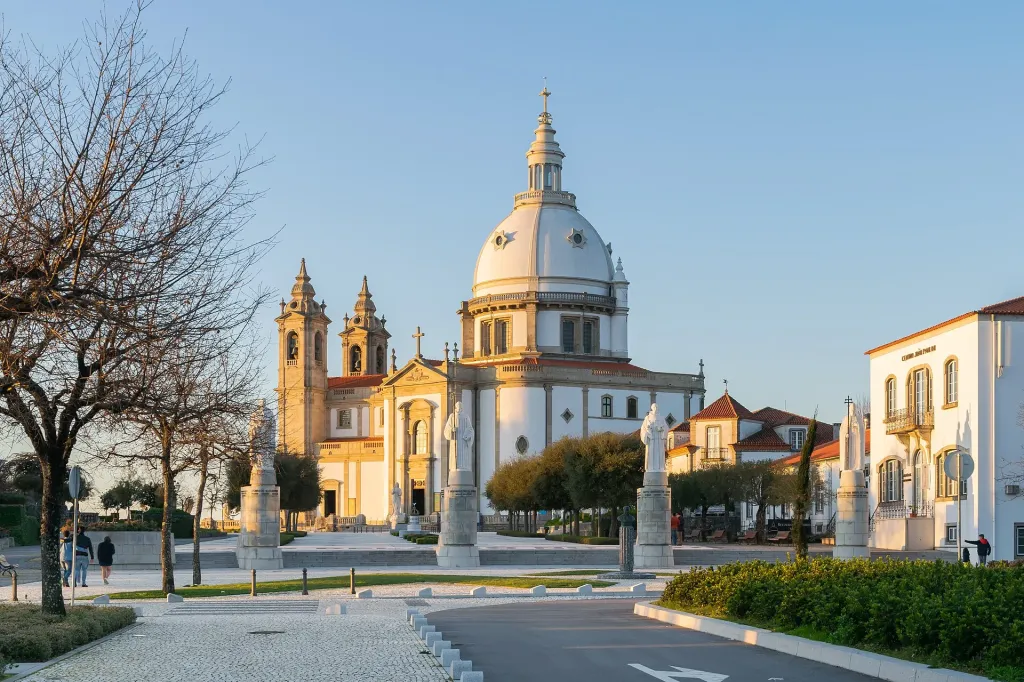
This site forms part of a Marian Shrine Route in Portugal for Christians. Mary, mother of Jesus, and often revered as “Nossa Senhora”, has long held a special place in Portuguese history. As national identity took shape (see Portugal in the Reconquista), a parallel and exceptional devotion to Mary saw the founding of monasteries, chapels, churches and sanctuaries that are still the focus of celebration and popular festivals. It is to Mary that the majority of cathedrals in Portugal are dedicated, for example those in Porto, Viseu, Lisbon and Évora.
Existence of the sanctuary is thanks to Fr Martinho Silva (1812-1875), priest in the archdiocese of Braga, and figurehead of a local Marian devotion from the middle of the 19th century. Only a generation earlier, religious houses throughout Portugal had been forced to close after the end of the Liberal Wars. This, however, had been tantamount to civil war, from which the dust could have barely settled. Many of those faithfully adherent to the Catholic Church, its institutions in Portugal ostensibly among the losers at cessation of hostilities, would have felt bereft and disorientated. Further afield, meanwhile, a vision reported by Catherine Labouré had ignited a general revival of devotion to Mary. Then, in December 1854, Pope Pius IX pronounced as dogma the Immaculate Conception, the belief that, from when she was conceived, Mary had been free of Original sin. The first diocese in Portugal to celebrate this was Braga, with an elaborate ceremony in January 1855. In short order would have come news of the revelations reported by Bernadette Soubirous at Lourdes.

 1 / 6