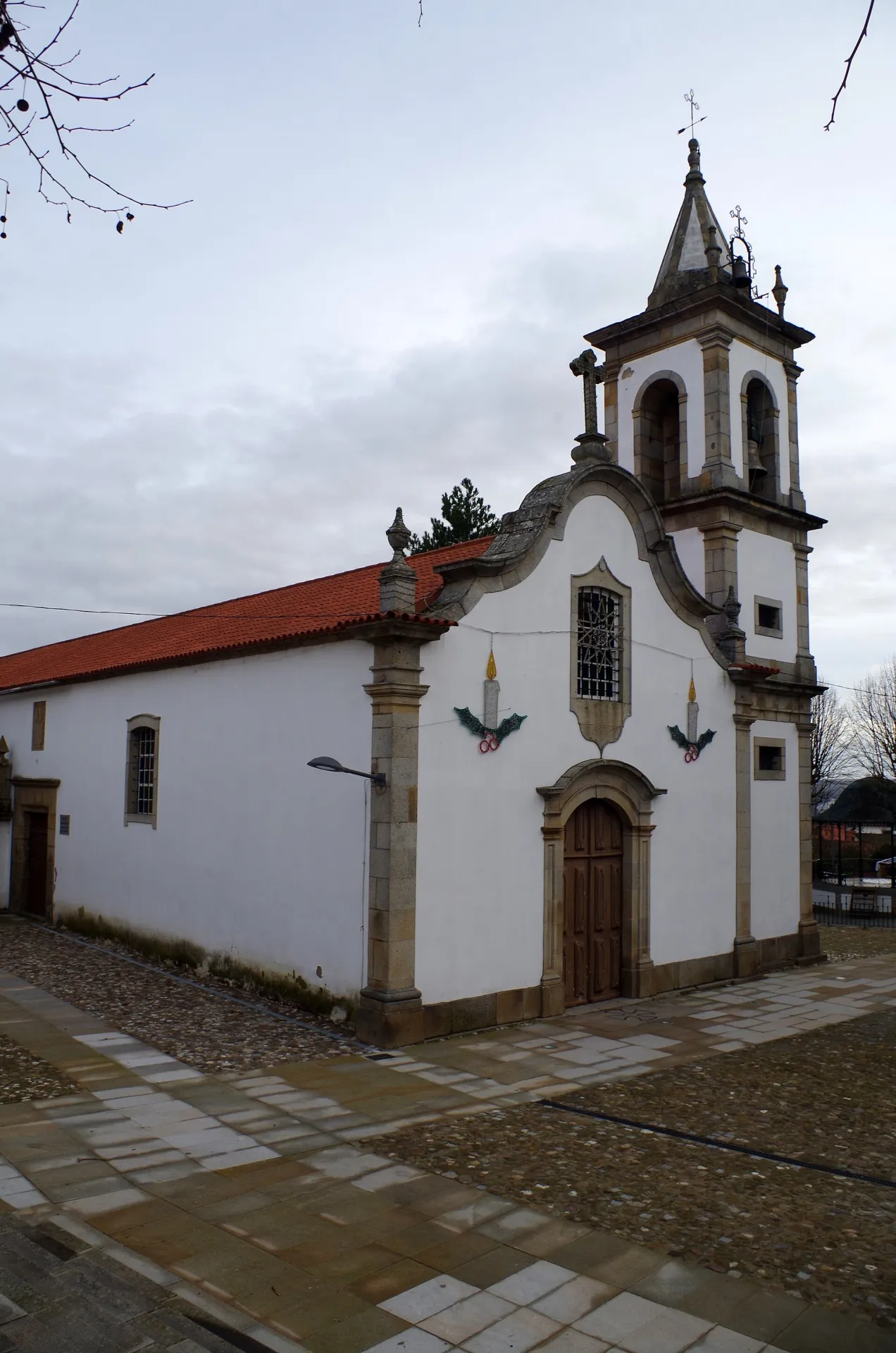
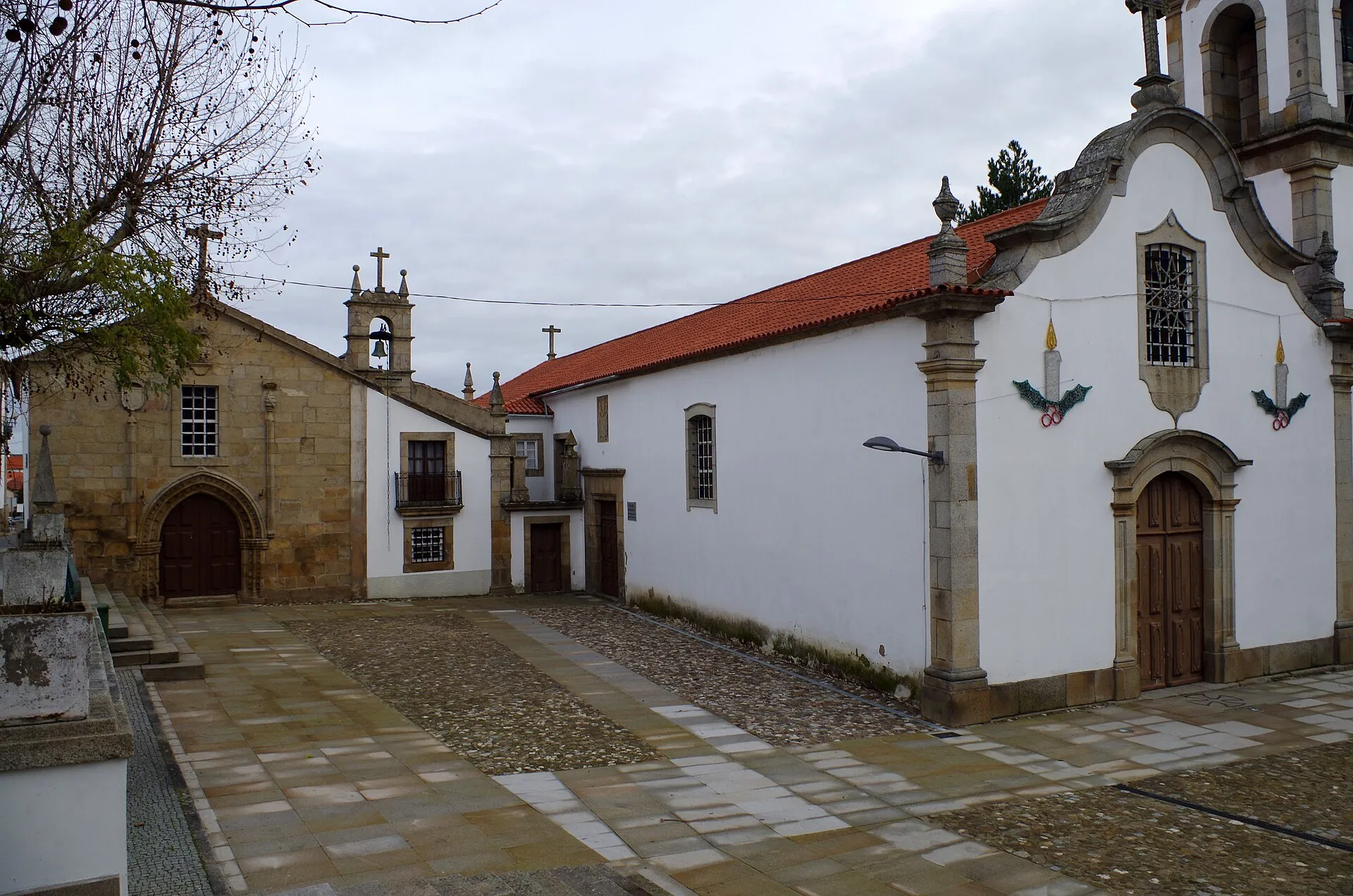
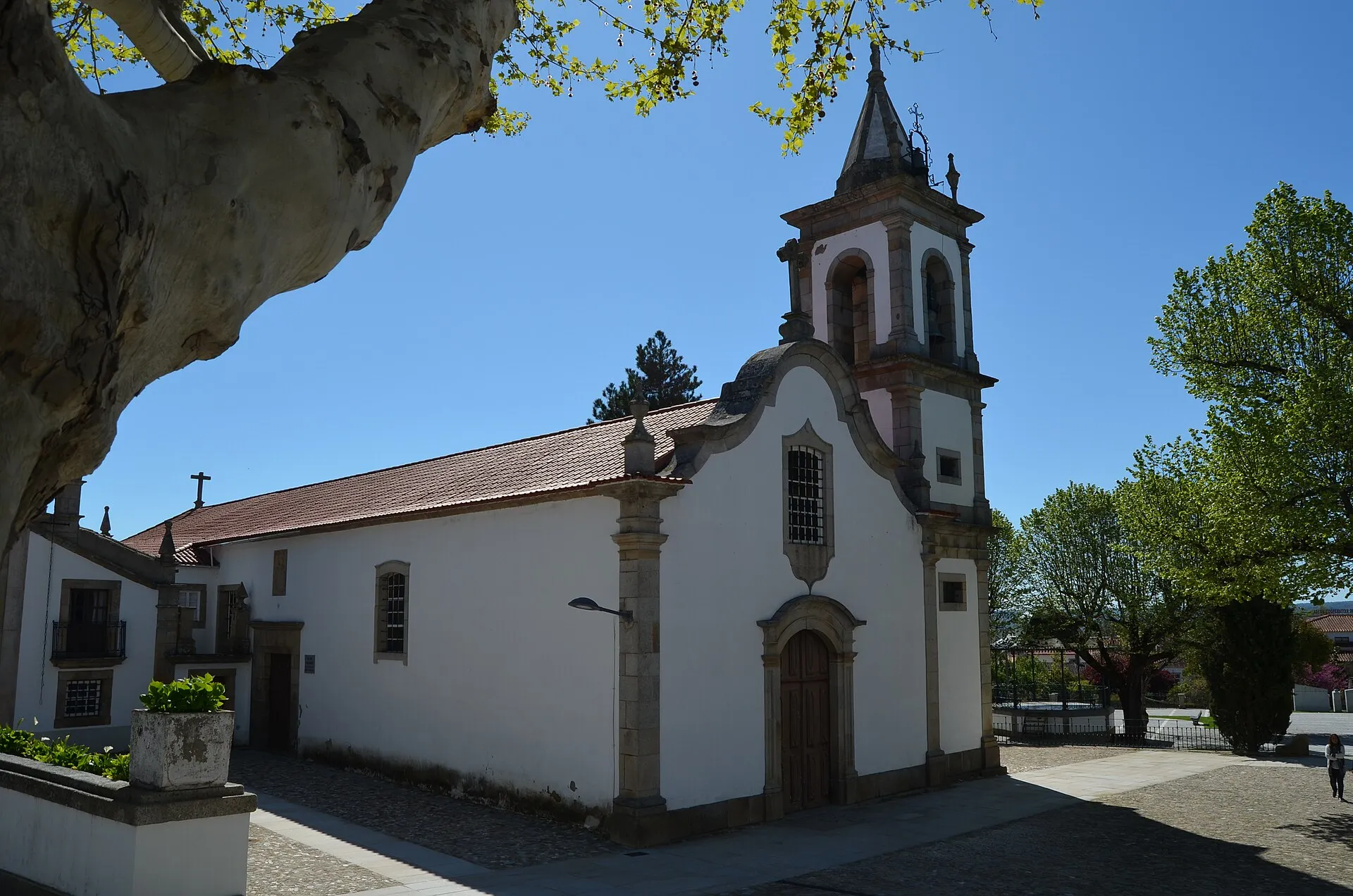
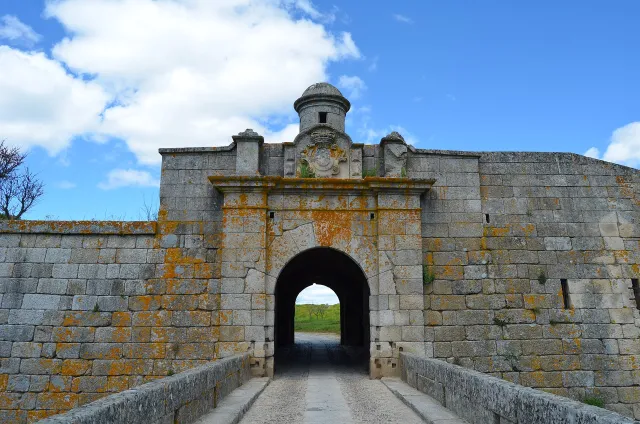
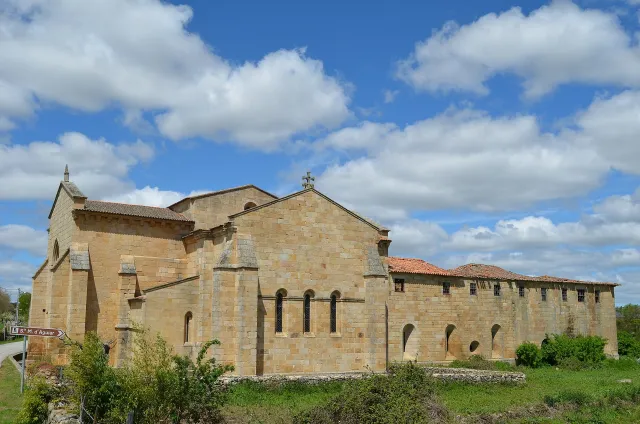
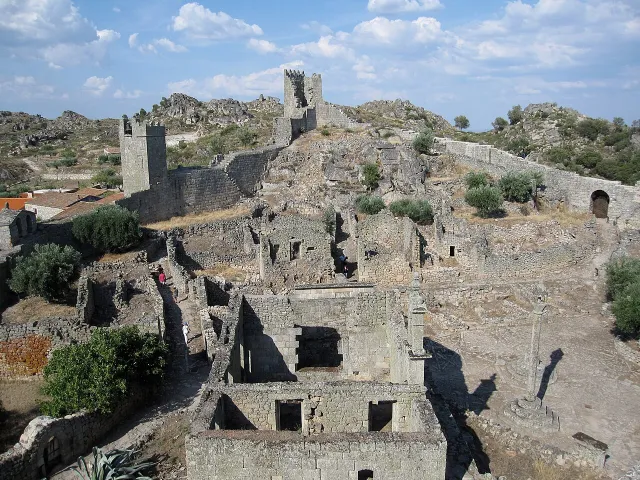
On 5 December 1602, the convent was transferred to the Order of St. Francis, creating a quarrel between the founder and various prelates, who wanted to expand the monastery. Only in October of the following year the first nuns began to enter the institution. Successive conflicts with the bishop over the status of the sisters, that resulted in the interdiction of the monastery.
In the 17th century, the box-ceiling and retable altar was finally installed in the church, along with azulejo tiles in the presbytery. Religious reliquaries were gifted by Pope Paul V in 1620, consisting of artifacts associated with São Caio Papa, São Vital, Santa Teodora and Santa Cristina.
Its founder, Luís Falcão, was buried onsite in 1631. Within another 15 years his son, António de Figueirdo Falcão would also be buried.
An image of St. Joseph was commissioned in the 18th century.
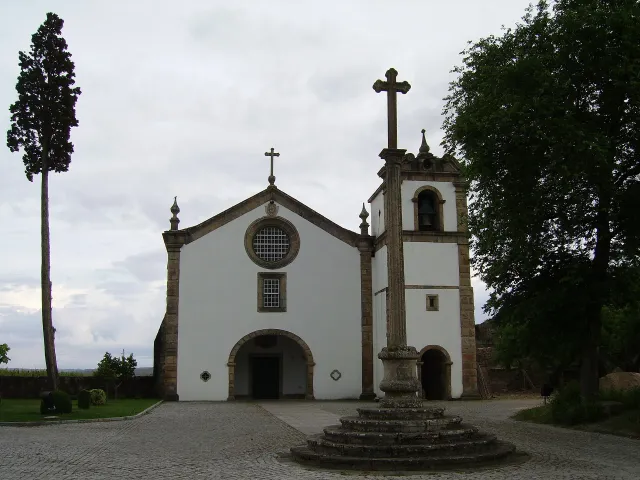
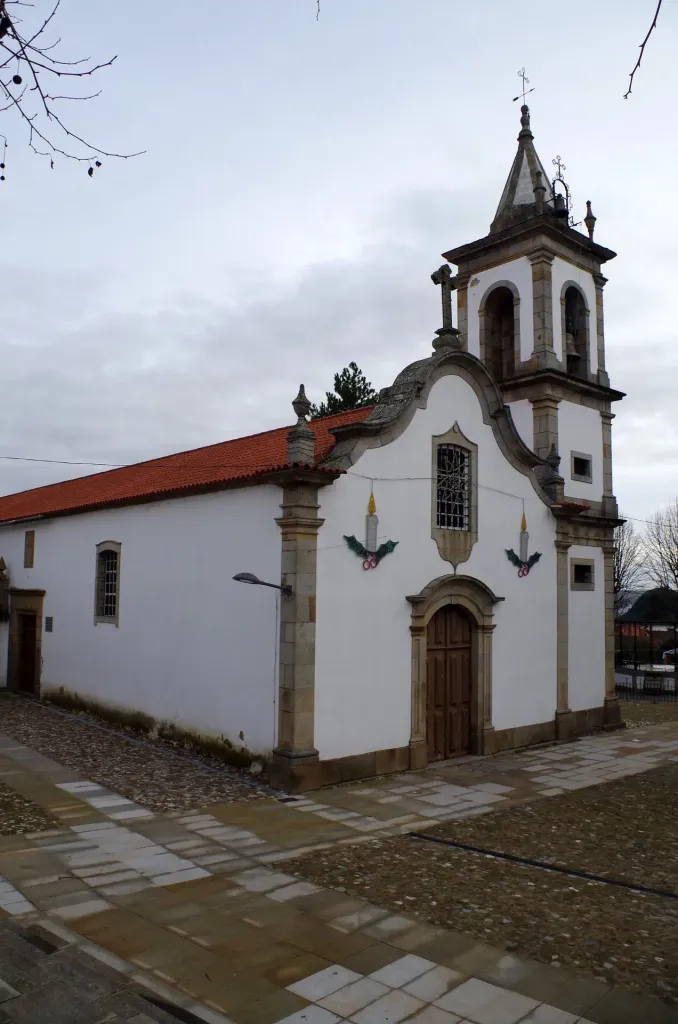
Between 1797 and 1828, it was elevated to the status of cathedral of the Diocese of Pinhel by order of its Bishop Don Bernardo Bernardino Beltrão Freire (1797.12.18 – 1828.07.19) following the demolition of the Church of the Saviour (Portuguese: Igreja do Salvador). Work in the interior advanced during this period, with the reconstruction of the principal facade and the addition of a high choir occurring in 1808.
In 1836, though, the convent was extinguished, and the church began to serve as a parochial church. During this era, around 1862, a bell-tower was installed by a local master mason.

 1 / 3