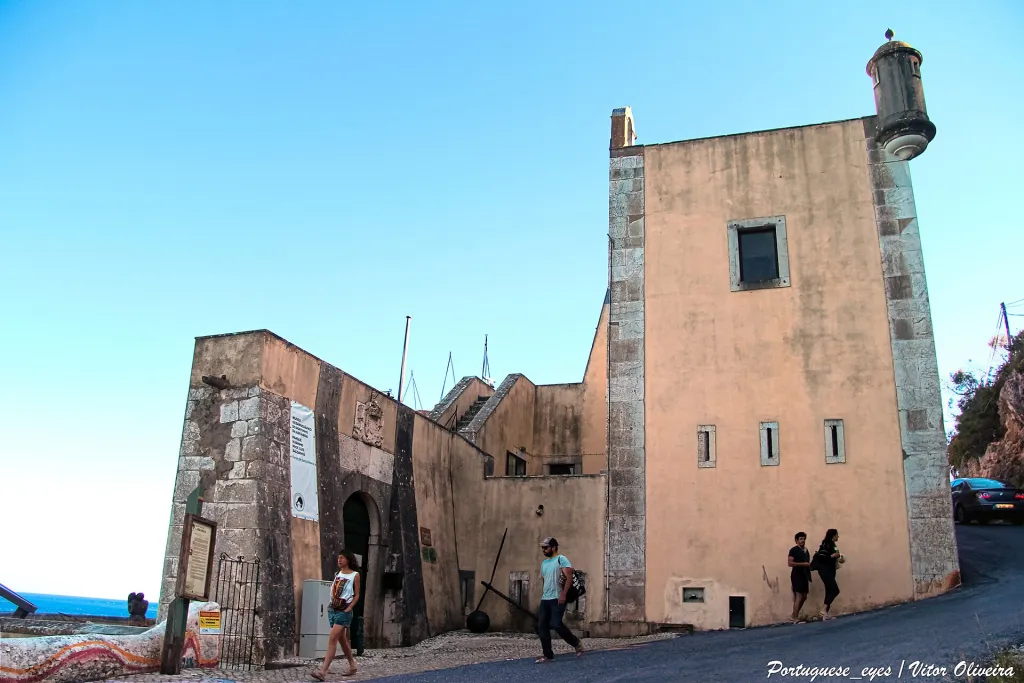
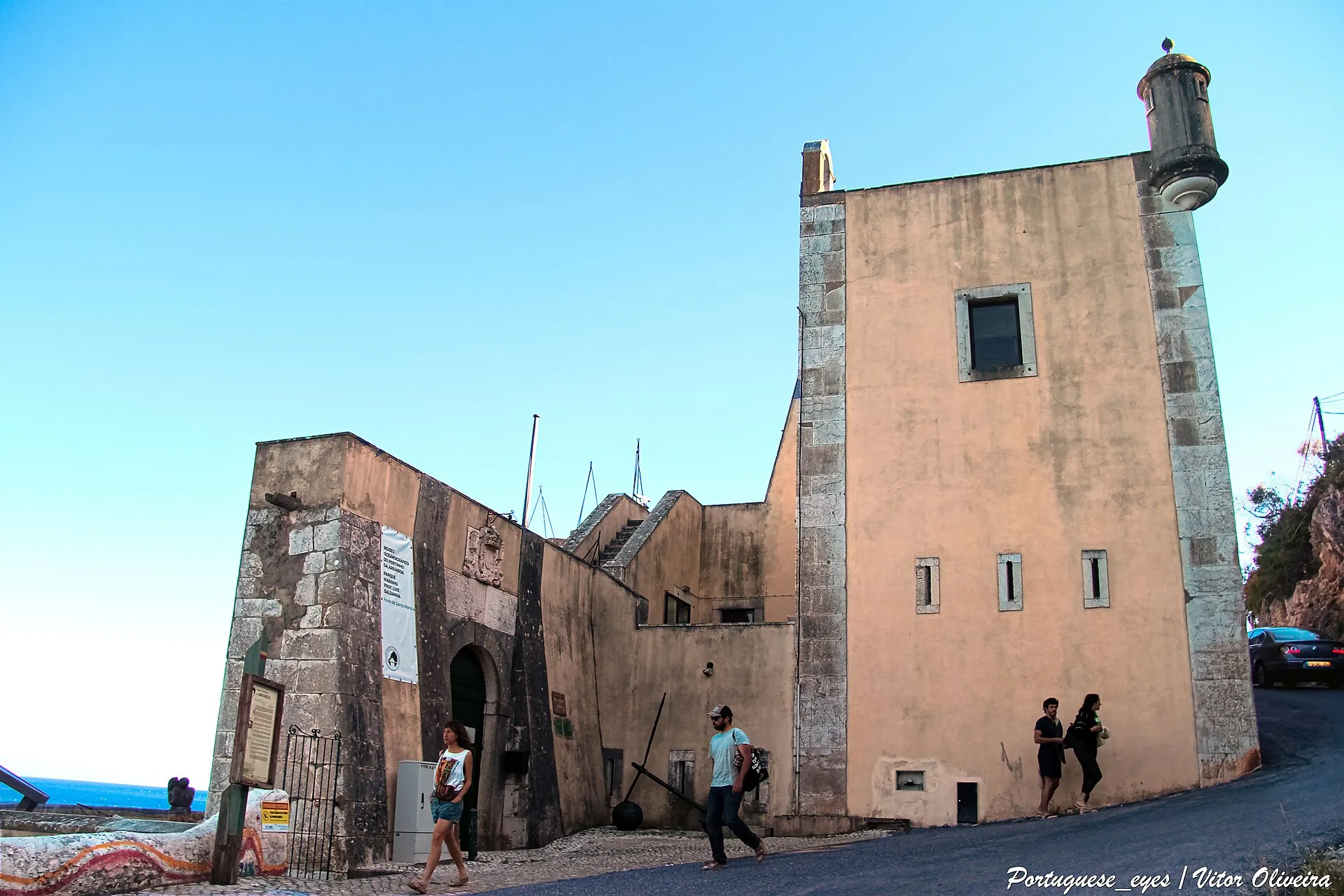
It complements the set of 18th century fortifications built during the Portuguese Restoration War, along the coast from Setúbal to the Fort São Domingos da Baralha, near Cape Espichel. It currently contains the Luís de Saldanha Oceanographic Museum.
The site took on religious dimensions from 1250 onwards, when, according to tradition, Hildebrand, a merchant from the British Isles, built a small hermitage devoted to Our Lady, as a symbol of thanks for the miracle that saved him from a shipwreck there.
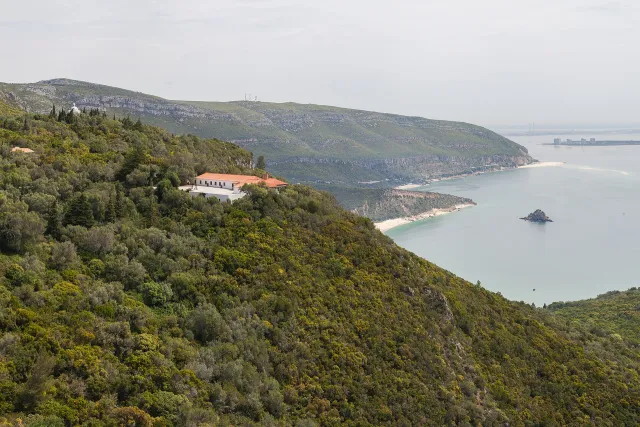
Between 1539 and 1542, Dom João de Lencastre (1501–1571), 1st Duke of Aveiro, built the original convent, donated to the Spanish Franciscan Friar Martin de Santa Maria Benavides, who wanted to live there as a hermit. Construction work continued between the second half of the 16th century and the first half of the 17th century, due to the devotion of the 2nd and 3rd Dukes of Aveiro, (to whom the construction of the inn and stations of Passos da Paixão are owed) and the daughter-in-law of the 3rd Duke. In the mid-17th century, the 4th Duke of Aveiro promoted the construction of the Bom Jesus chapel.
Constructed as part of the complete renovation of Portugal's defenses during the reign of John IV (1640–1656), as far as the defense of the Setúbal river mouth was concerned, the oldest version of this coastal fortification was only begun between 1670 and 1676, under the reign of King Peter II (1667–1706), with the function of defending the so-called "little port" and the Monastery of Arrábida, a site of pilgrimage. The current fort dates to the rule of John V (1706–1750) during which reconstruction was undertaken. A stone over the gate-of-arms reads:
Governing these kingdoms and lordships of Portugal the very high and powerful Prince Dom Pedro, Our Lord, by the Marquis of Fronteira, of the Council of War, gentleman of his Chamber, overseer of his finances, General-Field-Master of the Court, Estremadura, Cascaes and Setúbal, had this fortress built to defend this port and rivermouth of Arrábida and its seas in the year 1676. By order of H. M.