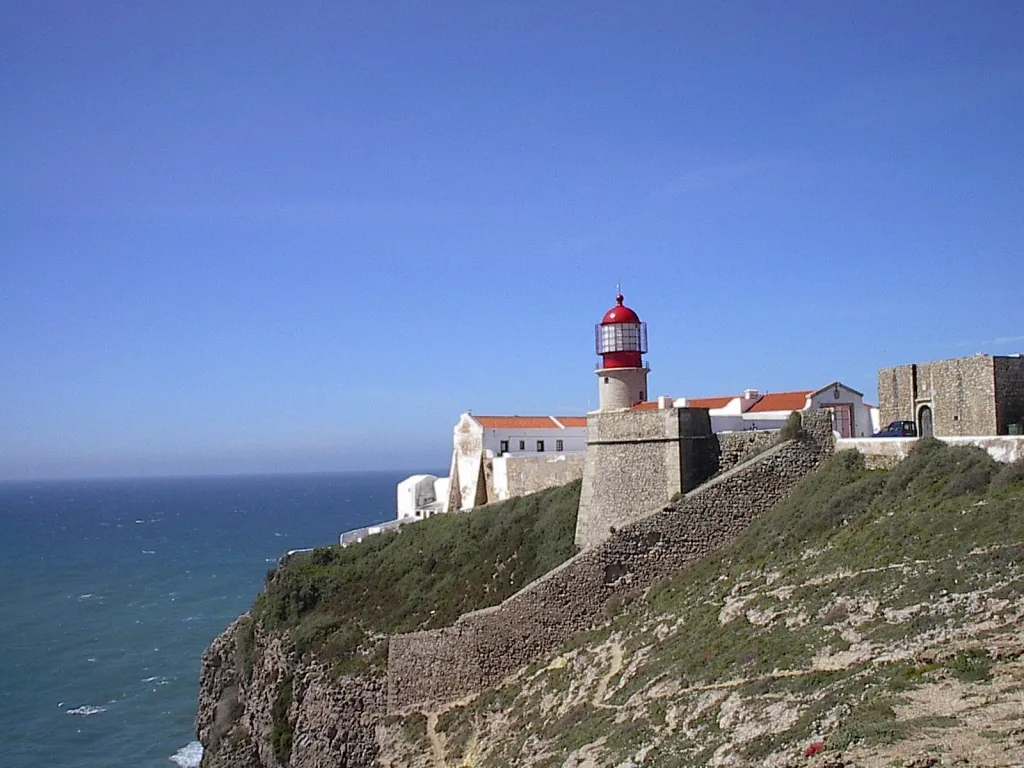
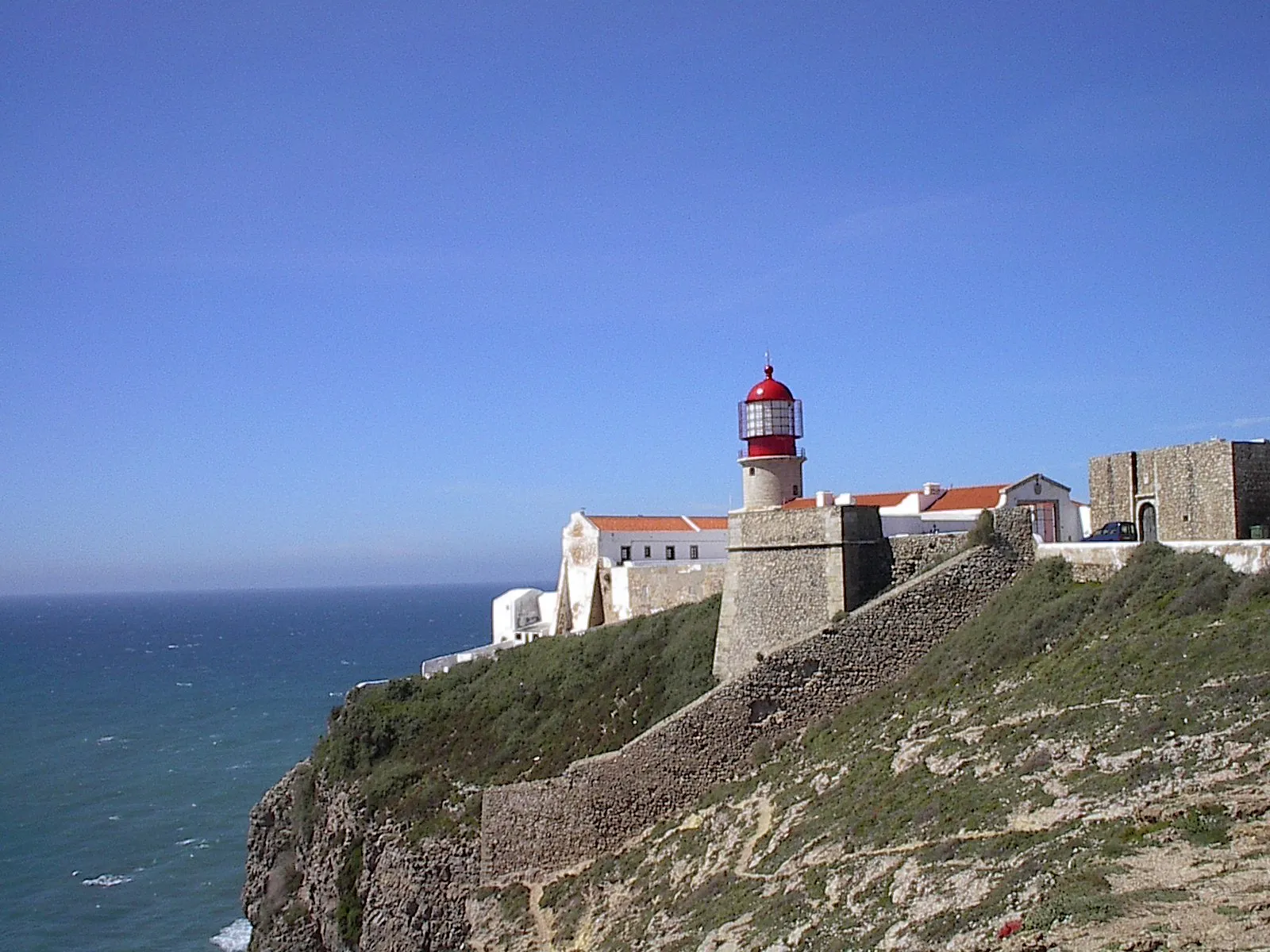
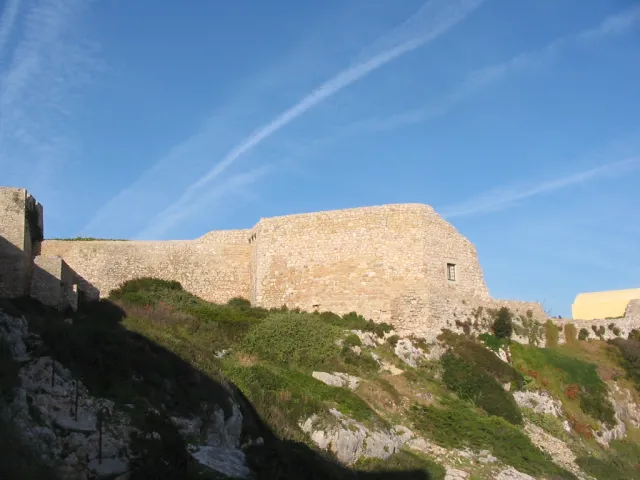
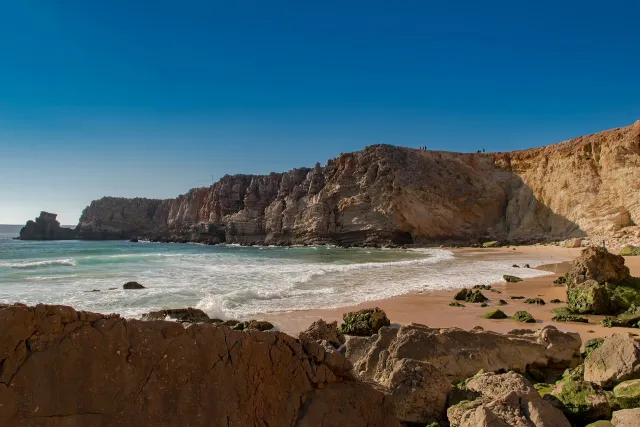
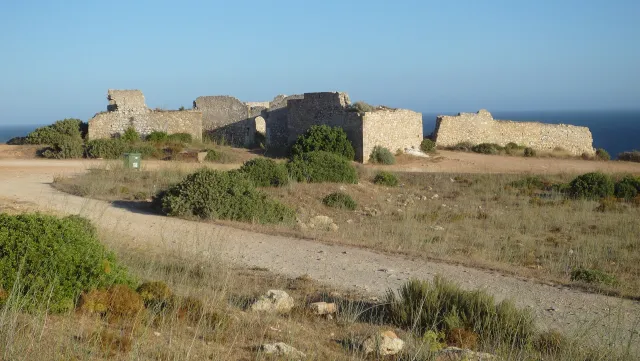
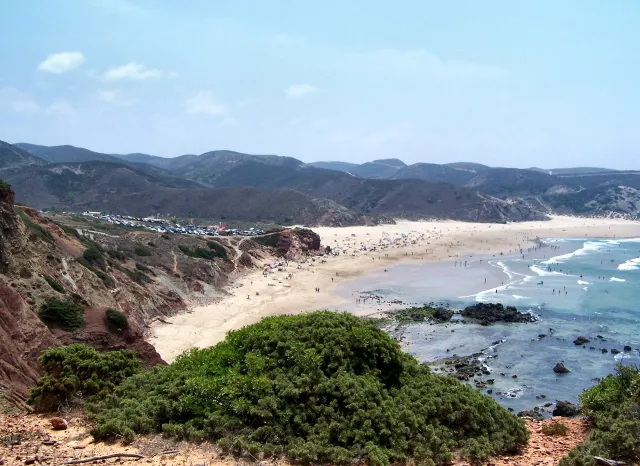
Human occupation in Cabo de São Vicente dates back to prehistory, and lithic materials of the Musterian and Mirense typology were collected at the site, chronologically integrated in the Paleolithic and Mesolithic periods, polished stone pieces from the Neolithic, and a skewer in Iron Age bronze. Several classical authors, such as Ephorus, Artemidorus and Strabo, mention, probably based on the Massaliot Periplus, that there were monoliths of religious function in the cape, which were surrounded by visitors, and then used in libations. In 1639 a burial tomb was discovered at the west end of the cape, with an epigraphed tombstone, which probably dates back to the Roman period.
The headland became a Christian pilgrimage site, as it is the site of the legendary tomb of Saint Vincent, who was martyred by the Romans in the 4th century. The sixteenth-century historian Duarte Nunes de Leão, in his work Description of the Kingdom of Portugal, mentions that the mortal remains of the saint were transported by boat together with a group of Christians, who had fled from Valencia due to the persecutions of the Moors, having always been followed by a crow. According to legend, the boat reached the cape, and the Christians built a small hermitage there to keep the saint's body, and some houses for his habitation, which continued to be occupied by his descendants. The Arab geographer Al Idrissi mentioned that there was the Temple of the Crow, on whose roof ten birds lived, which never left that place. The temple in which the saint's tomb was allegedly located was demolished by Muslim forces in the 12th century. According to tradition, some members of the community were killed, while others were taken captive. Two of these Christians were reportedly freed by King Afonso Henriques after a battle against the Moorish King Ismar, having informed the monarch that São Vicente was buried at the cape.