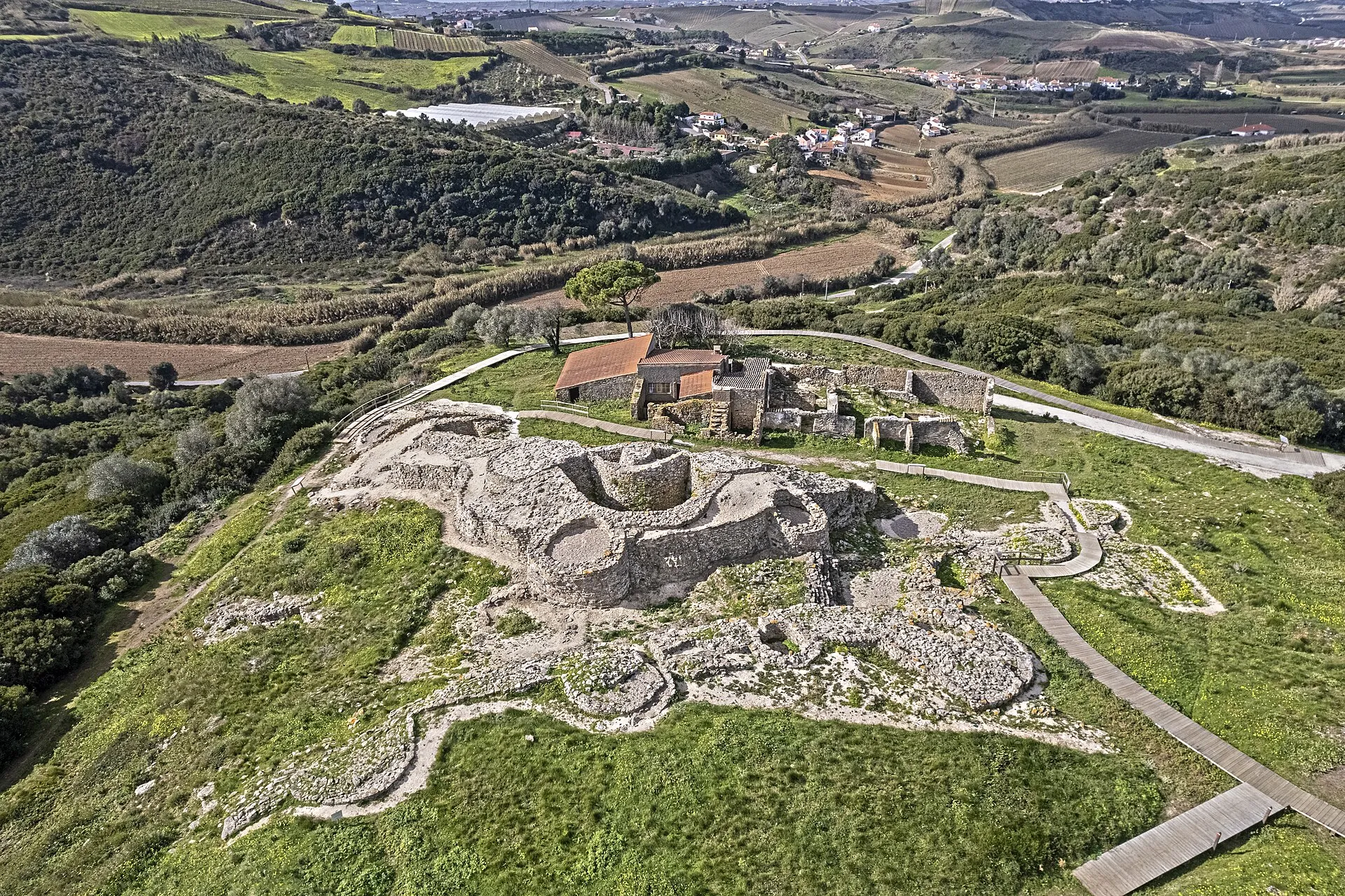
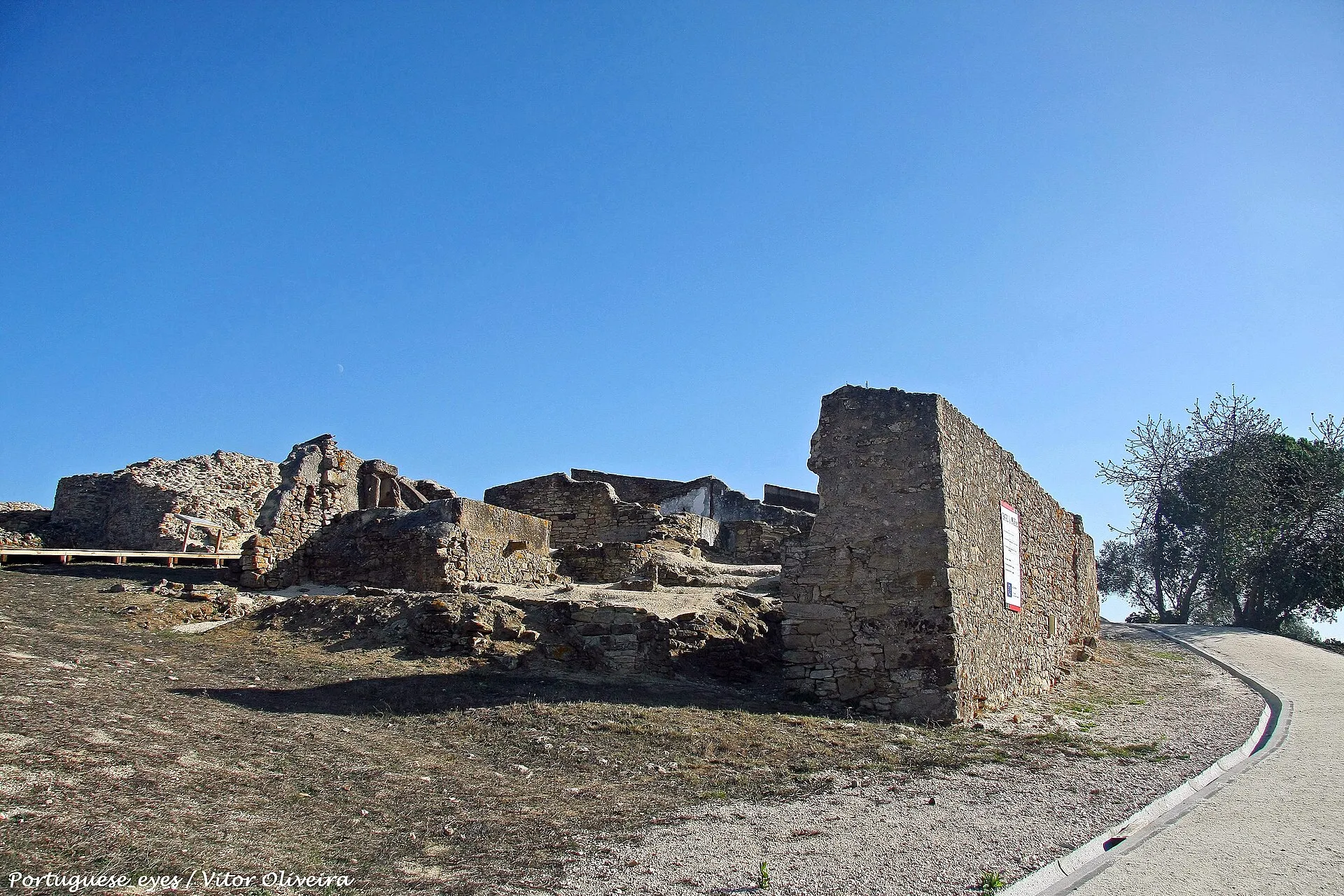
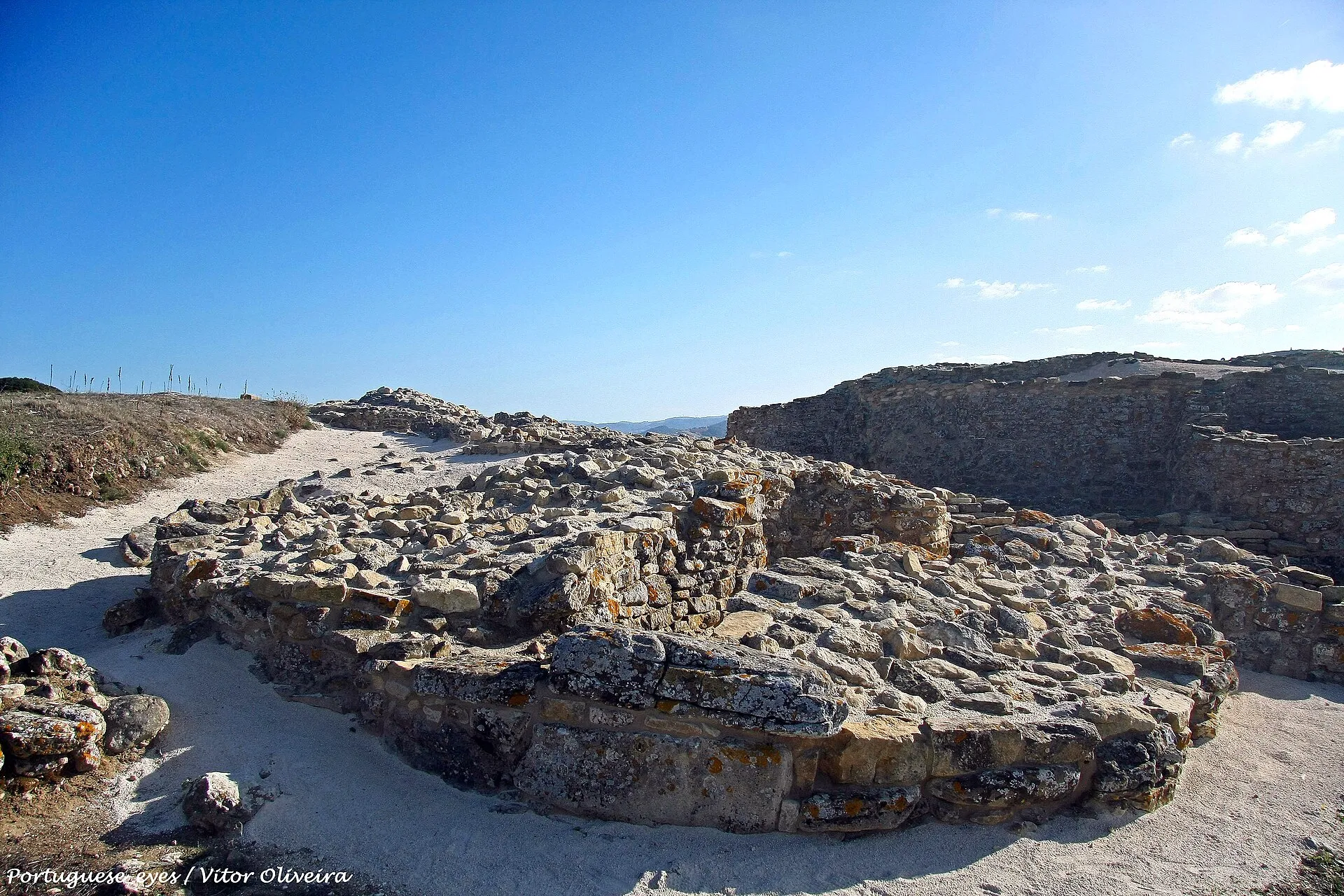
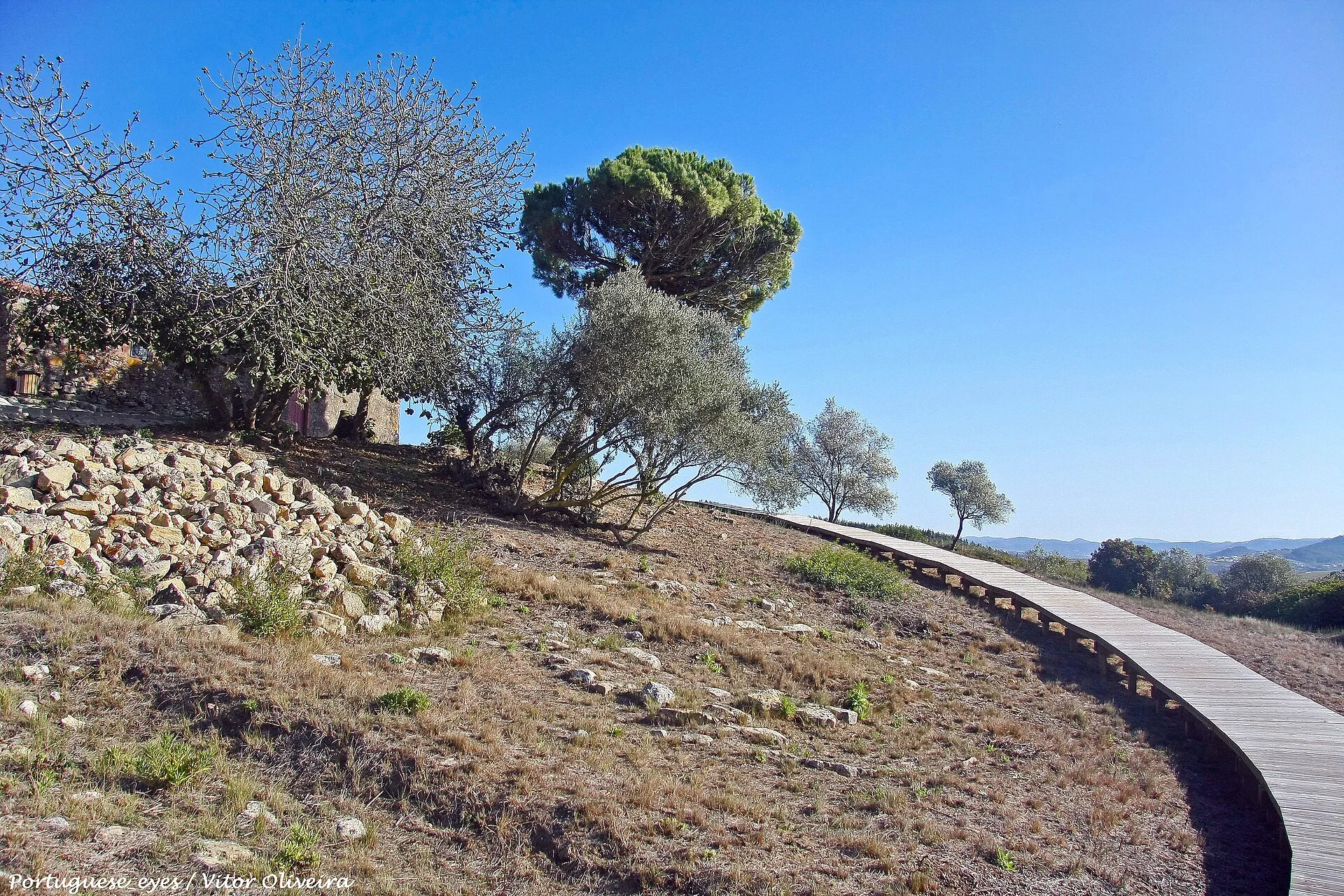
Most of the artefacts discovered at the site are stored and displayed in the Leonel Trindade Municipal Museum, Torres Vedras.
The site was first occupied in the Chalcolithic period, at the beginning of the 3rd millennium BC. Research from the last 30 years suggests that the region of the actual Portuguese Estremadura in Central Portugal was the region where the “Bell Beaker” phenomenon started, around the middle of the 3rd millennium BC, and from there spread to other European regions during the later Chalcolithic or early Bronze Age.
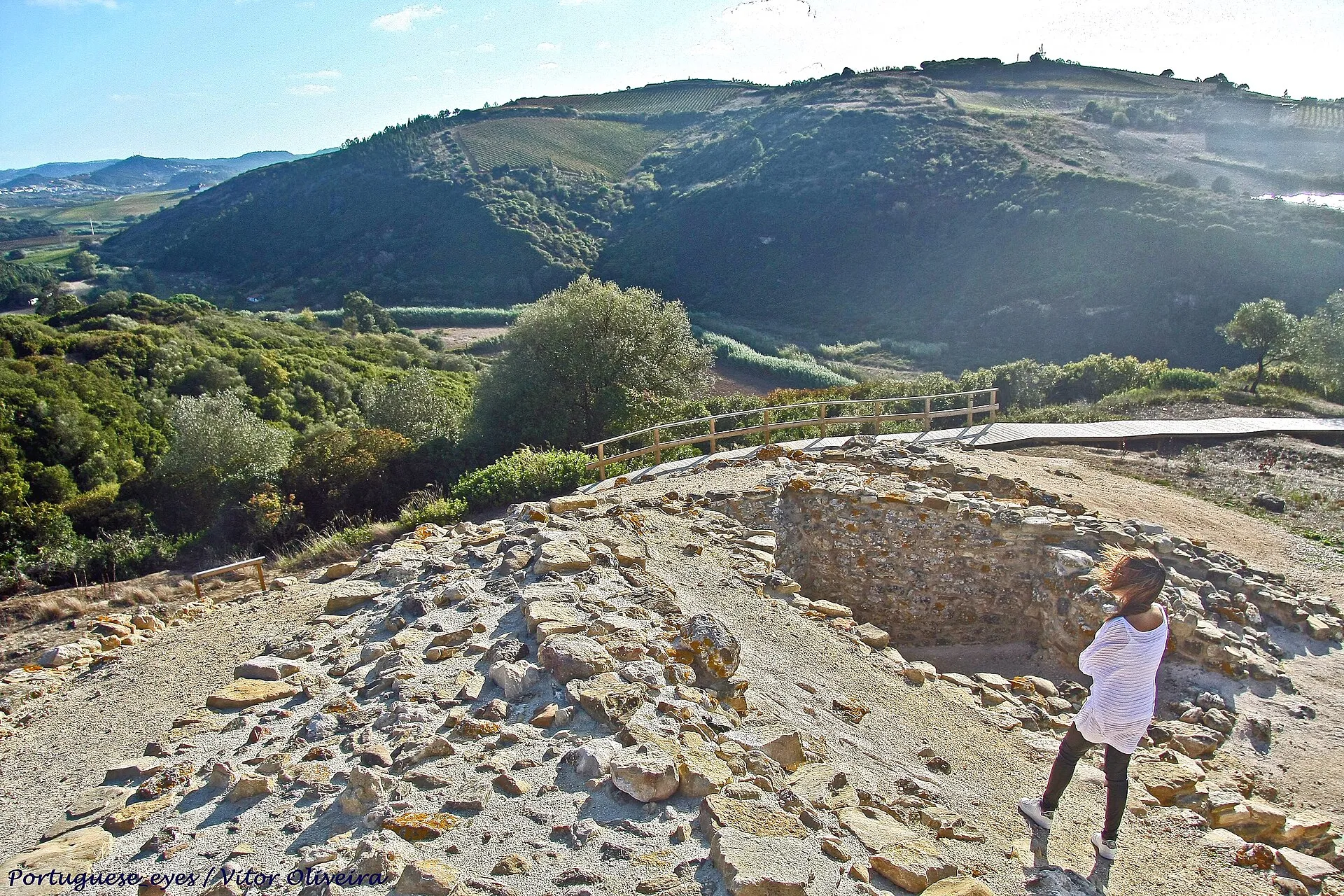
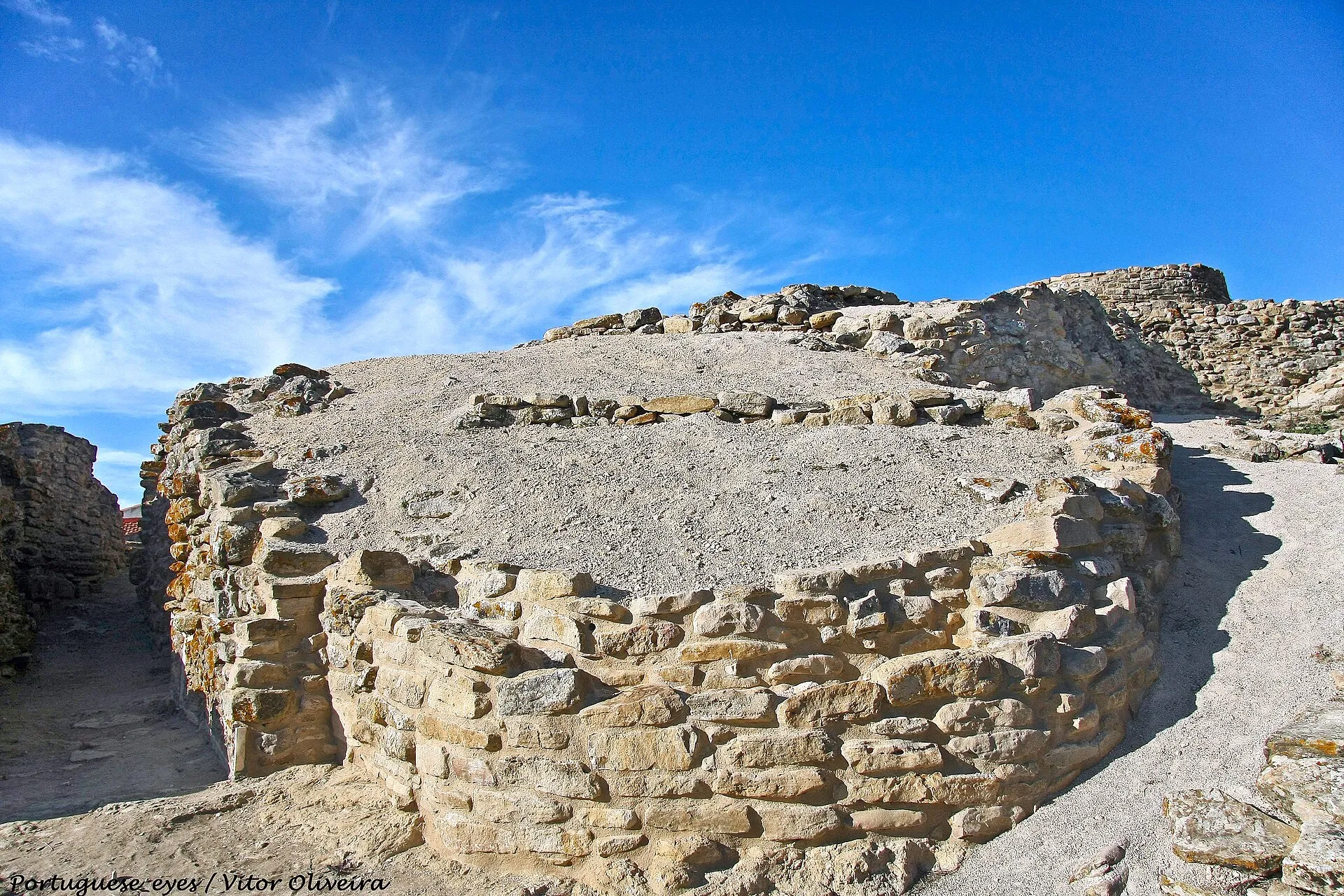
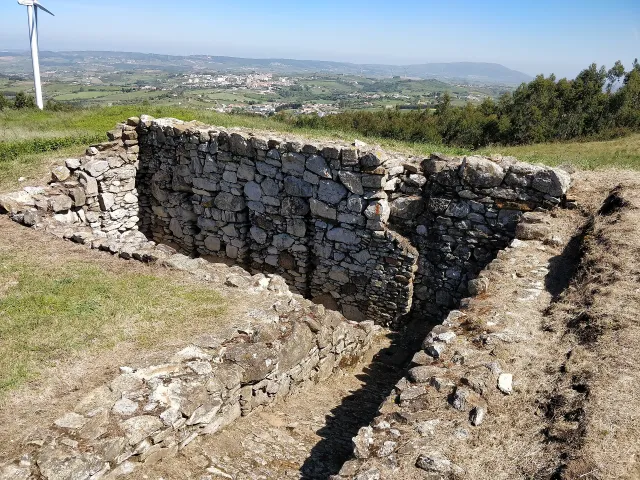
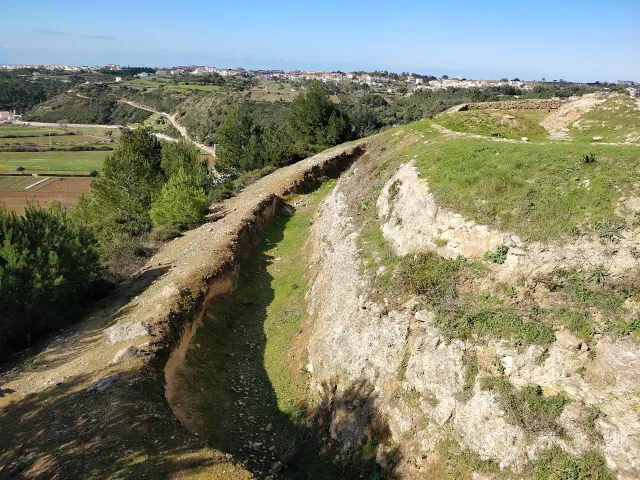
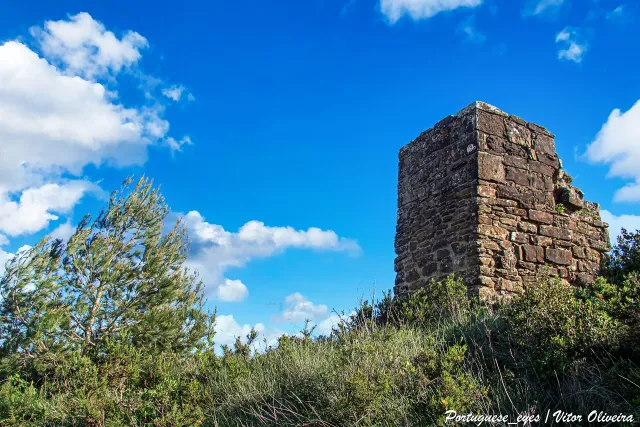
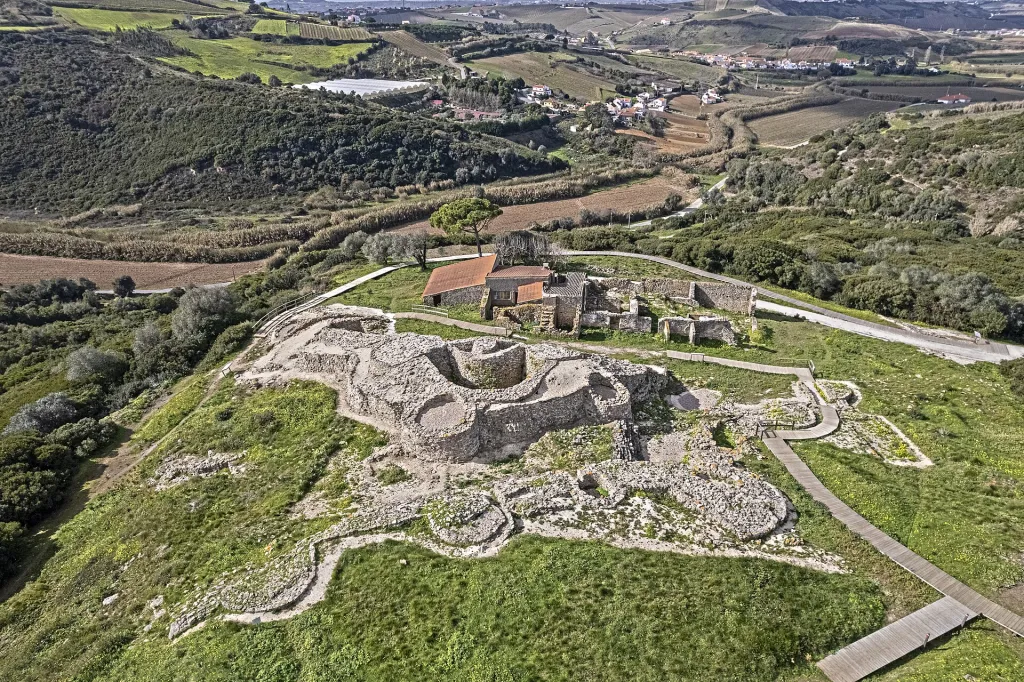
Zambujal from this period is relatively well conserved, some walls still standing up to a height of 4 meters, and is one of the most important sites with extensive stratigraphy. The site and surrounding land was specifically tied to a chalcolithic settlement that constructed a wall around itself to protect its community from attack. The settlers, who may have been from the peninsula but perhaps with Eastern Mediterranean contacts, based their economy on intensive farming. They were also part of an economic network importing commodities like gold, copper, amphibolite stone, and ivory between 3000 and 1700 BC.
Based on the excavations and analysis of Sangmeister, Schubart, and Trindade (1969), the site went through several successive phases of occupation and development:
construction of "soft walls", relatively straight, yet, narrow channels, with the fortifications developing in sections;
reinforcement of the northern gateway, through the construction of new soft bastions, and reinforcement of sections;
reinforcement of all walls, construction of small semi-circular towers, and sections;
fortification of the walls, construction of large semi-circular towers, completed in sections;
free-form walls constructed using small slabs, the construction of projecting barbicans, also completed in sections;
constructed of massive buildings surrounding the structure;

 1 / 6