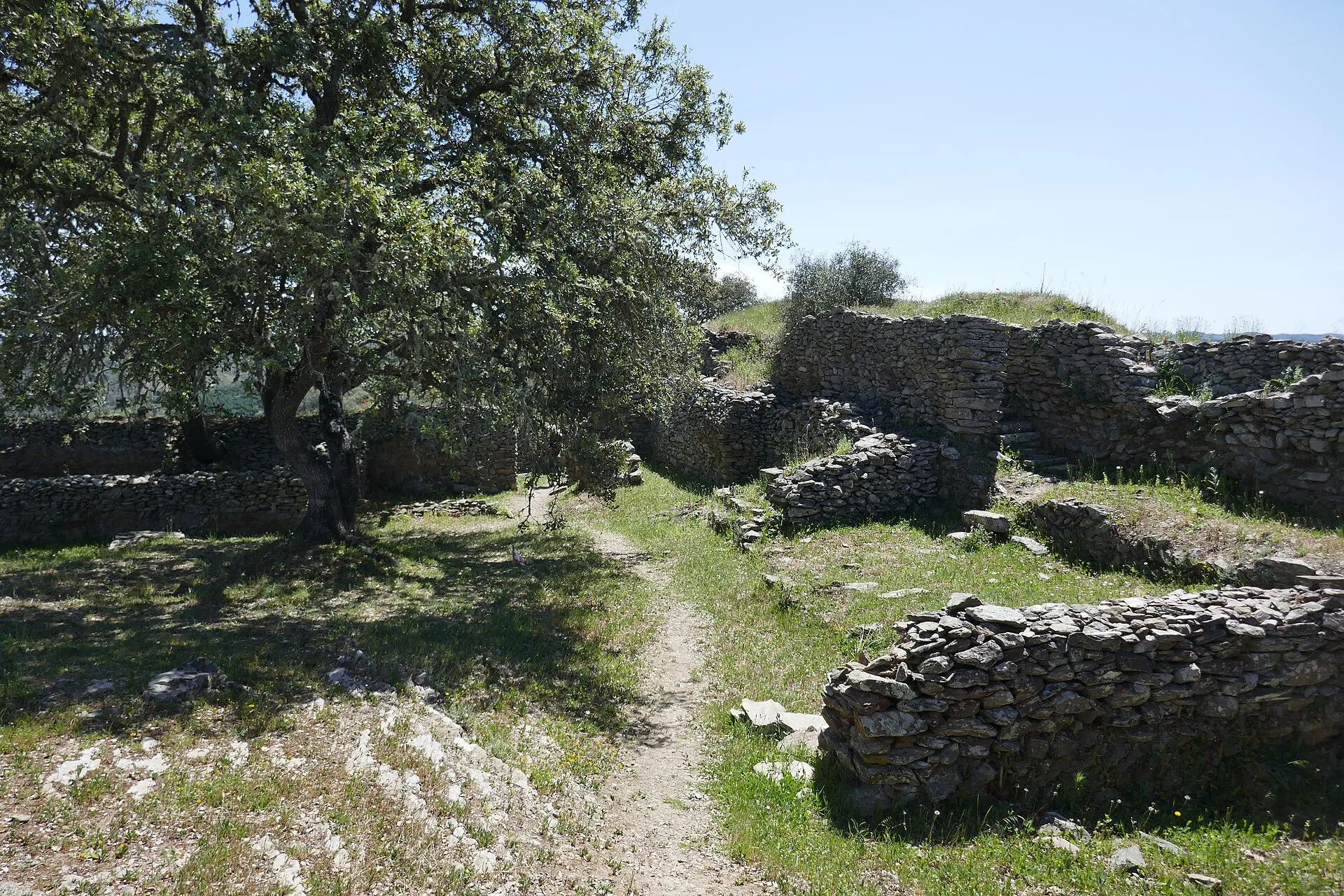
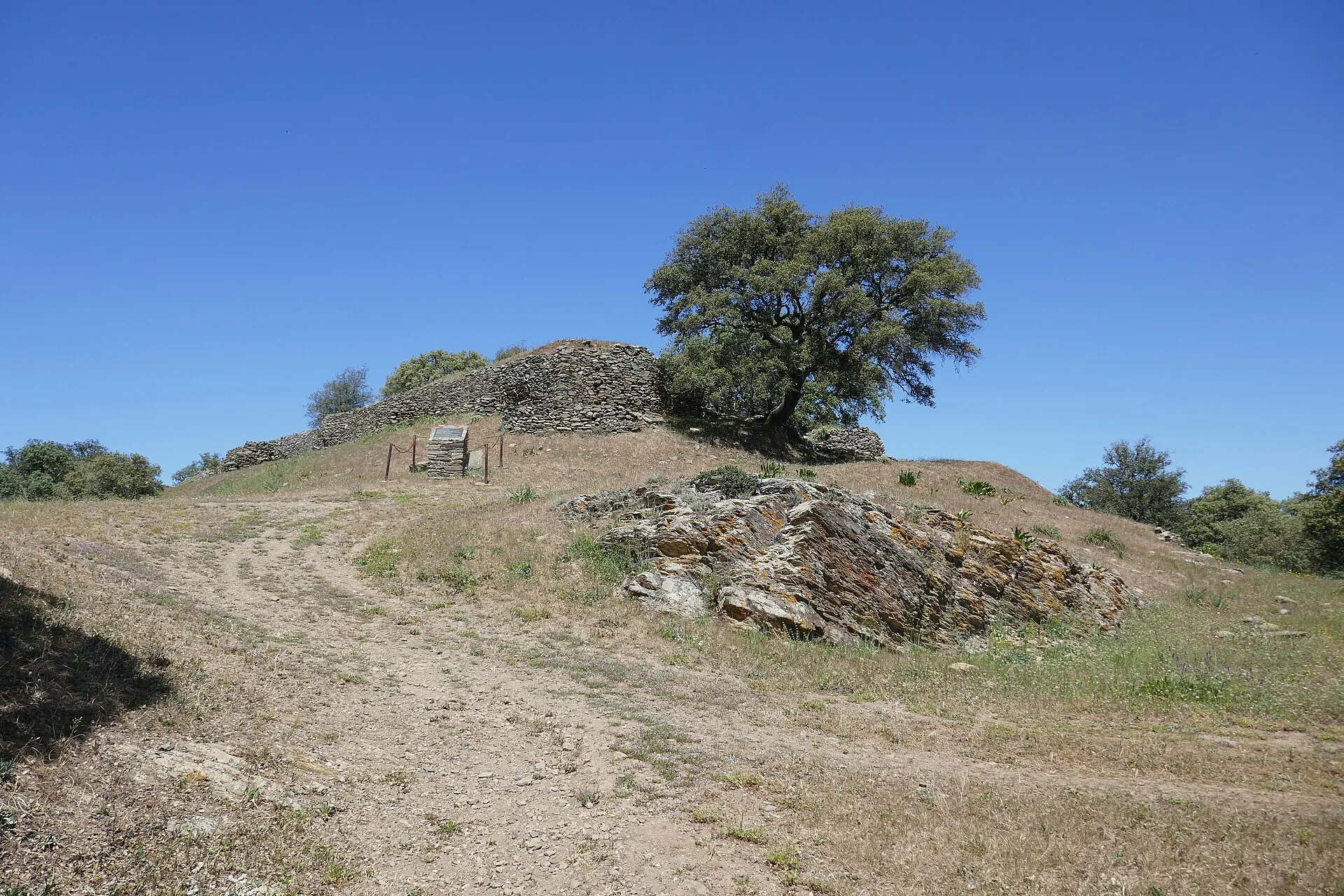
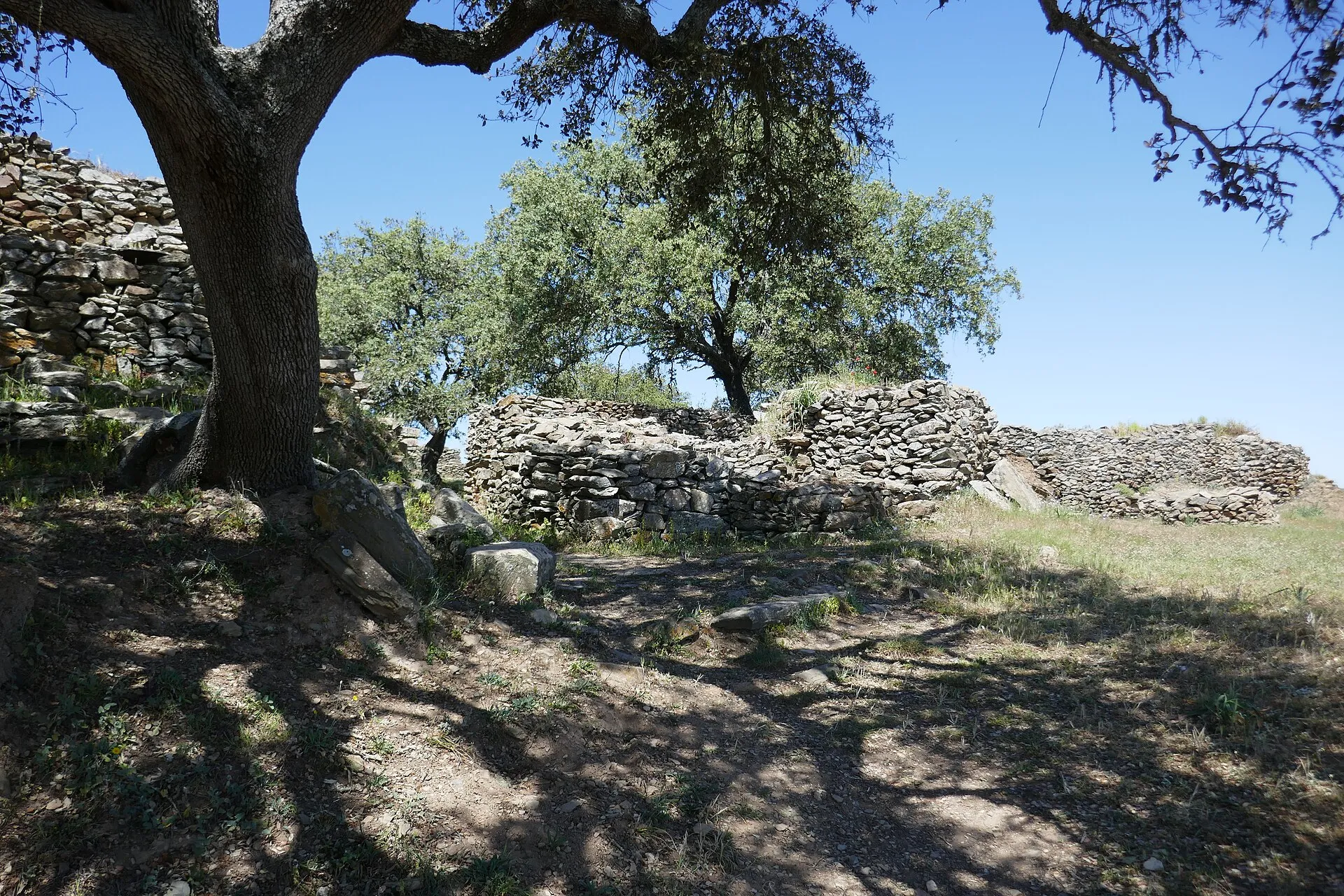
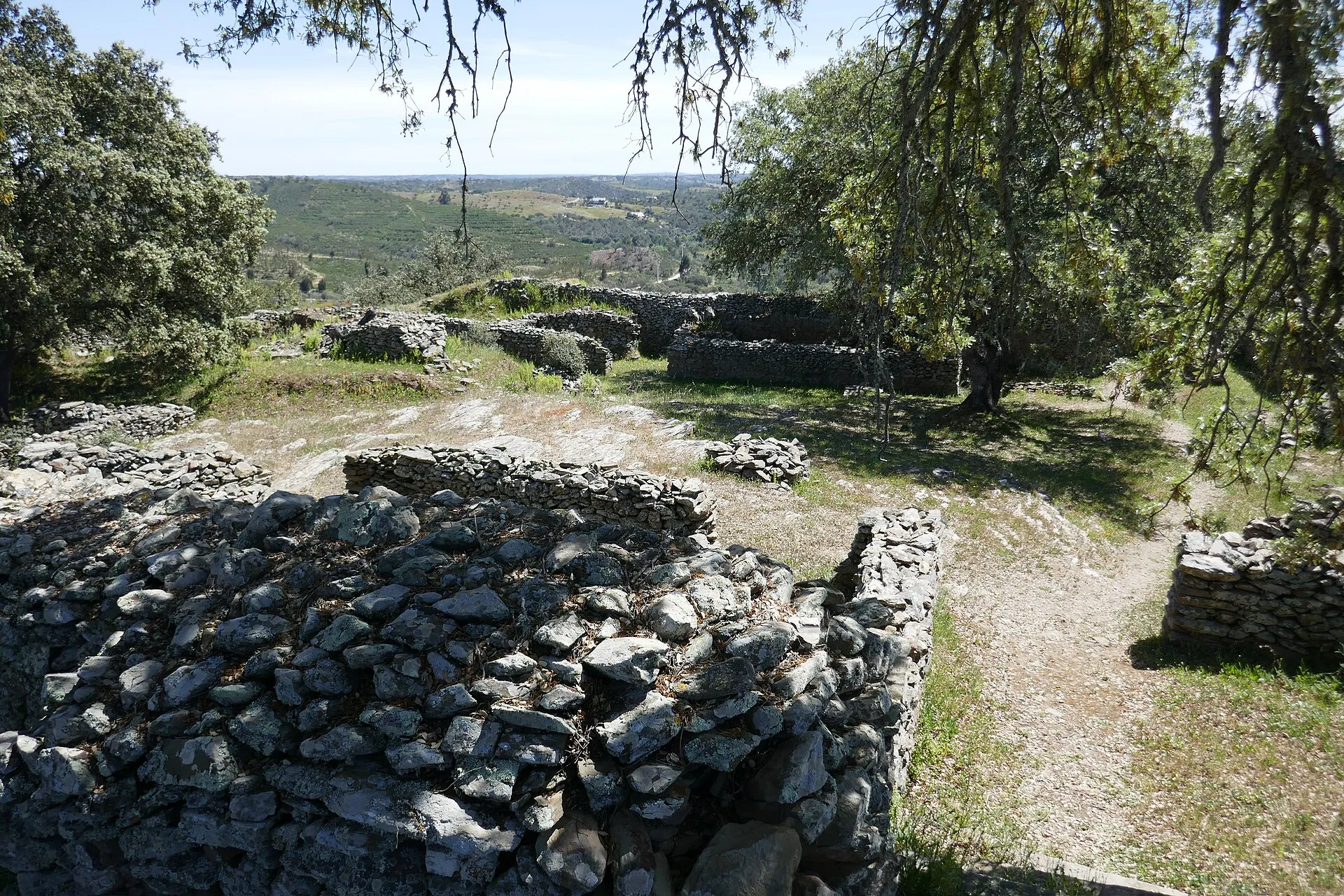
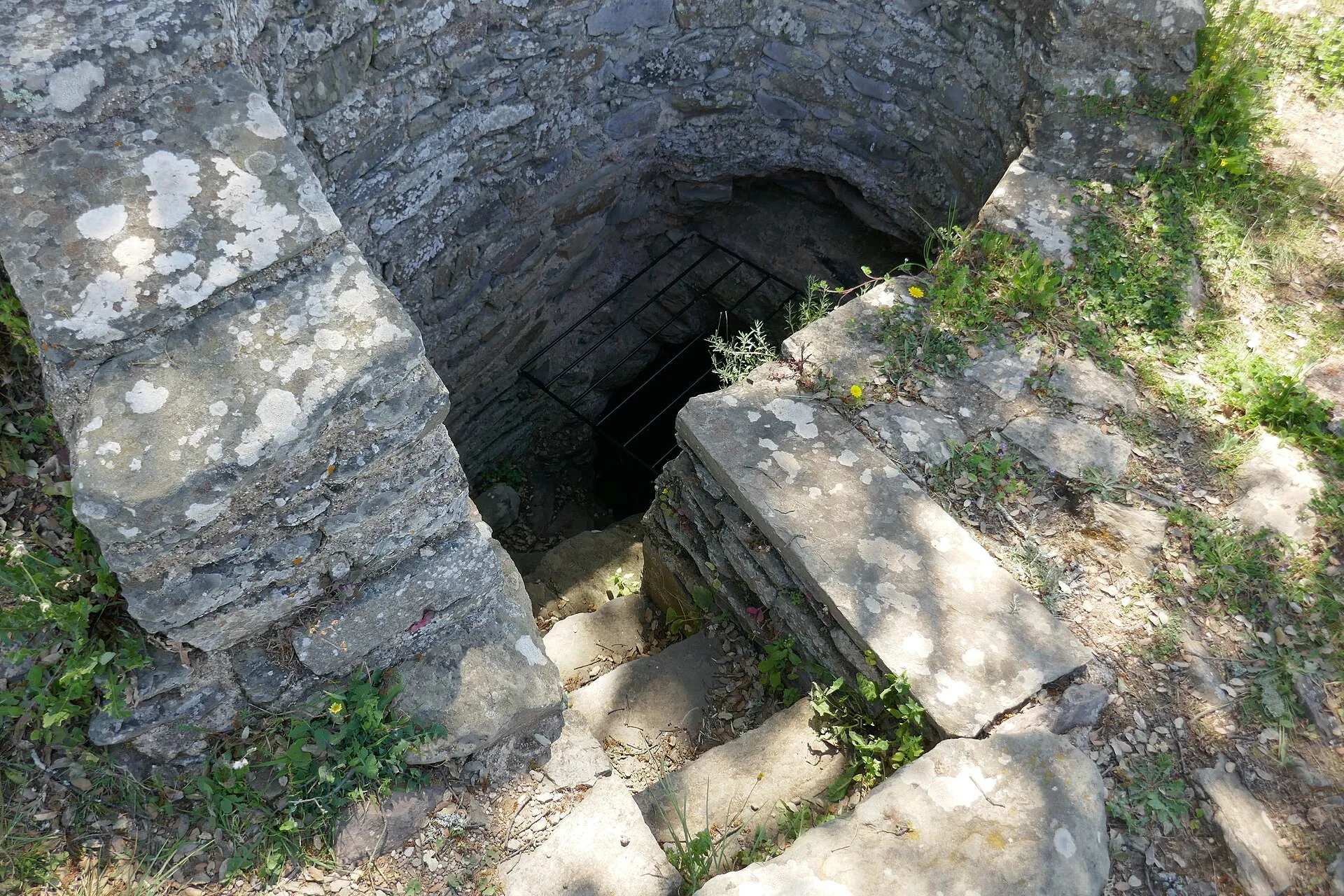
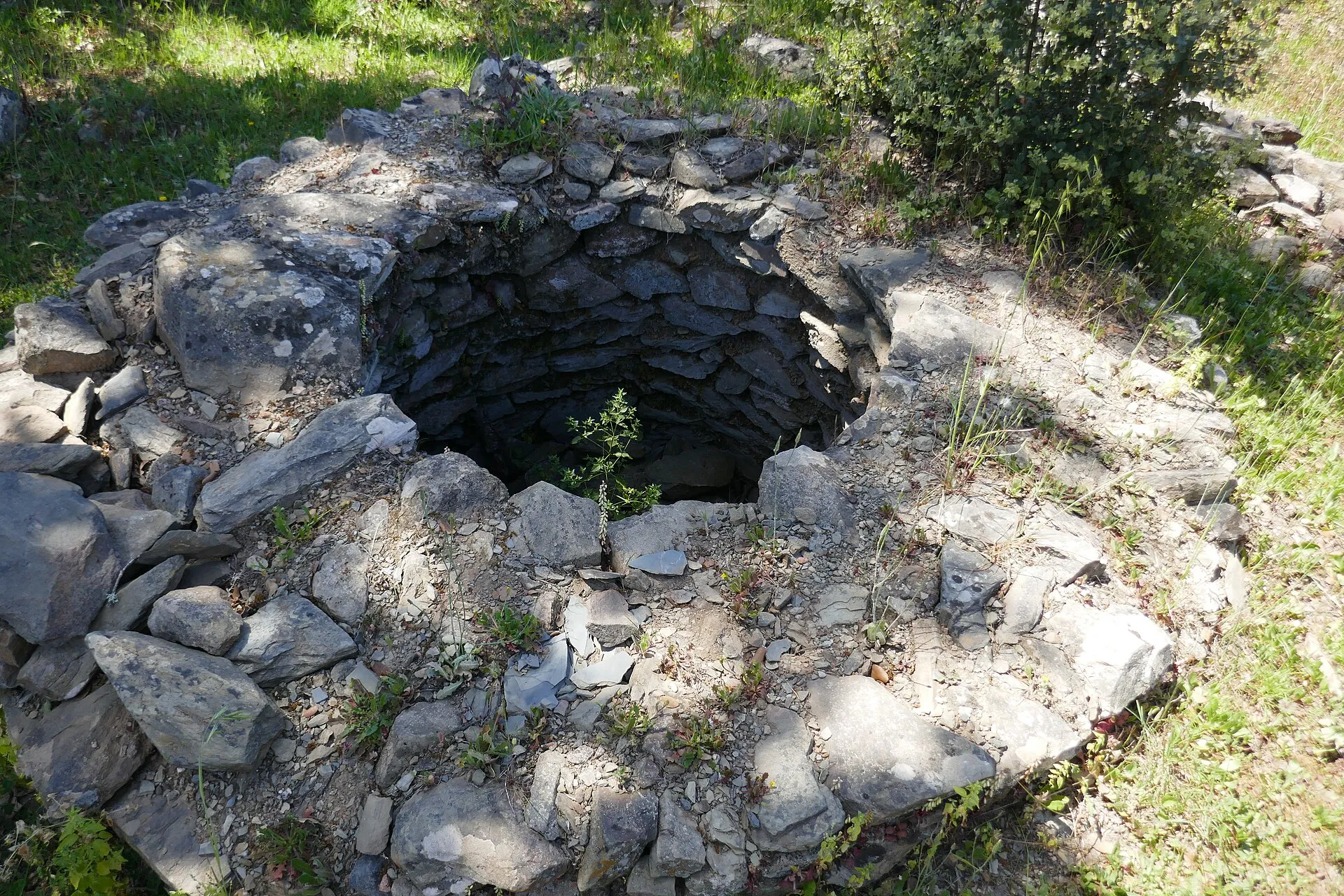
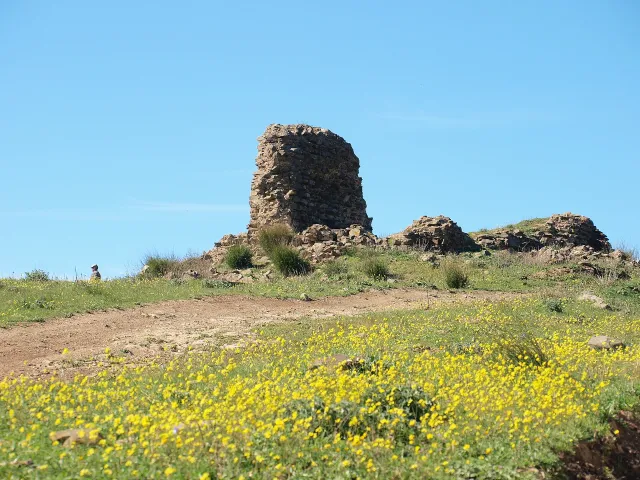
The construction of the ancient occurred, and human occupation fixed itself on this site, around the beginning of the Bronze Age.
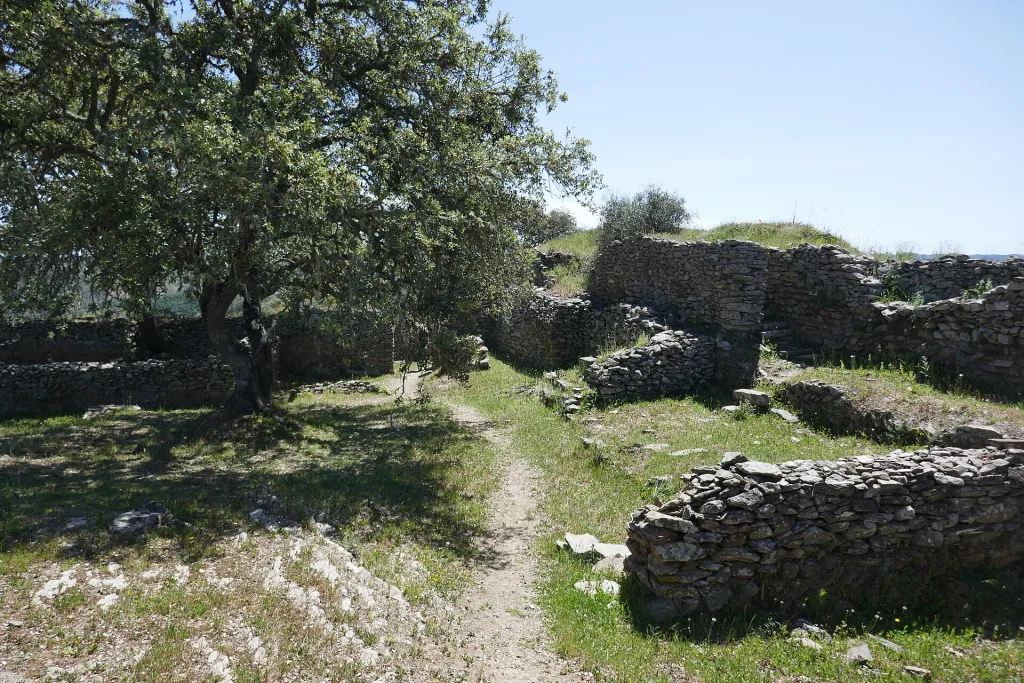
During the period of Islamic influence within the Iberian peninsula, the castro was reinforced to serve as an outpost. The fortification controlled one of the principal routes of passage into the Algarve. Of the artifacts discovered there are objects dating to the pre- and proto-cultural episodes of the region, including: polished stone axes, fragments of Iron Age vessels, rural ceramics, glass beads, gold, needle bone, bronze bracelets, drills, firing pins, spheroids; historical objects: Roman-Visigoth ceramics, Arabic and Portuguese Medieval metal objects (screws, cossoiros, buckles, keys, rings, etc.), stone objects (millstones, spheroids throwing, firing pins), hewn Roman and Visigothic stones, Arab tombstones, coins, Roman lamps.
The site was abandoned during the 14th century, based on the research of Abel Viana. Yet, this is contradicted by Rosa Varela Gomes, who suggests that the abandonment occurred sometime in the 15th or 16th centuries.
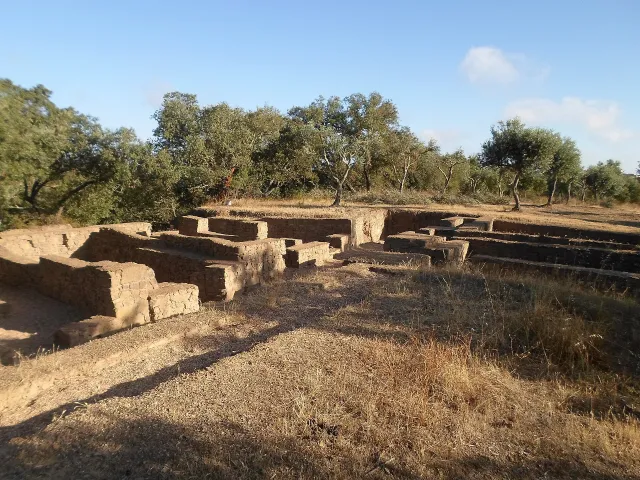
Excavations on the site were realized in 1960, under the direction of Abel Viana. During this period the walls of the southeast corner were consolidated (1961) Further investigations and reinforcement of the northern parts of the castle were accomplished in 1962, followed once again in 1963 by work completed by Abel Viana.
In 1999, it was included within the Programa de Valorização e Divulgação Turística (Tourist Valorization and Appreciation Program), by the Ministry of Commerce and Tourism and Secretary of State for Culture, and included as part of the archaeological itineraries for the Alentejo and Algarve regions. In order to improve tourist visits, a new interpretative center and reception area was constructed between 1999 and 2000, by architect Sofia Salema.
In 2001, archaeological excavations were carried out on the site.

 1 / 7