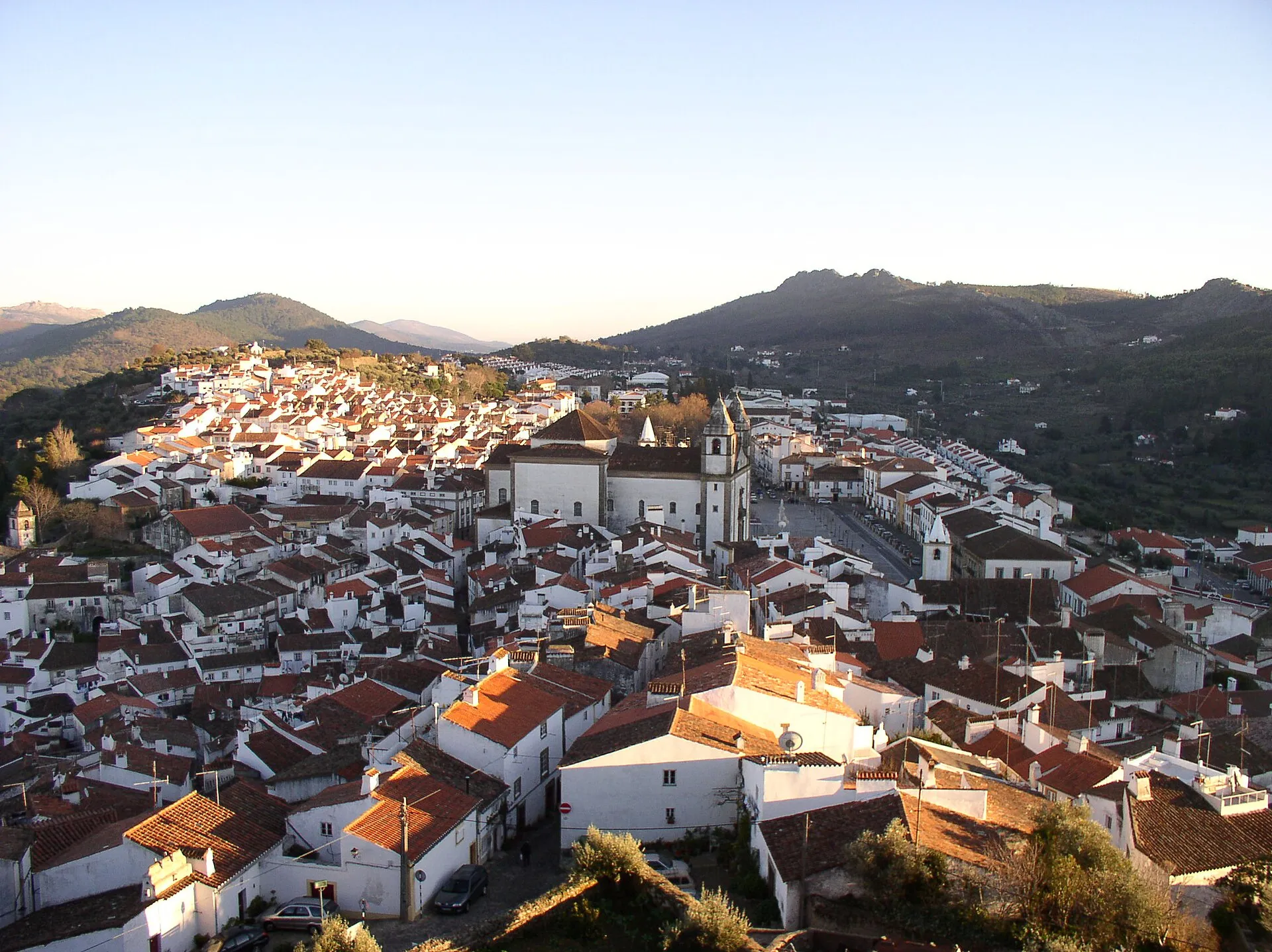
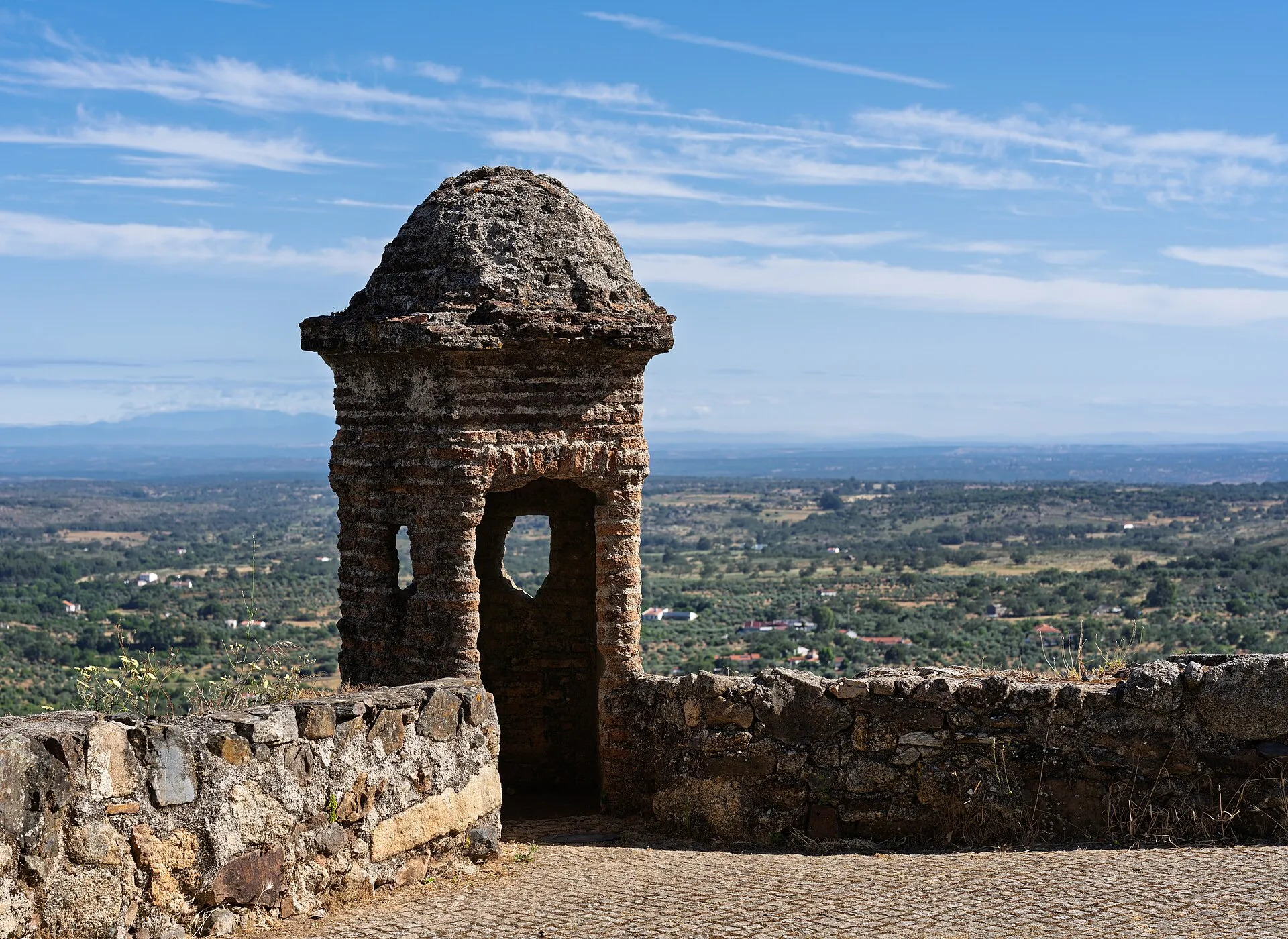
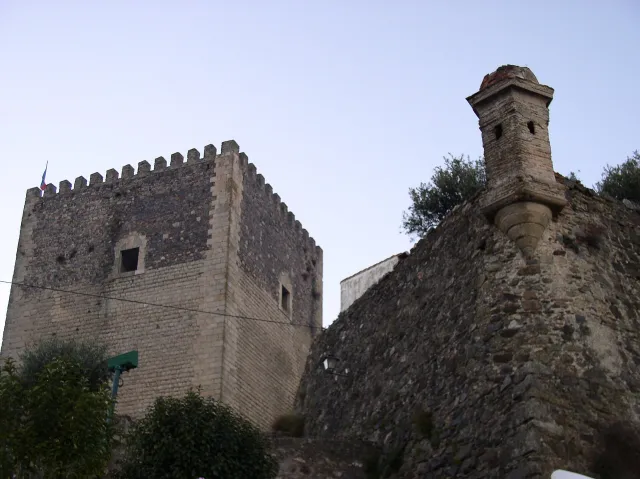
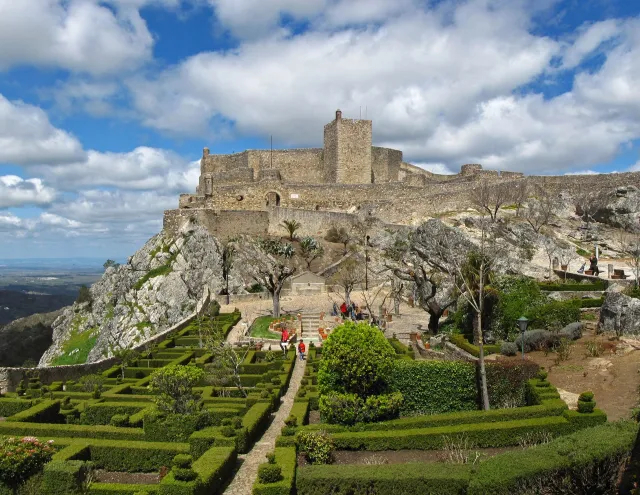
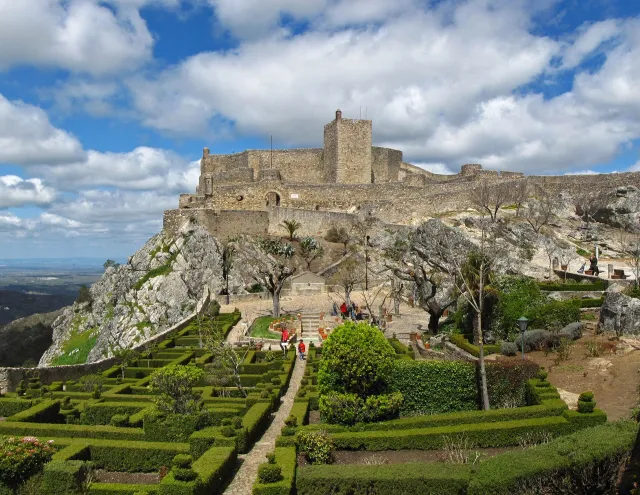
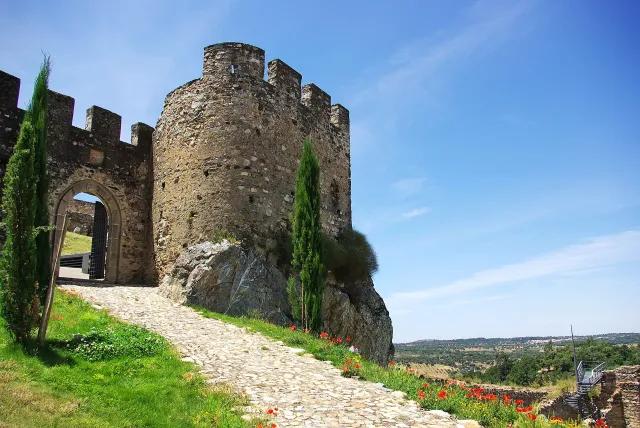
In 1299 Rui de Pina wrote that Castelo de Vide remained a weak stronghold, stating "lugar etã mais chão q forte" (the locality is more place then strong). Afonso Sanches, son of king Afonso III, rebuilt the fortification walls, and his brother King Denis continued the task, with work completed during the reign of King Afonso IV sometime in the 14th century. These changes improved the stronghold's defensive conditions, including moving a well into the interior and a new line of walls protecting the citadel and houses previously outside the walls. A tower keep was constructed flush with the southern walls in order to better defend the southern passage. All these improvements proved useful during Portugal's conflicts with Castile, when siege engines were used.
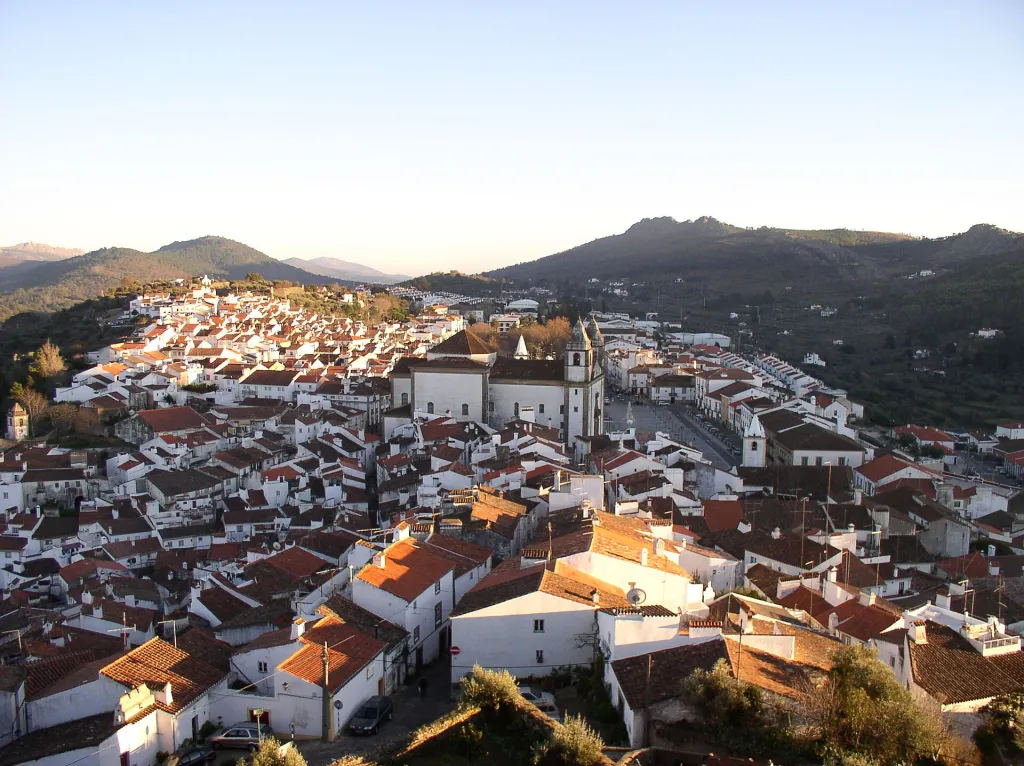
Throughout the 14th century the settlement slowly expanded outside the castle walls. The southern flanks, with good southerly exposure and a gentle slope, allowed easy settlement, while the northern and western exposures expanded later due to wind and steep cliff faces. The growth of the settlement occurred along the main road leading to the castle, and followed the expansion of religious buildings outside the walls. This road bisected two sides of the hill and one side was occupied by a Jewish quarter inhabited by Jews expelled from Castile and Aragon.
Written documents attest to the existence of Castelo de Vide's Jewish community and quarter throughout the 14th and 15th centuries. The 14th-century Synagogue of Castelo de Vide in Santa Maria da Devesa still stands, and despite Portugal's expulsion of Jews in 1496 was used by Marranos as a religious sanctuary and school until the 16th century. Today it houses a small museum dedicated to Castelo de Vide's historical Jewish community.

 1 / 5